
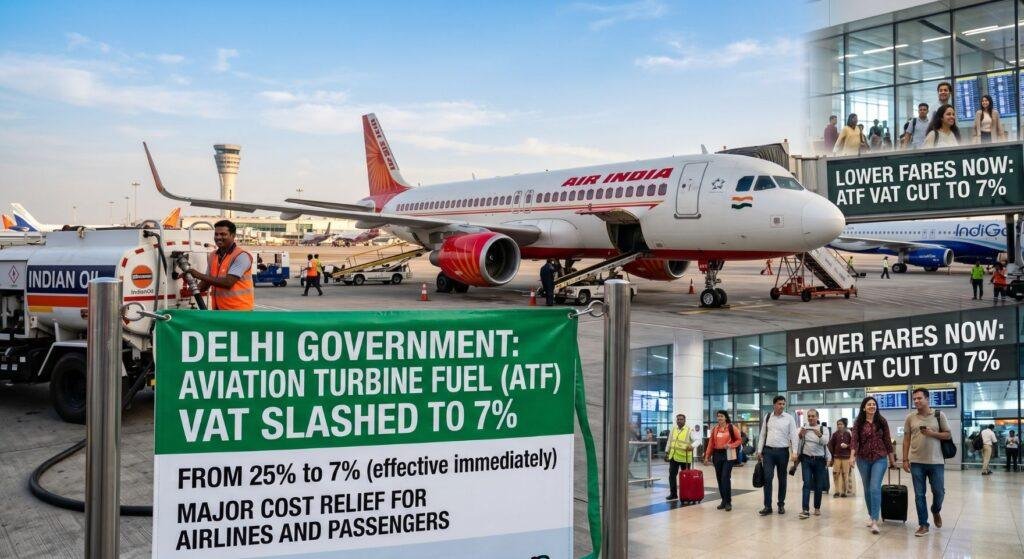
In a landmark move, the Delhi government has reduced Value Added Tax (VAT) on Aviation Turbine Fuel (ATF) from 19.4% to just 7%. This steep cut promises major ripple effects across India’s aviation sector. Here’s a point-wise breakdown of what this means.
1. Major Cost Relief for Airlines
ATF constitutes 35–40% of an airline’s operating costs. Lower VAT directly reduces expenses.
Delhi was among the costliest airports for refueling due to high taxes. The 7% rate now aligns it with hubs like Mumbai (5%) and Bengaluru (8%).
Full-service carriers (IndiGo, Air India, SpiceJet, Akasa) stand to save crores in monthly fuel bills.
2. Benefit Passed to Passengers
Airlines are likely to reduce fuel surcharges on tickets, especially for short-haul and domestic routes.
Competitive pressure may force carriers to lower base fares, making air travel more affordable for budget-conscious flyers.
Example: A Delhi-Mumbai round trip could see fare drops of ₹500–₹1,000 per passenger.
3. Enhanced Delhi as an Aviation Hub
Airlines will prefer refueling in Delhi rather than bypassing it for cheaper stations like Lucknow or Jaipur.
Increased refueling activity means higher non-aeronautical revenue for Delhi Airport (DIAL) and more stopover flights.
International carriers may also add Delhi as a technical stopover, boosting connectivity.
4. Environmental and Operational Upsides
Lower fuel cost reduces economic pressure to fly inefficient routes or carry excess tank fuel (tankering), which burns more fuel.
Airlines can optimize flight planning, reducing overall carbon emissions per flight—a subtle green benefit.
5. Boost to Tourism and Business Travel
Cheaper flights encourage leisure travel to Delhi from tier-2/3 cities.
Corporate travel budgets stretch further, spurring MICE (Meetings, Incentives, Conferences, Exhibitions) tourism.
Hotel, cab, and retail sectors near Delhi airport stand to gain from higher passenger volume.
6. Comparison with Other States
Delhi now joins the club of progressive states: Maharashtra (5%), Karnataka (8%), West Bengal (12%).
Still pricier than some? Yes, but a huge improvement from 19.4%. Pressure now mounts on states like Tamil Nadu (28%) and Rajasthan (20%) to follow suit.
7. Challenges & Caveats
The VAT cut reduces Delhi’s tax revenue in the short term, but increased flight movements may offset losses.
Airlines must genuinely pass savings to passengers—regulators like DGCA should monitor fare trends.
Global oil price volatility can dilute local tax benefits; continued global crude watch remains key.
Final Verdict from Aviators360
Delhi’s ATF VAT slash from 19.4% to 7% is a textbook win-win. Airlines get breathing room, passengers see lighter tickets, and the capital cements its status as India’s top aviation gateway. If other states emulate this model, Indian skies could truly take off.