
By Aviators 360 – Aviation News & Analysis
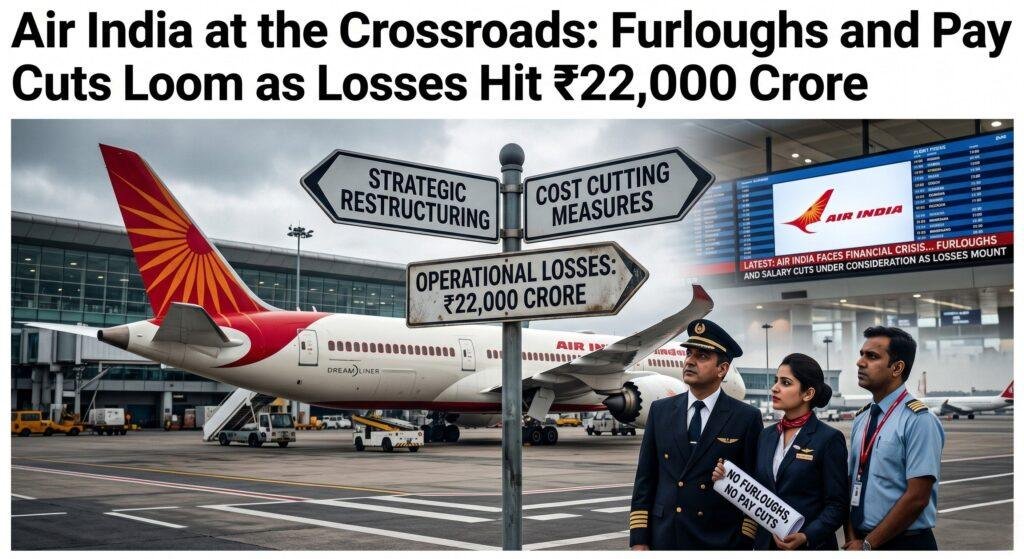
In what is shaping up to be the most significant financial storm since the Tata Group’s takeover, Air India is reportedly preparing for a harsh landing. Sources close to the development confirm that the national carrier is actively weighing furloughs (temporary layoffs) and senior-level pay cuts as losses deepen beyond projections.
The Numbers Don’t Lie
For the fiscal year ending March 2026, the Air India Group—including the mainline carrier and Air India Express—is projected to post staggering losses exceeding ₹22,000 crore (approximately $2.6 billion USD). This financial hemorrhage comes despite the much-publicized “Vihaan.AI“ transformation plan and public optimism from Tata Sons leadership.
The situation at Air India Express is particularly alarming. After posting a modest profit of ₹116 crore in FY23, the low-cost subsidiary plummeted to a massive loss of ₹5,832 crore in FY25, signaling systemic bleeding across the group rather than isolated inefficiencies.
Why the Sudden Collapse?
Three primary factors have converged to create this perfect storm:
1. The Geopolitical Factor (Iran War)
Unlike standard airline stress, this crisis is heavily geo-political. The ongoing conflict has forced Air India’s long-haul flights to take extended detours to avoid conflict zones over West Asia. These diversions have resulted in a dual blow—sharply higher Aviation Turbine Fuel (ATF) consumption and reduced aircraft utilization (fewer flights per day). Routes that were marginally profitable have turned deeply unviable overnight.
2. Legacy Cost Structure
Despite placing a record order for 600 new aircraft, Air India continues to operate fuel-inefficient legacy aircraft like the B747 and older B777s on several routes. Intense competition from Gulf carriers (Emirates, Etihad, Qatar) and aggressive domestic expansion by IndiGo and Akasa Air has squeezed yields to breaking point.
3. Leadership Void
Adding to the turbulence, CEO & Managing Director Campbell Wilson is set to step down later this year. With the board now searching for a new leader, decision-making on critical cost-cutting measures has slowed, exacerbating the financial bleed.
The Furlough Plan: What We Know
Internal discussions point to an immediate three-pronged workforce strategy:
Non-Essential Furloughs: A temporary unpaid leave program for 10–15% of staff in non-critical operational roles, including select ground handling and administrative personnel.
Executive Pay Cuts: Salary reductions for employees at the Vice-President level and above. Performance-linked bonuses for all staff are being deferred indefinitely.
Capacity Reduction: To align with lower demand and higher fuel costs, the airline is looking at slashing overall flight capacity by over 20% for at least three months.
The Aviators 360 Take
From an industry perspective, furloughs are a double-edged sword. On one hand, they preserve the long-term organizational structure, avoiding permanent layoffs during what the airline hopes is a cyclical downturn triggered by external war. On the other hand, they erode crew morale and risk permanently losing skilled pilots and engineers to competitors who are still hiring—namely IndiGo, Akasa Air, and Gulf carriers.
For a carrier rebuilding its global reputation, losing experienced manpower could undo years of progress.
What Lies Ahead?
Tata Sons Chairman N. Chandrasekaran has publicly reaffirmed the group’s commitment to building a “world-class airline” and praised staff for their “tenacity.” However, behind closed doors, the board is enforcing strict financial discipline.
Official announcements regarding pay cuts and flight reductions are expected imminently. Unless Air India accelerates fleet modernization, renegotiates legacy contracts, and finds a permanent CEO quickly, these furloughs will serve as a short-term bandage—not a cure.
The verdict from Aviators 360 is clear: Air India is in emergency savings mode. How the airline treats its people during these furloughs will determine whether it soars again or sinks deeper into turbulence.
This article is based on internal projections and industry sources as of May 2026. For more exclusive aviation updates, stay tuned to Aviators 360.