
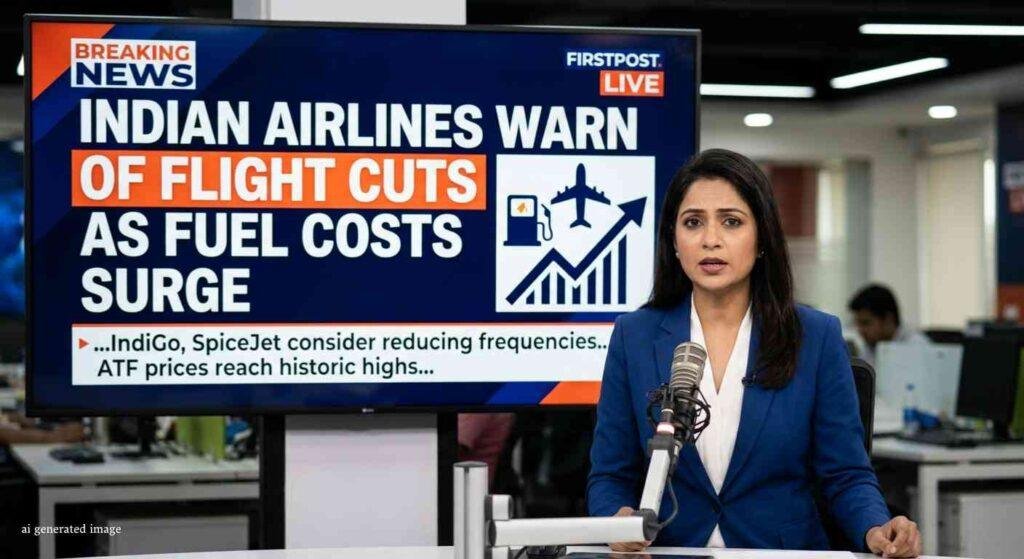
The Federation of Indian Airlines (FIA)—representing Air India, IndiGo, and SpiceJet—has sent an SOS to the Civil Aviation Ministry, warning that the industry is “on the verge of closing down or stopping its operations” if urgent relief on jet fuel prices is not provided.
In a letter dated April 26, 2026, the airline body flagged that the ongoing West Asia conflict has pushed Aviation Turbine Fuel (ATF) prices to catastrophic levels, making both domestic and international operations largely unviable.
The Numbers Behind the Crisis
The FIA’s letter highlights a dramatic surge in operating costs:
| Metric | Before Crisis | Current |
|---|---|---|
| ATF Share of Operating Cost | 30-40% | 55-60% |
| Brent Crude Price | ~$72/barrel | ~$118/barrel |
| ATF Price (MOPAG Index) | ~$87/barrel | $235-260/barrel (295% increase) |
| Crack Differential (Refinery Margin) | $11-18/barrel | $132.59/barrel |
The “crack spread”—the difference between crude oil and refined jet fuel—has surged despite no actual increase in refining costs, indicating excessive margins that airlines say are unsustainable.
What Airlines Are Demanding
In their SOS letter, the FIA has made three urgent requests to the Centre:
Reinstate the Crack Band Mechanism — A transparent pricing framework (with a $12-22 per barrel margin band) that was introduced in 2022 but discontinued in late 2024.
Temporarily Suspend 11% Excise Duty on ATF for domestic operations, as the ad valorem tax multiplies with every price hike.
Reduce VAT in Key Aviation Hubs — Delhi has the second-highest VAT at 25%, while Tamil Nadu tops at 29%. Mumbai, Bengaluru, and Hyderabad range between 16-20%.
The FIA also sought uniform pricing for domestic and international operations. Currently, international flights bear the full fuel price surge, while domestic hikes were partially capped (₹15/litre vs. ₹73/litre for international).
Why This Matters for Passengers
If the government does not act before the next ATF revision on May 1, passengers could face:
Flight cancellations — especially on Tier-2 and Tier-3 routes
Sharp airfare hikes as airlines pass on costs
Reduced network connectivity with airlines rationalizing capacity
“Any irrational increase in the price of ATF will result in unsurmountable losses for airlines and will lead to grounding of aircraft, resulting in cancellation of flights.” — FIA letter to Civil Aviation Ministry
The Geopolitical Trigger
The crisis stems from the West Asia war that began on February 28, 2026, following a joint US-Israel offensive on Iran. The Strait of Hormuz—through which one-fifth of global oil passes—has faced disruptions, pushing energy prices sky-high. While a ceasefire is currently in place, diplomatic efforts remain ongoing.
What’s Next?
The government has yet to formally respond to the April 26 letter. However, speculation is mounting that the administration may raise fuel prices once state elections end on April 29. Last month, the government stepped in to moderate domestic ATF hikes—but airlines say that relief was insufficient.
Expert Take: Aviation analyst Mark D. Martin called the SOS letter a “pressure tactic,” noting that India is the only country cushioning jet fuel costs to protect airlines. However, with fuel now consuming 60% of revenues, carriers argue they have no buffer left.
Bottom Line
Indian airlines are flying into a perfect storm of geopolitical tension, currency depreciation (rupee at record lows), airspace closures, and soaring fuel costs. Without immediate government intervention—including tax relief and pricing reforms—passengers should brace for disruptions.
Stay tuned to Aviators360 for updates on this developing story.
What do you think—should the government step in with a bailout, or should airlines raise fares to survive? Drop your thoughts in the comments below.