
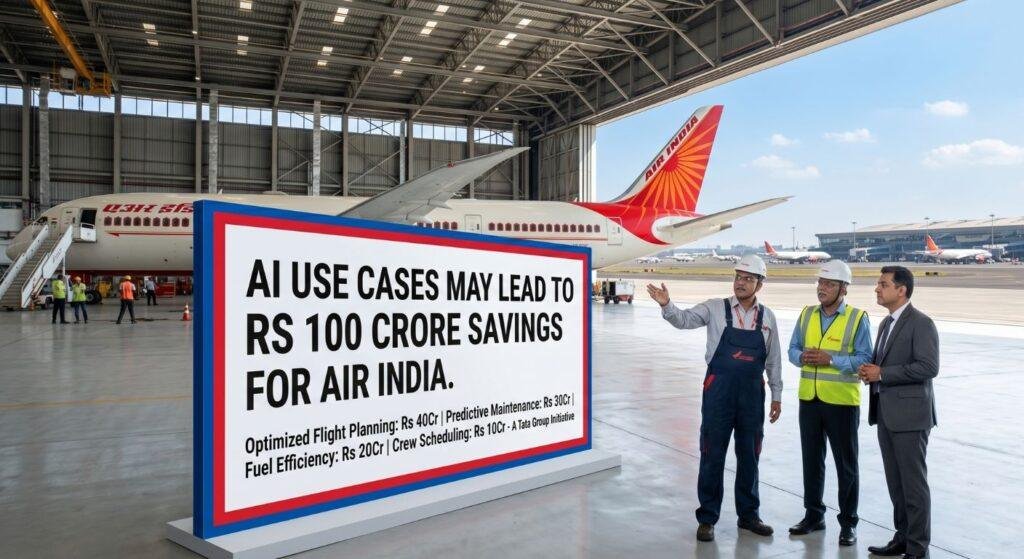
In a bold move to merge aviation with artificial intelligence, Air India is strategically deploying AI across its operations. Industry experts suggest that these AI use cases may lead to Rs 100 crore savings for Air India annually, once fully implemented. This marks a significant shift for the Tata-owned carrier as it modernizes after its privatization.
Where Will the Savings Come From?
The projected Rs 100 crore savings will not come from a single source but from multiple AI-driven efficiencies across the airline’s value chain:
1. Predictive Maintenance
AI algorithms can analyze real-time engine and component data to predict failures before they occur. This reduces unscheduled downtime, lowers spare part inventory costs, and minimizes flight delays – directly saving crores in maintenance and disruption expenses.
2. Fuel Efficiency Optimization
Fuel is an airline’s single largest cost. AI-powered flight planning systems can suggest optimal altitudes, speeds, and routes based on weather and air traffic. Even a 1-2% reduction in fuel burn can translate to massive annual savings.
3. Dynamic Pricing & Revenue Management
Machine learning models help Air India forecast demand with greater accuracy, allowing real-time fare adjustments. This maximizes load factors and revenue while reducing empty seats.
4. Crew & Ground Staff Optimization
AI schedules crew more efficiently, reducing overtime costs and ensuring compliance with duty time regulations. Similarly, ground handling resources are deployed where needed most, cutting idle time.
5. Personalized Customer Service
AI chatbots and virtual assistants handle routine passenger queries – from baggage status to flight changes – reducing call center costs while improving response times.
Beyond Cost Cutting – Enhancing Passenger Experience
While Rs 100 crore savings is impressive, Air India is also leveraging AI to enhance the flyer experience. From personalized meal recommendations to predictive baggage tracking, the airline aims to use data to delight passengers – not just save money.
Challenges on the Runway
Implementing AI across a legacy airline comes with hurdles: integrating with older IT systems, training staff, and ensuring data privacy. However, with Tata’s technology-first approach, Air India appears committed to overcoming these challenges.
What This Means for Aviation Professionals
The rise of AI in airlines creates new career paths – data analysts, AI specialists, and digital transformation experts are now in demand. For aspiring aviators and industry veterans alike, staying updated on such trends is crucial. Platforms like aviators360.com regularly cover these shifts, offering career guidance and industry insights tailored to the Indian aviation sector.
The Bottom Line
If successful, these AI use cases may lead to Rs 100 crore savings for Air India, proving that artificial intelligence is not just a buzzword but a tangible business tool. For an airline competing with IndiGo, Akasa, and global carriers, every crore saved strengthens its position. The message is clear – the future of Indian aviation is not just faster; it’s smarter.
For more expert analysis on aviation technology, careers, and news, bookmark aviators360.com today.