
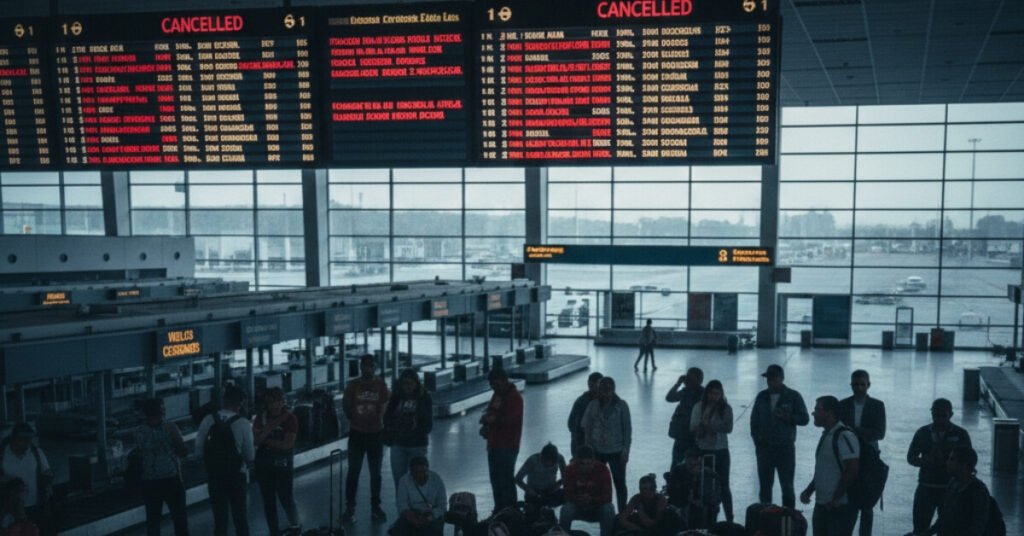
Venezuela is once again at the center of global attention — this time due to a major aviation crisis that has disrupted international travel and raised diplomatic tensions. Several leading airlines abruptly suspended their operations in and out of Venezuela after receiving strong advisories about increased U.S. military activity in nearby airspace. The Venezuelan government responded immediately and forcefully, banning these airlines from returning unless they complied with new aviation requirements.
The result? A sudden, unprecedented shutdown of air connectivity that has left passengers stranded, airlines scrambling, and political leaders trading accusations. Here’s a detailed look at what happened, why it happened, and what the future might look like for Venezuela’s aviation landscape.
What Triggered the Crisis?
The situation escalated when the United States issued a warning to pilots and airlines about unusual military operations close to Venezuelan airspace. This advisory urged airlines to take precautions and avoid potential risk zones.
Multiple major carriers — including several well-known international airlines — reacted immediately and halted flights to and from Venezuela. Their reasons were straightforward: safety concerns, unclear airspace conditions, and rising geopolitical tensions in the region.
Passenger flights were delayed or canceled, and the ripple effect was felt across airports in South America, the Caribbean, and even Europe.
Venezuela’s Strong Reaction
For the Venezuelan government, the mass withdrawal of airlines was not just a safety response — it was seen as a politically influenced move. Officials believed the airlines were reacting more to U.S. political pressure than to any real danger.
Why Venezuela Responded So Strongly
From Venezuela’s point of view, the sudden and simultaneous suspension of flights by multiple international airlines appeared more than just a safety precaution — it looked coordinated and politically motivated. Officials felt that the U.S. advisory overstated the risks and that airlines were reacting to American pressure rather than any real, immediate danger in Venezuelan airspace.
Because of this, the government interpreted the flight cancellations as an attempt to isolate the country on the global stage. To demonstrate authority and assert control over its airspace, Venezuela responded by revoking the operating rights of airlines that refused to resume services.
The government believed that allowing airlines to cancel flights without consequences would set a dangerous precedent and weaken national sovereignty.
However, this strong response may bring unintended long-term consequences, including reduced global connectivity, loss of tourism revenue, and increased diplomatic tension — outcomes that could affect both the economy and Venezuela’s international relationships.
Impact on Passengers and Airlines
The fallout was immediate:
Passengers
Thousands were left stranded at airports across Latin America.
Ticket rebooking became nearly impossible.
Some were forced to take long detours through neighboring countries.
Airlines
Had to reorganize routes.
Faced pressure from both governments and customers.
Risked losing long-term access to Venezuelan markets.
Venezuela
Saw a sudden drop in international arrivals.
Faced criticism for escalating the situation rather than seeking diplomatic solutions.
Had to manage a sudden logistical void at its airports.
Is Venezuela’s Airspace Actually Unsafe?
This is where perspectives differ.
While the U.S. cited potential risks from nearby military activity, Venezuela insists its skies are safe and stable. Independent aviation bodies haven’t confirmed any direct threat, making the issue more political than technical.
Experts argue that uncertainty — rather than confirmed danger — drove the airlines’ decisions.
What Happens Next? Future Outlook
The situation is still developing, but several scenarios are emerging:
1. Diplomatic Negotiations
International pressure could push Venezuela to soften its ban and invite airlines back under new agreements. Back-channel discussions are reportedly already underway.
2. Regional Airlines May Step In
Smaller Latin American carriers might fill the gap left by major airlines, at least temporarily. This could give them an opportunity to expand operations.
3. Long-term Isolation Risks
If unresolved, Venezuela could face:
Reduced tourism
Declining foreign investment
Higher travel costs
Increased dependency on a few allied countries for air travel
4. Revised Safety Procedures
Airlines may wait for:
Updated airspace safety assessments
Clearer flight-path guidelines
Formal guarantees from the government
5. Possible Policy Reversals
If economic pressure grows, Venezuela may be forced to restore flight permissions sooner than expected.
Conclusion
Venezuela’s sudden aviation fallout is a vivid example of how politics, diplomacy, and safety concerns collide in today’s globalized world. While the government aims to defend its sovereignty, the ban risks isolating the nation further and hurting its citizens most of all.
The coming weeks will be critical. Whether through negotiation, pressure, or stabilization, the path Venezuela chooses will determine how quickly its skies open again — and whether trust between airlines and the government can be rebuilt.
Pingback: Venezuela Airspace Closed After US Strikes | Latest Update