
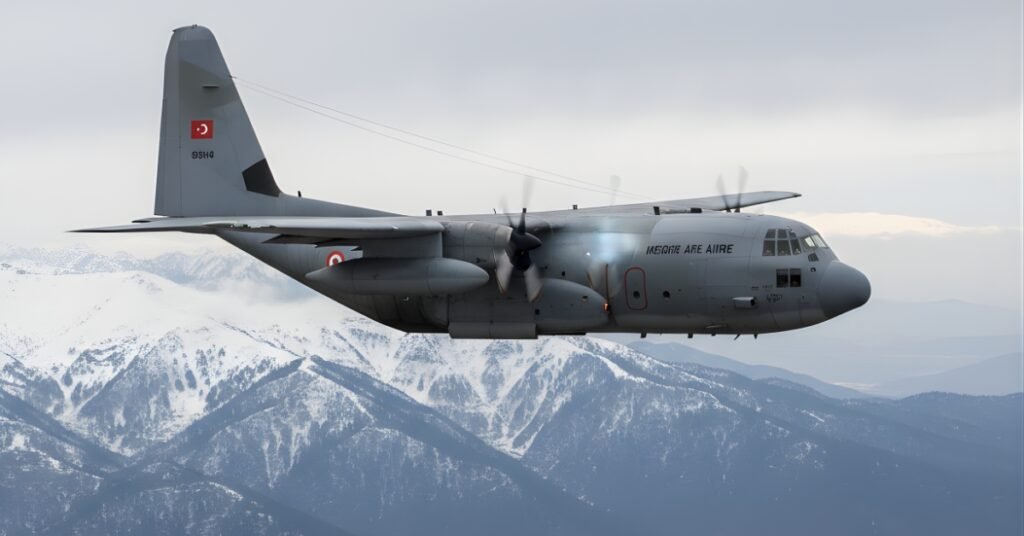
The recent headline reporting a Turkish C-130’s crash near the Georgia-Azerbaijan border delivers a devastating truth in its barest form. However, this concise statement merely marks the starting point of a story that extends deep into the realms of human tragedy, geopolitical significance, and the relentless pursuit of answers in the face of loss.
Early reports confirm the tragic outcome: the military transport aircraft crashed in a rugged, mountainous area of northeastern Türkiye, claiming the lives of all 20 service members on board. As the nation mourns, the incident draws attention not only to the inherent risks of military aviation but also to the strategic importance of the region where it occurred.
The Strategic Corridor: More Than Just a Border
The specified location—near the border tripoint of Georgia, Azerbaijan, and Türkiye—is far from a random dot on a map. This is the Nakhchivan corridor, a critical geopolitical and logistics artery.
- A Vital Link: This region is essential for connectivity between Türkiye and Turkic nations in the Caucasus and Central Asia.
- Military Significance: The area hosts significant military infrastructure and is a key route for transport and supply, especially in light of recent regional dynamics following the conflict in Nagorno-Karabakh.
- Challenging Terrain: The flight path traverses the rugged, high-altitude terrain of the Lesser Caucasus mountains, known for creating complex and sometimes treacherous flying conditions with rapidly shifting weather.
Understanding this context is crucial. A routine flight in this corridor is operationally normal but environmentally demanding, a factor that will be central to the official investigation.
The Aircraft: The C-130 Hercules, a Reliable Workhorse
The aircraft involved, a C-130 Hercules, is one of the most trusted military transport planes in the world. Its presence in this incident is particularly jarring to aviation experts. Known for its rugged durability and ability to operate from rough airstrips, the Hercules is the backbone of tactical airlift for dozens of nations.
The fact that such a proven platform was involved immediately rules out simplistic explanations and points investigators toward a complex interplay of potential factors. The C-130’s strong safety record makes its loss a significant event within global military aviation circles.
The Investigation: A Multi-Faceted Inquiry Begins
Turkish authorities have now launched a full-scale air crash investigation. The process will be meticulous and evidence-based, focusing on several key areas:
- Flight Data Analysis: The immediate priority is recovering the Flight Data Recorder and Cockpit Voice Recorder. These “black boxes” will provide an immutable record of the aircraft’s systems, performance, and crew communications in the final moments.
- Environmental Factors: The weather and terrain in the Kars province will be scrutinized. Investigators will analyze historical weather data, including wind shear, visibility, and cloud cover, to determine if environmental conditions played a role.
- Technical Airworthiness: A deep dive into the aircraft’s maintenance history and service logs will be conducted to rule out or identify any potential mechanical failure.
- Operational Context: The nature of the mission and the weight of the cargo will be examined as part of the comprehensive review.
It is vital to emphasize that official conclusions will take time. Speculation on the cause at this early stage would be irresponsible and contrary to the principles of trustworthy reporting.
Honoring the Fallen
Beyond the geopolitics and technical analysis, the core of this story is the tragic loss of 20 Turkish soldiers. Their service and sacrifice in the line of duty have been honored with national mourning. This crash is a somber reminder of the risks that military personnel accept, even during non-combat operations.
As the investigation continues, the world’s attention remains on Türkiye, offering condolences and awaiting answers. The findings will not only provide closure for the grieving families but will also contribute to the ongoing efforts to enhance the safety of military aviation worldwide.