
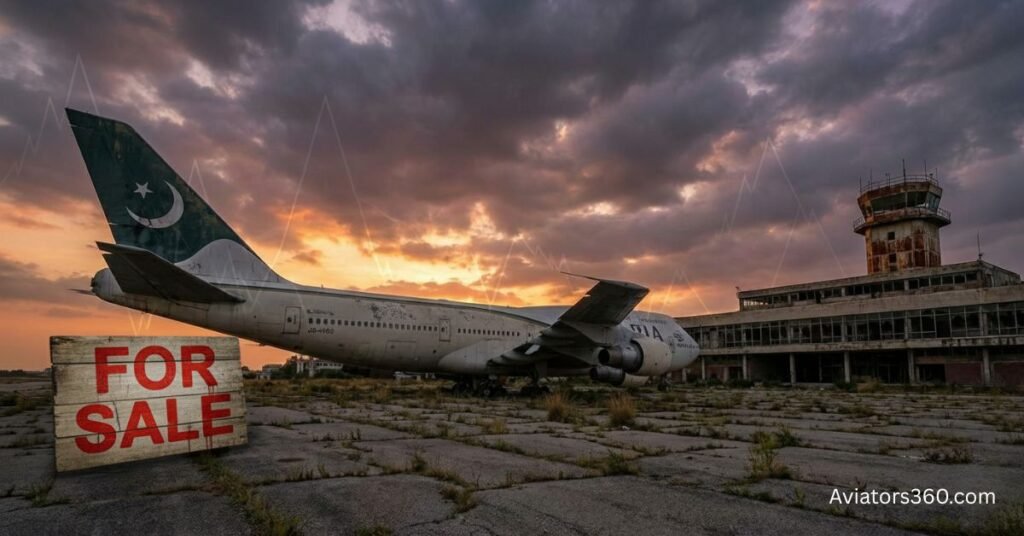
PIA Broke, Pakistan Selling 100% Of Airline
Pakistan’s national airline, Pakistan International Airlines (PIA), is in deep financial trouble. The government has decided to sell its entire 100% share. This means PIA will no longer be a government-owned company. This news has surprised many people across the country. Let’s understand in simple words what happened, why it happened, and what will happen next.
What Exactly Happened to PIA?
For many years, PIA was a symbol of pride for Pakistan. It started in 1955 and was once very successful. But for the last 20 years, it has been losing money.
The situation became very bad recently. The airline has piled up losses of over Rs. 743 billion. That’s a huge amount of money. It reached a point where PIA could not pay its bills, its fuel costs, or even the rent for its airplanes. Some planes were taken back by the companies that leased them because PIA couldn’t pay.
There was another big problem. In 2020, after a plane crash, it came out that many PIA pilots had fake or suspicious licenses. Because of this, European countries banned PIA from flying to Europe. This was a major blow because flights to Europe and the UK were some of PIA’s most profitable routes. This ban is still partly in place and cut off a lot of the airline’s income.
Reasons Behind PIA’s Failure
PIA’s failure is not because of one mistake. It is a result of many problems over a long time.
Too Many Employees, Political Pressure
Over the years, governments gave jobs in PIA to their supporters. This led to the airline having too many staff. PIA has about 14,000 employees for only around 30 planes. This is a very bad ratio. Top management jobs were often given to people close to politicians, not to the best experts.
Old Planes and High Costs
PIA’s planes are old and different models. Maintaining them is expensive and complicated. Old planes use more fuel and break down often, causing delays. So, costs were very high, but the money coming in was low.
Massive Debts
To cover its losses, PIA kept borrowing money from banks. Now, the interest on these loans itself is so high that it eats up any money the airline makes. It became a trap of taking new loans to pay old ones.
The European Flight Ban
The ban from Europe was the final big shock. It didn’t just stop income from those routes; it also damaged PIA’s reputation for safety worldwide. Fixing this reputation is very difficult and costly.
The Government’s Plan: Selling PIA
With no other option left, and because the International Monetary Fund (IMF) is also pushing Pakistan to fix its loss-making companies, the government decided to sell PIA completely.
Process Governing the Sale
The government doesn’t plan to sell PIA with all its debt. That would be impossible. First, they will split the company into two parts:
- The “Bad” Part: This will hold all the huge debt and some old assets.
- The “Clean” Part: This will have the actual airline business – the PIA brand, its landing rights in other countries, and its operational assets.
They will then try to sell this “clean” PIA to an investor. The government wants to sell it to a big investor or a group, maybe a foreign airline or a company that knows how to run airlines. They want someone who can bring both money and smart management.
Big Problems in Selling PIA
Selling PIA won’t be easy:
- Debt: No investor wants old debt. How cleanly the government separates the debt will be key.
- Flight Ban: The new owner’s first job will be to get the European ban fully lifted.
- Employee Protests: PIA workers’ unions are very strong and fear job cuts. They will protest. Handling them will be tough.
- Finding a Buyer: Who will want to buy an airline with so many problems? The government will have to offer a very good deal.
What Comes Next for PIA? The Road Ahead
A New Future for PIA
If a good buyer is found, it could be a fresh start for PIA. A private owner could:
- Reduce unnecessary staff and run the airline more efficiently.
- Bring new, better planes.
- Use modern business ideas to attract more passengers.
- Work hard to get the flight bans removed and rebuild trust.
For Pakistan, it means the government will stop spending taxpayer money every year to keep a loss-making airline alive. That money can be used for hospitals, schools, or roads.
The End of a Government-Run Airline
This sale marks the end of an idea that the government should run an airline. In today’s world, airlines need to be run like sharp businesses to survive, not like government departments.
Final Words
The sale of 100% of PIA is a big and emotional moment. It shows what happens when a company is run poorly for decades due to politics and mismanagement. While people have fond memories of PIA, the money problems are too big to ignore.
The next few months are very important. The sale process needs to be fair and clear. For employees and passengers, everyone hopes this difficult time leads to a better, stronger, and safer PIA in the future. The government is hoping for a safe landing so that a new owner can help the airline take off again.
Disclaimer:
This blog is intended for general informational purposes only. The information presented is based on publicly available reports, media sources, and official statements available at the time of writing. While every effort has been made to ensure accuracy, the author does not guarantee the completeness or reliability of the information. Developments related to Pakistan International Airlines (PIA), including government decisions, privatization processes, and financial figures, may change over time. Readers are advised to verify details from official government or regulatory sources before forming conclusions or making decisions based on this content.