
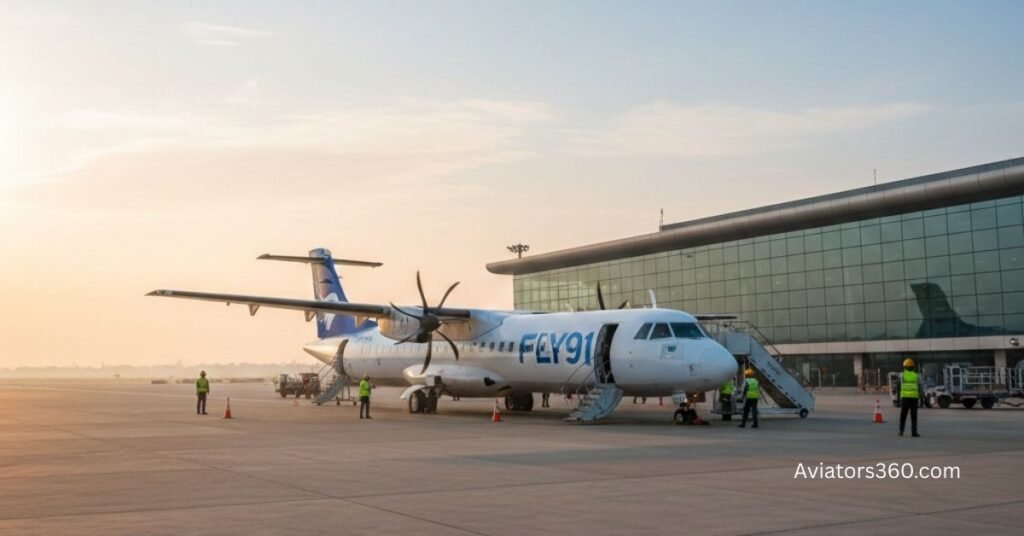
India’s aviation sector is set for a fresh wave of growth and competition as new players prepare to enter the market. Just days after the government gave initial approval for three new domestic airlines, one of them, FLY91, has announced plans to significantly expand its proposed network. This development signals a potential boost in connectivity, especially for smaller cities, and offers travelers more choices in the near future.
Understanding the Recent Government Nod
Earlier this month, the Directorate General of Civil Aviation (DGCA), the national regulator for civil aviation, granted a “No Objection Certificate” (NOC) to three airline companies: FLY91, the revived Jet Airways, and Air India Express. This step is often described as the first major green light in a multi-stage process to launch an airline in India.
An NOC is not an operating license. Instead, it is a crucial initial approval that allows the company to proceed with more detailed planning. It signifies that the government has reviewed the airline’s initial proposal and found it satisfactory to move forward. The companies must now focus on securing funding, leasing or purchasing aircraft, hiring and training staff, and finalizing their business plans before they can apply for a full-fledged operating permit.
FLY91: A Focus on Regional Connectivity
Among the three, FLY91 has been the most vocal about its immediate next steps. The airline is positioning itself as a regional carrier, with a focus on connecting tier-2 and tier-3 cities—smaller urban centers that often have fewer direct flight options.
The airline’s name itself, FLY91, is a nod to India’s country code (+91). Its stated mission is to enhance air travel access to parts of the country that are not as well-served by the current major airlines. Following the DGCA’s NOC, FLY91 management stated they are now “spreading their wings wider,” working to add more destinations to their initial route map. While the exact cities have not been officially announced, reports suggest a focus on connecting regions like the Northeast, coastal towns, and central Indian states to major hubs.
Why This Expansion Matters for Passengers
For the average traveler, the entry of new airlines like FLY91 can have several positive effects. The most direct impact is increased choice. When more airlines operate on a route, it often leads to competitive pricing, as carriers vie for passengers. This could mean more affordable airfares on certain routes over time.
Secondly, improved regional connectivity can be a game-changer. It can reduce travel time dramatically for those living in smaller cities, who currently might rely on long train journeys or connecting flights through big metros. Better air links can stimulate local economies by making business travel easier, encouraging tourism, and improving access for professionals and students.
FLY91’s strategy aligns closely with the government’s long-running UDAN (Ude Desh Ka Aam Nagrik) scheme. This scheme, whose name translates to “Let the Common Citizen Fly,” aims to make air travel more affordable and widespread by subsidizing certain regional routes. New airlines often participate in this scheme to secure attractive routes and initial passenger traffic.
The Bigger Picture in Indian Aviation
The approval of three new carriers comes at a pivotal moment for Indian aviation. The industry is experiencing a strong rebound in passenger numbers after the difficult years of the pandemic. Existing major airlines like IndiGo and Air India have placed record orders for hundreds of new aircraft, anticipating massive growth in demand over the next decade.
The arrival of new players is seen as a sign of confidence in this sustained growth story. It suggests that investors and entrepreneurs believe there is still room in the market for more airlines, particularly those with a specialized focus. However, the Indian aviation market is also known for its fierce competition and thin profit margins. Several airlines have ceased operations in the past decade due to financial pressures, high fuel costs, and intense price wars.
This history makes the journey ahead for FLY91 and its peers both promising and challenging. Their success will depend not just on securing aircraft and routes, but on managing costs efficiently, building a reliable brand, and offering a service that resonates with passengers.
The Road Ahead: Next Steps and Challenges
For FLY91, the immediate path involves turning plans into reality. The key next steps are:
- Securing Aircraft: As a regional airline, FLY91 is likely to look at smaller, fuel-efficient aircraft like the ATR 72 or similar turboprops, which are well-suited for shorter regional routes.
- Finalizing Routes: The airline will work with authorities to secure specific airport slots and finalize its launch network, potentially bidding for UDAN-subsidized routes.
- Building Infrastructure: This includes setting up operational bases, maintenance facilities, and a training center for pilots and cabin crew.
- Obtaining the Air Operator’s Certificate (AOC): This is the final and most critical license from the DGCA. It involves a rigorous series of safety inspections, operational audits, and demonstration flights to prove the airline is fully ready and compliant with all regulations to carry passengers safely.
The process from NOC to AOC can take anywhere from 12 to 18 months or more. Only after receiving the AOC can FLY91 officially start selling tickets and operating flights.
Conclusion: A Cautious Optimism
The announcement of FLY91’s expansion plans so soon after receiving government approval is an encouraging sign of momentum. It reflects a proactive approach to tapping into the demand for better regional air travel. For potential passengers, it brings the hope of more direct flights, new destinations on the map, and a healthier competitive environment.
However, seasoned observers of the industry advise cautious optimism. The true test will come when these new airlines actually take to the skies and navigate the complex realities of daily operations, customer service, and financial sustainability.
For now, the message is clear: India’s aviation story is writing a new chapter. With FLY91 preparing to spread its wings wider, and other new carriers in the pipeline, the coming years could see the country’s aviation network become more extensive and inclusive than ever before. The journey from government nod to first flight is a long one, but the process has now officially begun.
Also Read : The Remarkable Rise of Shravan Kumar Vishwakarma: From Tempo Driver to Shankh Air Founder
Also Read : India’s Aviation Sector Gets New Wings: Al Hind Air and FlyExpress Receive Initial Approval
Disclaimer:
This blog is based on publicly available information, official statements, and media reports at the time of writing. Details related to airline expansion plans, regulatory approvals, and timelines are subject to change. The content is intended solely for informational purposes and should not be interpreted as official confirmation or commercial advice.