
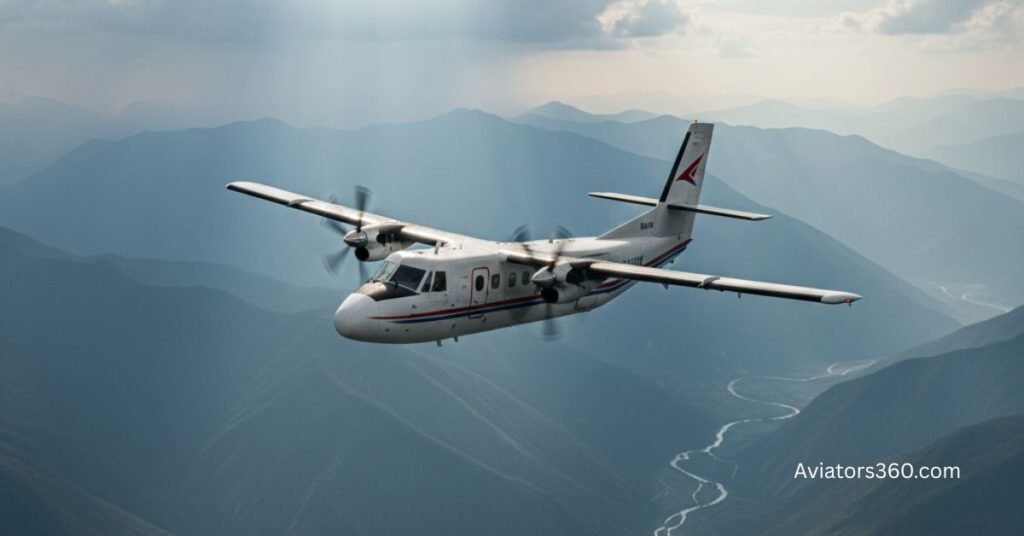
Imagine you’re on a small plane, landing in the mountains. Suddenly, the plane skids, bumps hard, and slides off the runway into a field. Your heart is pounding. This is exactly what happened recently in Nepal. A Tara Air plane, carrying 55 passengers and crew, landed at Jomsom Airport and veered off the runway. The good news? Everyone survived. But it was a very, very close call.
Let’s break down what happened, why it’s so tricky to land there, and what it means for flight safety.
The Incident Explained
The plane was a Twin Otter—a small, strong plane built for short, rough runways. It was flying from Pokhara to Jomsom, a town high in the Himalayas.
Jomsom’s “airport” isn’t like the big airports you see in cities. The runway is short, made of gravel and dirt, and sits in a valley with a river on one side and huge mountains on the other. It’s famous for being tough to land on.
As the plane landed, it didn’t stop in time. The front wheel (nose gear) broke, and the plane slid off the end of the runway, kicking up a huge cloud of dust. Thanks to quick rescue teams and a sturdy plane, all 55 people on board walked away. They were shaken, but safe.
Difficult Landing Conditions at Nepal’s Airports
This wasn’t just “bad luck.” Flying in Nepal is known to be challenging, even for expert pilots. Here’s why:
- The Mountains Are Everywhere: Nepal has some of the highest mountains in the world. Airports like Jomsom are squeezed into narrow valleys. This means there’s often strong, swirling wind that can push a plane around right when the pilot needs steady control.
- The Air is Thin: The higher you go, the thinner the air gets. Thin air means plane engines don’t work as powerfully, and wings don’t get as much lift. So, planes have to land faster to stay in the air, which makes stopping harder on a short runway.
- The Runways are Short and Rough: Unlike the long, paved runways in major cities, many Nepali runways are short and made of gravel or dirt. These surfaces can be slippery, especially if it’s wet. There’s less room for error and less grip to stop the plane.
- One Shot to Get it Right: At many of these mountain airports, a pilot often gets only one chance to land. If they come in too high or too fast and have to pull up and try again (called a “go-around”), the mountains and thin air might not let them. This adds huge pressure.
A pilot with experience flying in Nepal once said, “In the mountains, you don’t have minutes to decide. You have seconds. A small mistake can use up all your runway.”
A History of Tough Flights
Sadly, Nepal has seen several air accidents over the years because of these difficult conditions. This has led to strict safety reviews and bans from some international lists. But it’s also pushing the country to improve. Better pilot training, better safety rules, and better planes are being used to make these essential flights safer.
This recent accident, where everyone survived, actually shows some progress—in how the plane stayed in one piece, how the crew likely handled it, and how fast help arrived.
Key Takeaways for Air Passengers
You might think, “I’ll never fly to a tiny mountain airport!”
- Pilot Training is Everything: This shows why pilots train for hours in simulators for emergencies. Their skill in those first few seconds saves lives.
- Planes are Built Tough: Modern planes are designed to protect the passenger cabin even in a hard landing. This plane’s strong build is a big reason why everyone walked away.
- Safety is a Chain: Safe flying is a chain made of many links: good maintenance, careful air traffic control, accurate weather info, and trained crew. If one link breaks, accidents can happen. In the mountains, every link is tested more.
The Bottom Line: A Warning and a Miracle
The Jomsom incident is a sharp reminder of the risks pilots take to connect remote parts of the world. It shows the incredible power of nature and the limits of machines.
But more than anything, it’s a story of survival. It’s about a well-built plane, a likely calm crew, and fast rescuers doing everything right after things went wrong.
For the people in Nepal’s mountains, these flights are a lifeline—carrying food, medicine, and families. They will continue. And each close call teaches a lesson that makes future flights a little bit safer.
So next time you see a small plane in a remote place, remember the skill it takes to fly it and the constant work behind the scenes to keep everyone safe. This event in Nepal was a close shave, but it also shows how resilience—of people, machines, and systems—can make all the difference.
Also Read: The Kindu Airport Incident: A Dangerous Failure in Ground Safety Protocol
Disclaimer:
This article is based on publicly available reports and preliminary information. Details may change as official investigations progress. The content is intended for informational purposes only and should not be interpreted as an official aviation accident report or safety assessment.