
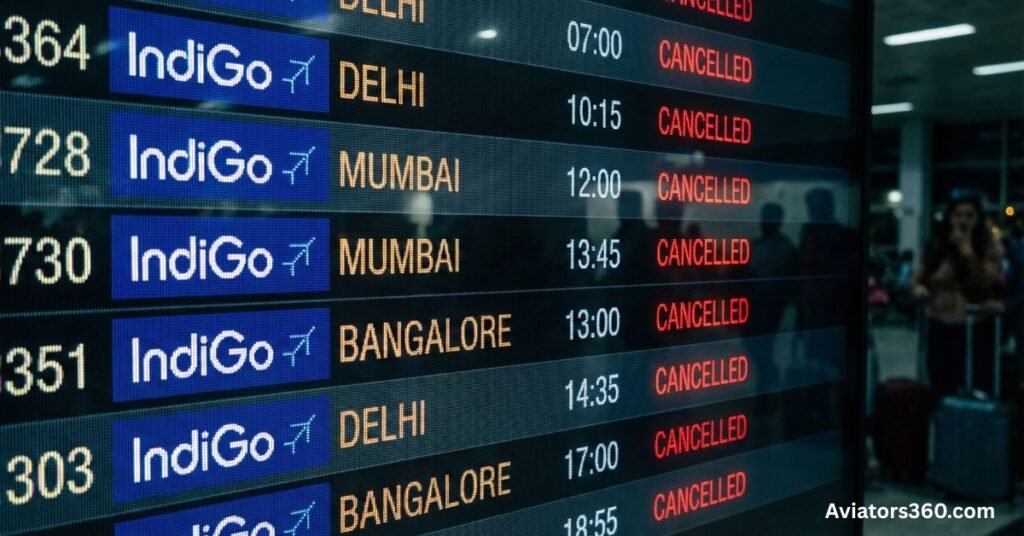
December India’s largest airline, IndiGo, faced one of its most severe operational meltdowns in early 2025. Over 100 flights were cancelled within a single day, with hundreds more delayed, leaving thousands of passengers stranded across major airports. The situation became so widespread that the aviation regulator DGCA launched a formal investigation and demanded a detailed mitigation plan from the airline.
This blog breaks down what triggered the crisis, why IndiGo is struggling, and what the future of India’s air travel might look like after this major disruption.
What Happened: Cancellations Across the Country
Passengers travelling on IndiGo flights on December 2–3 found themselves caught in chaos. Airports in Delhi, Mumbai, Bengaluru, Hyderabad, Chennai, and Kolkata saw:
- Long queues at check-in and boarding counters
- Constant announcements of delays
- Passengers sleeping in terminals
- Last-minute cancellations without clarity
IndiGo’s on-time performance had already been slipping for weeks, but the early-December cancellations pushed the situation into crisis mode. Over the past month, cancellations had already crossed the thousand-mark — a red flag that something deeper was brewing.
With holiday travel increasing and winter conditions setting in, the timing of the disruption made the impact even worse.
Why It Happened: The Real Reasons Behind IndiGo’s Crisis
The meltdown wasn’t caused by one single problem — it was the result of multiple operational stress points stacking up simultaneously.
- Crew Shortage Triggered by New FDTL Rules
One of the biggest reasons behind the cancellations was the airline’s difficulty in complying with the newly enforced Flight Duty Time Limitations (FDTL) — the rules governing how many hours pilots and cabin crew are allowed to work and mandatory rest periods.
IndiGo reportedly reduced hiring and operated with a lean crew strategy while preparing for the new rules. As the regulations kicked in:
- Pilots reached duty-time limits faster
- Cabin crew scheduling became tight
- A shortage of reserve crew led to cascading cancellations
With no backup crew available, even small delays caused an entire chain of cancellations.
- Technical Glitches and Operational Pressure
IndiGo also acknowledged that technical issues and unexpected aircraft maintenance contributed to long delays and cancellations. With more than 2,200 flights a day and high aircraft utilisation, even minor technical snags can disrupt multiple flights.
- Airport Congestion and Winter Weather Stress
Winter is a challenging season for Indian aviation because of:
- Fog in northern cities
- Congested runways
- Slower ground operations
- Increased holiday travel demand
This year, the pressure was even higher, straining IndiGo’s already stretched schedule.
- A Tight Network With No Buffer
IndiGo’s business model relies on:
- Maximum aircraft utilisation
- Minimum turnaround time
- Very tight schedules
This helps keep fares low, but during stress — like crew shortages and winter delays — the network becomes fragile. A delay in one airport can ripple through the entire system.
DGCA Steps In: Investigation and Corrective Actions
As flight cancellations mounted, the DGCA demanded:
- A detailed explanation of the disruptions
- A mitigation plan
- A revised crew roster
- A plan to prevent similar breakdowns
- Stronger internal monitoring
The regulator also emphasised passenger support, advising the airline to offer timely updates, rebooking options, and quick refunds.
This intervention signals that the situation had escalated beyond a routine operational challenge — it became a national aviation concern.
Impact on Passengers and the Aviation Ecosystem
For Passengers
Thousands of travellers faced:
- Missed connections
- Business trips ruined
- Holiday travel disrupted
- Costly last-minute rebookings
- Overnight airport stays
Trust in airline reliability has been affected, especially among frequent flyers and business travellers.
For IndiGo
The disruptions have hurt the airline’s:
- Brand reputation — IndiGo built its name on punctuality
- Financial performance — cancellations mean losses
- Operational credibility — especially with regulators
For Indian Aviation
The crisis exposed vulnerabilities in India’s growing aviation ecosystem — particularly the dependence on tight scheduling and limited crew reserves across airlines.
What Happens Next: Near-Term and Long-Term Outlook
To stabilise operations and regain passenger confidence, several changes are expected.
Near-Term (Next Few Weeks)
- IndiGo may adjust flight schedules to create buffer capacity
- Some flights will be pre-cancelled to avoid sudden disruptions
- Crew rosters will be rebuilt
- Delays will gradually reduce, but minor issues may continue through winter
This is essentially a recovery and stabilisation phase.
Medium-Term (Next 3–6 Months)
We may see IndiGo:
- Launch aggressive hiring for pilots and cabin crew
- Increase crew standby strength
- Redesign schedules to reduce tight turnarounds
- Improve technical maintenance planning
- Strengthen communication systems for real-time passenger updates
This period will be crucial for rebuilding trust.
Long-Term (6–18 Months)
This crisis could reshape IndiGo’s long-term strategy:
- A stronger, more resilient crew-management system
- More realistic scheduling
- Better risk-management for weather disruptions
- Higher investments in training and operations
- Possible regulatory reforms in crew planning requirements
Other airlines may also learn from IndiGo’s experience and update their own operations.
Final Thoughts: A Wake-Up Call for the Industry
IndiGo’s mass cancellations show how fragile airline operations can be when faced with:
- Crew shortages
- Tight schedules
- Weather challenges
- Technical delays
- New regulatory norms
But they also provide an opportunity for improvement.
If IndiGo successfully restructures its crew planning, scheduling strategy, and operational resilience, it could turn this crisis into a blueprint for a stronger, more reliable future.
Passengers will be watching closely — and so will the rest of India’s aviation sector.