For more than a decade, IndiGo has been closely associated with affordable fares, on-time performance, and a strong presence in India’s domestic and short-haul international markets. The airline built its success on a simple and disciplined strategy: operate a single aircraft family, keep costs low, and focus on high-frequency routes with strong demand.
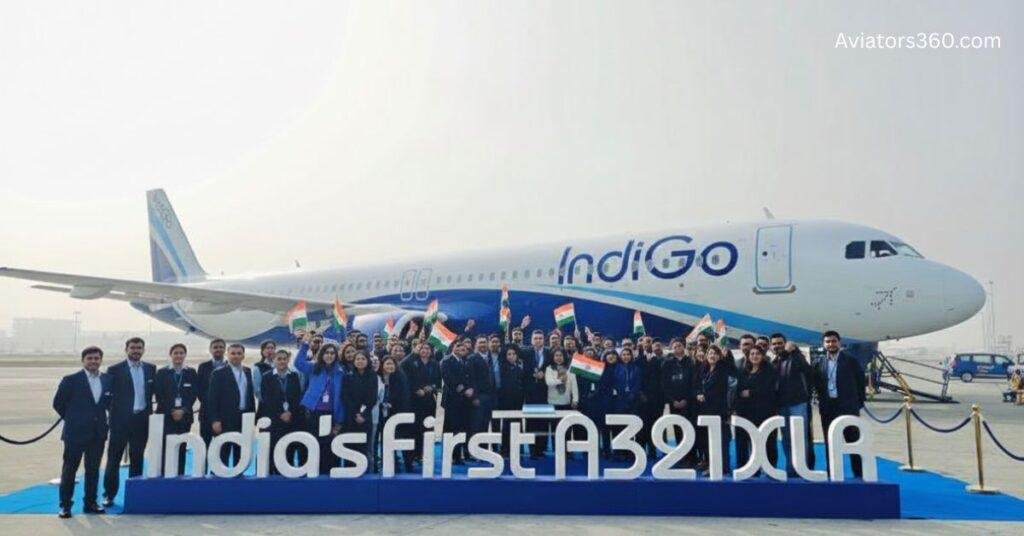
Today, IndiGo is entering a new phase of its journey. With the induction of the Airbus A321XLR and the launch of direct international services from Mumbai and Delhi to Athens, the airline is signaling a clear strategic shift. This move marks IndiGo’s transition from being primarily a regional operator to becoming a serious player in the medium- and long-haul international market.
This is not merely an expansion of routes. It represents a structural change in how IndiGo sees its future.
The Importance of International Expansion for IndiGo
India is one of the fastest-growing aviation markets in the world. Rising incomes, a growing middle class, and improved airport infrastructure have led to steady growth in air travel. However, domestic aviation has natural limits. Competition is intense, fares are tightly controlled by market forces, and margins remain thin.
International markets offer a different opportunity. Outbound travel from India has increased sharply in recent years, driven by leisure tourism, business travel, and VFR (Visiting Friends and Relatives) traffic. Many Indian passengers also prefer direct flights over one-stop connections through foreign hubs, especially on routes that are six to ten hours long.
Historically, these medium- and long-haul routes were served mainly by widebody aircraft operated by full-service airlines. Such aircraft require higher passenger volumes and come with significantly higher operating costs. For a low-cost airline like IndiGo, entering this space was not viable until recently.
That equation has now changed.
The A321XLR: A New Kind of Aircraft
The Airbus A321XLR, where “XLR” stands for Extra Long Range, is designed to bridge the gap between narrowbody and widebody operations. It can fly up to approximately 4,700 nautical miles, or about 8,700 kilometers, allowing airlines to operate flights lasting eight to ten hours using a single-aisle aircraft.
For passengers, this means direct flights on routes that previously required a stopover. For airlines, it means lower costs. The A321XLR consumes less fuel per seat, requires fewer crew members than widebody jets, and has lower maintenance and airport handling expenses.
For IndiGo, the importance of this aircraft cannot be overstated. It allows the airline to enter long-haul markets without abandoning its low-cost model. In simple terms, it enables long-distance flying without long-distance costs.
Mumbai and Delhi to Athens: A Strategic Signal
IndiGo’s decision to launch direct flights from Mumbai and Delhi to Athens is significant on several levels. Greece has emerged as a popular destination for Indian leisure travelers, while also hosting a growing Indian community. Until now, most passengers had to travel via Middle Eastern hubs, adding time and complexity to the journey.
By offering non-stop services, IndiGo is addressing a clear gap in the market. The route also connects India directly with Southern Europe, opening the door to further expansion into nearby regions. More importantly, it demonstrates confidence in the narrowbody long-haul model.
This is a proof-of-concept route. If it succeeds, similar services to other parts of Europe, Central Asia, and Africa become feasible.
A Natural Fit with IndiGo’s Operating Model
IndiGo’s growth has always been built on simplicity. The airline operates aircraft from the Airbus A320 family, allowing it to standardize training, maintenance, and operations. The A321XLR belongs to the same family, which means the transition is smoother than introducing an entirely new aircraft type.
Pilots require limited additional training, engineers can work within familiar systems, and spare parts management remains efficient. Operationally, the aircraft offers high reliability and faster turnaround times compared to larger jets.
Commercially, the A321XLR provides flexibility. It has the right seating capacity for “thin” long-haul routes where demand exists but may not be sufficient to fill a widebody aircraft daily. This allows IndiGo to test new international markets with lower financial risk and adjust capacity as demand grows.
A Shift in Competition in International Air Travel
IndiGo’s long-haul narrowbody strategy is likely to have ripple effects across the aviation sector. Legacy carriers that rely on widebody aircraft may face increased competition on medium-haul international routes. At the same time, Indian travelers could benefit from more direct connections and competitive pricing.
The move also reduces India’s dependence on foreign hubs for international connectivity. As more direct routes open from Indian cities, the country strengthens its position as a point-to-point aviation market rather than just a feeder for global hubs.
From a broader perspective, this aligns with India’s ambition to become a global aviation hub, supported by airport expansion, fleet growth, and rising passenger demand.
Looking Ahead: IndiGo’s International Future
The Athens service is widely seen as only the beginning. As more A321XLR aircraft join IndiGo’s fleet, the airline gains the ability to build a wider international network without fundamentally changing its business model.
Potential future markets include additional destinations in Europe, parts of Africa, Central Asia, and extended Middle Eastern routes. These regions share common characteristics: strong demand, limited direct connectivity, and distances that fall within the A321XLR’s range.
By gradually expanding into these markets, IndiGo can strengthen its international presence while maintaining cost discipline.
In Simple Words
IndiGo’s induction of the Airbus A321XLR represents a defining moment in the airline’s history. The aircraft is not just a new addition to the fleet; it is a strategic tool that enables a new way of thinking about international travel.
By combining long-range capability with narrowbody efficiency, IndiGo is challenging traditional assumptions about how long-haul routes must be operated. The launch of direct services to Athens from Mumbai and Delhi signals the start of this transformation.
From domestic dominance to growing global relevance, IndiGo’s long-haul leap has begun—carefully planned, cost-conscious, and aligned with the realities of modern air travel.
Also Read : VTNLA: India’s First Airbus A321 XLR Heads Towards Delhi
Also Read : India’s Aviation Sector Gets New Wings: Al Hind Air and FlyExpress Receive Initial Approval
Also Read : SpiceJet’s Big Move: More Planes & Flights After Rival IndiGo Faces Trouble
Disclaimer:
This blog is intended for general information and news reporting purposes only. It is based on publicly available information and industry observations at the time of writing. Flight routes, aircraft deployments, schedules, and airline strategies may change without prior notice. The content does not constitute financial, investment, or travel advice. The author and publisher do not have any commercial or official association with IndiGo, Airbus, or any aviation authority.