
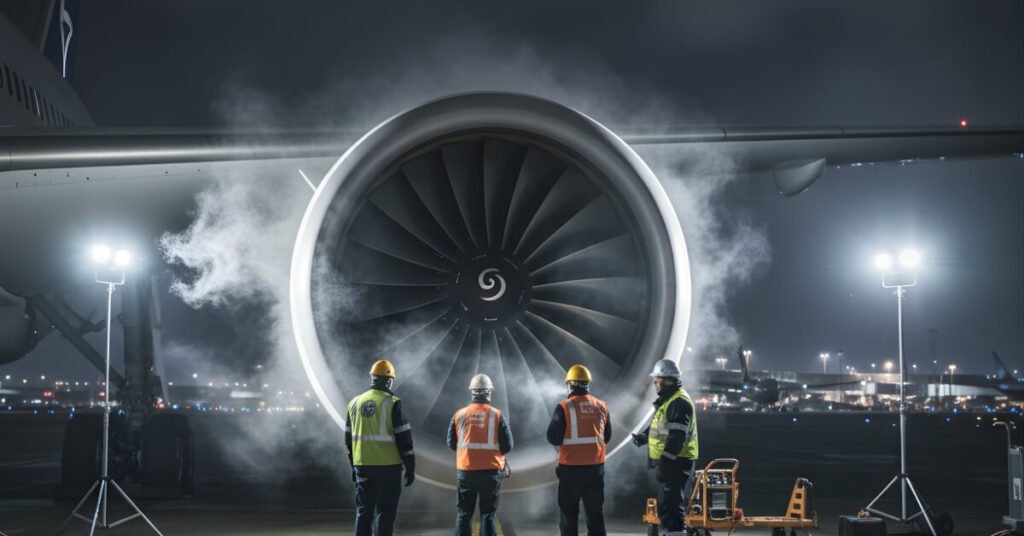
The global aviation community is on high alert after the Federal Aviation Administration (FAA) issued an urgent airworthiness directive mandating inspections and modifications on a specific set of General Electric GEnx-1B PIP2 engines powering the Boeing 787 Dreamliner. The directive, released on Friday, follows a chilling in-flight incident that exposed a potential safety threat affecting hundreds of aircraft worldwide.
Why the FAA Declared It an “Urgent Safety Issue”
On January 29, a Boeing 787 cruising at approximately 20,000 feet encountered severe icing on one of its GE engines. According to GE Aviation spokesperson Rick Kennedy, ice shedding from the fan blades led to heavy blade rub against the fan case, causing dangerous vibrations.
The pilot shut down the affected engine and safely landed the aircraft on the remaining engine—but the situation revealed a critical vulnerability.
The FAA warns that if the problem is not corrected, the fan blade rubbing issue may result in:
- Significant engine damage
- Non-restartable power loss in flight
- Potential failure of both engines simultaneously
The agency stated bluntly:
“The potential for common cause failure of both engines in flight is an urgent safety issue.”
What Is the FAA and Why Its Actions Matter?
The Federal Aviation Administration (FAA) is the United States’ aviation regulator responsible for overseeing civil aviation safety, certifying aircraft, issuing airworthiness directives, regulating aircraft operations, and maintaining national airspace safety.
FAA directives are respected globally because:
- Many countries adopt FAA standards automatically
- Aircraft manufacturers work closely with the FAA
- Airlines worldwide follow FAA-approved safety protocols
So when the FAA issues an emergency directive, it sends a strong signal to regulators, airlines, and manufacturers across the world.
How Many Aircraft Are Affected?
According to the FAA:
- 176 Boeing 787 Dreamliners across 29 airlines worldwide are affected
- 43 of these aircraft are operated by U.S. carriers
- Other nations are expected to order similar checks, following FAA guidelines
The impacted engines belong to the GEnx-1B PIP2 family—one of the two main engine options for the Dreamliner.
What Makes the Boeing 787 So Critical?
The Boeing 787 Dreamliner is widely considered one of the most advanced passenger aircraft ever built, thanks to its:
- Carbon-fiber composite fuselage
- Superior fuel efficiency
- Long-range capabilities
- Lower emissions
- Advanced aerodynamics
The 787 has opened dozens of new long-haul routes globally, making any disruption significant for airlines.
How Will Airlines Fix the Issue?
GE and Boeing have already collaborated on a corrective action plan. GE recommended the engine modification back on April 1, and the FAA has now made the work legally mandatory.
The fix includes:
- Use of a fan grinding machine
- On-wing rework with no need to remove the engine
- Approximately 16 hours per engine for full completion
More than 40 Dreamliner engines have already undergone the rework, and airlines have 150 days to complete all required fixes.
Although the FAA acknowledges that some aircraft may be grounded, GE says it is coordinating with airlines to minimize operational disruptions.
Interim Procedures for Pilots
Until the required modifications are completed, pilots must follow an in-flight ice removal procedure.
When the system indicates ice buildup above 12,500 feet, pilots are required to:
- Increase each engine to 85% throttle every five minutes
This prevents dangerous ice accumulation but is only a temporary safety measure.
Why This Directive Matters for Global Aviation
Airworthiness directives are not uncommon, but this one stands out because:
- It highlights a common-cause risk affecting both engines
- It involves aircraft used heavily for long-haul, transoceanic flights
- The issue emerged during normal cruising conditions
Safety regulators worldwide will likely move quickly to adopt similar directives, ensuring consistency across international operations.
Future Plans: How Boeing, GE, and the FAA Aim to Prevent Such Incidents
This incident is already shaping future strategies for safety and engine performance. Key developments expected include:
- Enhanced Engine Icing Models
GE is likely to upgrade real-time icing prediction models and engine simulation systems, ensuring that icing scenarios are better understood and mitigated.
- Updated Software and Monitoring Systems
Future versions of the GEnx engine may receive improved onboard monitoring software capable of:
- Predicting ice accumulation more accurately
- Alerting pilots sooner
- Automatically adjusting engine settings
- Long-Term Design Improvements
Although the current fix is mechanical, GE may opt for:
- Redesigned fan blade materials
- Modified clearances between the fan blade and fan case
- Optimized blade aerodynamics to resist ice buildup
- Stronger Cross-Regulator Collaboration
The FAA’s decisive action signals an era of faster, more coordinated global responses to aviation safety risks.
Future directives may be issued jointly with EASA, Transport Canada, and other major regulators.
- More Proactive Airworthiness Monitoring
With AI and advanced telemetry, regulators and manufacturers are moving toward predictive safety models, identifying risks before incidents occur.
This event will likely accelerate those programs.
Conclusion: A Critical Move for Passenger and Fleet Safety
The FAA’s urgent directive underscores the aviation industry’s commitment to addressing even the slightest risk that could escalate into a catastrophic event. The quick action by GE, Boeing, and regulators worldwide demonstrates a coordinated approach to maintaining the extraordinary safety record of modern aviation.
While the issue is serious, the proactive steps—mandatory engine modifications, pilot procedures, and ongoing investigations—ensure that the Boeing 787 Dreamliner remains one of the safest, most advanced aircraft flying today.
The coming months will be crucial as airlines complete the required reworks and manufacturers continue developing future-ready safety enhancements. Aviation experts agree: this is not just a fix, but a forward-looking step toward even safer air travel in the years ahead.