
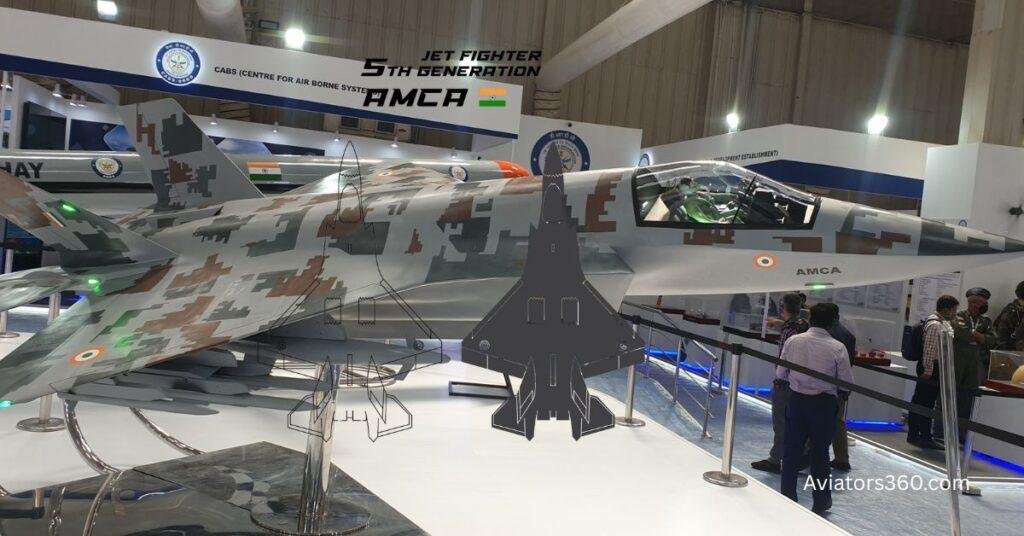
In a development that could quietly reshape India’s defence manufacturing landscape, recent media reports suggest that three private industrial groups have been shortlisted to build prototypes for the Advanced Multirole Combat Aircraft (AMCA) — India’s most ambitious indigenous fighter aircraft programme to date. The companies named are Tata Advanced Systems, Larsen & Toubro, and Bharat Forge.
If formally confirmed, this would mark a decisive shift in how India plans to design and build its next generation of combat aircraft. For decades, such programmes were almost exclusively led by state-owned enterprises. Now, for the first time, the government appears willing to place prototype-level responsibility for a fifth-generation fighter with private industry.
The AMCA in context
The AMCA is envisioned as a stealth-capable, multirole fighter designed to meet the Indian Air Force’s (IAF) needs in the 2030s and beyond. It is intended to reduce India’s dependence on foreign fighter aircraft while building domestic expertise in advanced aviation technologies such as low-observable design, sensor fusion, advanced avionics, and high-performance propulsion.
The programme is being overseen by the Aeronautical Development Agency (ADA) under the Ministry of Defence (MoD), with the IAF as the end user. While official timelines remain cautious, the AMCA is widely seen as a cornerstone of India’s long-term air power strategy.
According to Recent Media Reports
According to multiple media outlets, Tata Advanced Systems, Larsen & Toubro, and Bharat Forge have cleared the technical evaluation stage and will now move to the commercial proposal phase. A final decision, reports suggest, could be taken within the coming months.
At the same time, state-owned Hindustan Aeronautics Limited (HAL) has publicly stated that it has received no formal communication about being excluded from the programme. This has created some ambiguity, but the overall signal from reporting is clear: the government is seriously considering private companies as lead integrators for AMCA prototype development.
Until official documents are released, these reports remain indicative rather than final.
Why this represents a structural shift
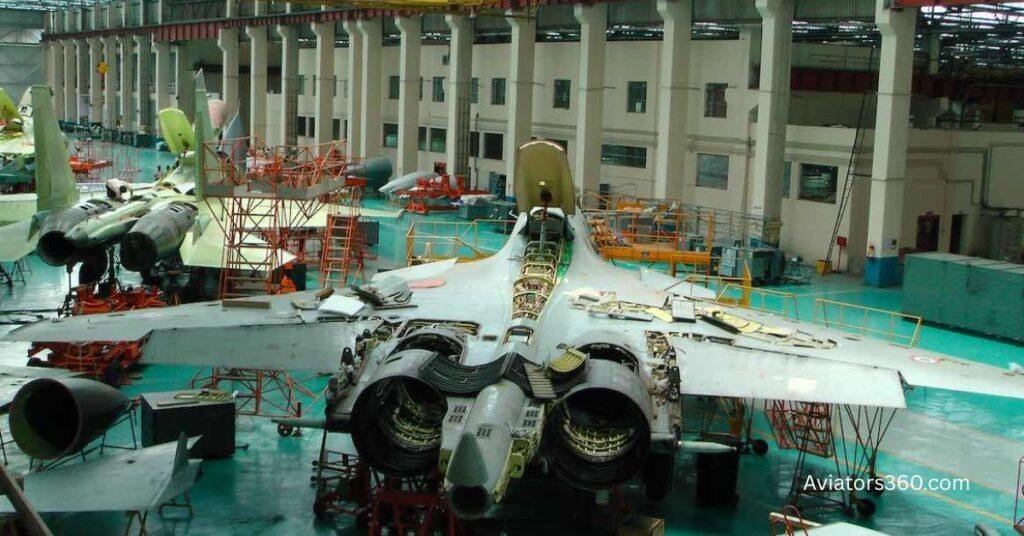
Historically, HAL has served as the system integrator for India’s major combat aircraft programmes, including licensed production of foreign fighters and indigenous projects like the Light Combat Aircraft (Tejas). Placing prototype development in private hands would be a clear departure from that model.
The rationale appears to be threefold:
- Faster innovation through competition – Private firms compete on cost, timelines, and execution.
- Broader industrial participation – Multiple Tier-1 and Tier-2 suppliers can be anchored around private integrators.
- Investment-led growth – Private companies are more likely to invest their own capital in advanced manufacturing and digital design tools.
However, this approach also introduces new challenges for the MoD, particularly around governance, accountability, and integration of complex systems.
The technical mountain ahead

Developing a fifth-generation fighter is among the most demanding tasks in aerospace engineering. The AMCA’s publicly stated requirements include stealth shaping, advanced avionics, sensor fusion, an AESA radar, and network-centric warfare capability.
One major uncertainty remains the engine. Public reporting has not confirmed a final propulsion strategy, whether fully domestic, co-developed, or sourced from a foreign partner. Without clarity on the engine, performance targets and timelines remain aspirational rather than fixed.
For the shortlisted companies, the challenge is not just technical competence but programme discipline. Contracts will need clearly defined milestones, strict quality controls, and balanced risk-sharing mechanisms to prevent delays and cost overruns.
Economic and export implications
If successful, a private-led AMCA programme could have effects well beyond military capability. It could:
- Create high-value jobs in precision manufacturing and systems engineering
- Establish India as a credible exporter of advanced aerospace platforms or sub-systems
- Build globally competitive supply chains anchored in India
For Tata Advanced Systems, Larsen & Toubro, and Bharat Forge, this would represent a leap from supplying components and structures to taking responsibility for full-system integration — a significant step in industrial maturity.
Strategic winners and risks
Private industry
For the shortlisted companies, winning an AMCA role would accelerate vertical integration and elevate their standing in global defence markets. It also brings long-term responsibility for sustainment, upgrades, and potential liabilities — areas where experience will matter as much as engineering skill.
HAL
For HAL, the reported shortlisting of private players signals a possible pivot in procurement strategy rather than an outright sidelining. HAL could still play a role as a license manufacturer, technology partner, or major subcontractor, depending on how final contracts are structured. Its public statement reflects institutional sensitivity around such a transition.
The IAF and MoD
For the IAF and MoD, private-led development could increase management complexity but may also deliver modern capability faster if oversight is strong. Balancing speed, cost, sovereignty, and intellectual property control will be critical.
What to watch next
Several concrete signals will indicate the programme’s direction:
- Official MoD or ADA announcements and release of contractual terms
- Clarity on engine selection and international partnerships
- Details of financial bids and any state-backed support mechanisms
- HAL’s formal role, if any, in production or sustainment
Closing analysis
Media reports that Tata Advanced Systems, Larsen & Toubro, and Bharat Forge have been shortlisted for AMCA prototype development suggest that India is testing a new model for building advanced military platforms. The government appears willing to bet that private industry can deliver next-generation capability at scale.
Whether that bet succeeds will depend less on headlines and more on contract design, technology partnerships, and disciplined programme management. Until official awards are announced, these developments should be viewed as strong indicators — not final decisions — in what may become one of the most consequential defence industrial shifts in India’s history.
Disclaimer :
This blog is based on publicly available information and media reports at the time of writing. No official confirmation or contract award has been announced by the Ministry of Defence or associated government agencies. References to shortlisting, timelines, or company roles reflect reported developments and should not be treated as final decisions. Readers are advised that details may evolve as official statements and documents are released.