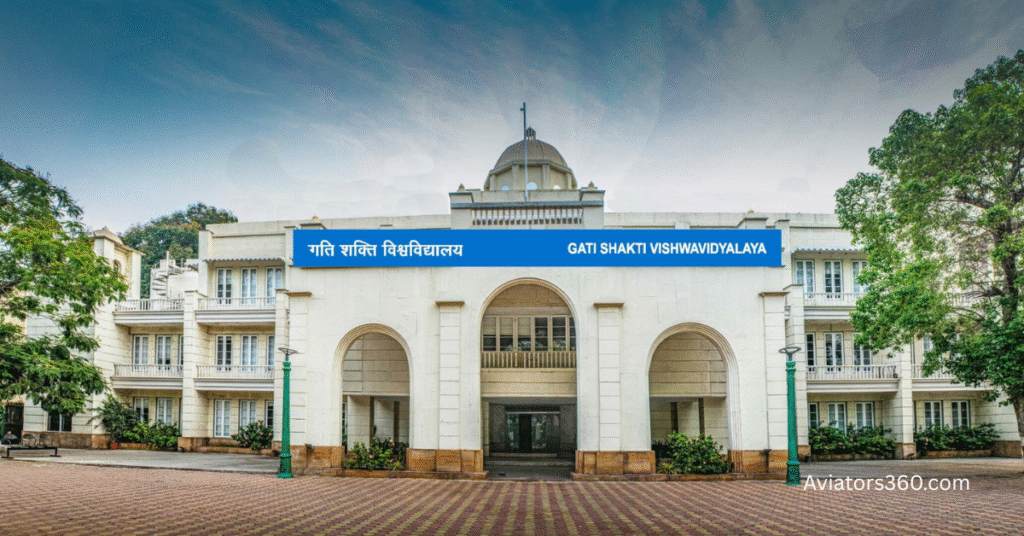
On 4 February 2026, Airbus formally inaugurated a Centre of Excellence (CoE) for aerospace studies at Gati Shakti Vishwavidyalaya (GSV) in Vadodara. The initiative marks an important step in India’s evolving role within the global aviation and aerospace ecosystem, bringing together industry expertise, academic research, and long-term talent development under one structured platform.
The newly launched Centre of Excellence is designed to focus on Sustainable Aviation Fuel (SAF), especially pathways that convert municipal solid waste (MSW) into aviation fuel. Alongside this, the Centre will support student-led innovation, applied research, scholarships, industry-grade training programmes, and the appointment of an Airbus Chair Professor. Together, these elements signal deeper and more strategic engagement by Airbus in India—not only as a manufacturing and sourcing destination, but also as a hub for research, sustainability, and skilled aerospace manpower.
Background: How the partnership took shape
The Airbus–GSV collaboration did not begin overnight. The partnership was first announced in 2024, when Airbus and the university outlined plans to jointly work on aerospace research and education. Over the past two years, groundwork was laid in the form of academic planning, identification of research themes, and alignment of industry requirements with university capabilities.
The formal inauguration in February 2026 marks the point at which the Centre moves from concept to operation. With dedicated programmes, funding commitments, and leadership involvement from both sides, the Centre of Excellence now becomes an active platform for research and training rather than a symbolic academic tie-up.
Official Announcement: Key Points
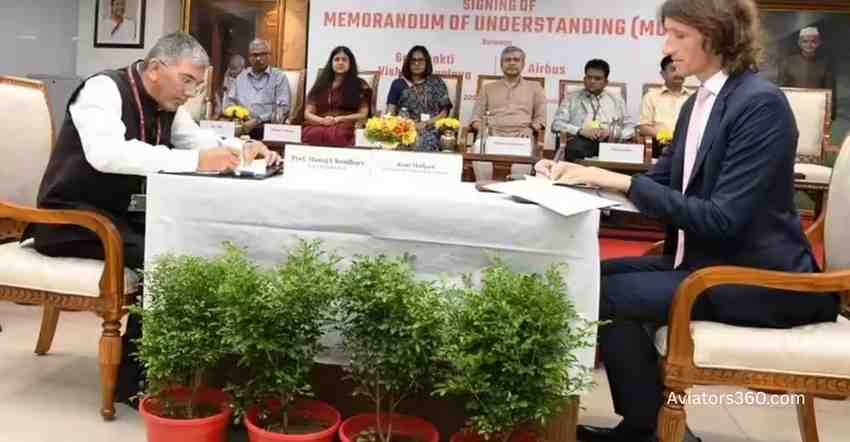
At its core, the announcement covered the operational launch of the Airbus–GSV Centre of Excellence for aerospace research, innovation, and skill development.
- What: Inauguration of a joint Centre of Excellence focused on aerospace studies, SAF research, and workforce development
- Where: Gati Shakti Vishwavidyalaya campus, Vadodara, Gujarat—India’s central university dedicated to transport and logistics education
- When: Official inauguration on 4 February 2026; partnership originally announced in 2024
- Who: Airbus India & South Asia leadership, led by Jürgen Westermeier, along with GSV leadership including Vice-Chancellor Manoj Choudhary, faculty members, and invited academic and industry guests
The presence of senior Airbus leadership at the inauguration underlined the importance the company attaches to the initiative.
The Importance of the Centre of Excellence
1. Advancing Sustainable Aviation Fuel research at scale
One of the most significant aspects of the Centre is its focus on Sustainable Aviation Fuel derived from municipal solid waste. Aviation remains one of the hardest sectors to decarbonise, and SAF is widely seen as a practical near- to medium-term solution for reducing emissions without redesigning aircraft or engines.
India’s large and growing cities generate substantial volumes of municipal solid waste. Converting a portion of this waste into SAF could address two challenges at once: waste management and aviation emissions. Developing domestic SAF capacity also reduces dependence on imported fossil jet fuel, improving long-term energy security.
2. Strengthening the industry–academia pipeline
For Airbus, the Centre provides direct access to Indian research talent and a controlled environment to test early-stage ideas and pilot projects. For India, it brings industrial investment, curriculum input from a global aircraft manufacturer, and exposure to real-world aerospace challenges.
Such collaboration helps ensure that academic research does not remain confined to laboratories but is shaped by practical requirements such as certification, safety, cost, and scalability.
3. Skill and capacity building for future aviation needs
The Centre’s design places strong emphasis on talent development. Scholarships, the Airbus Chair Professor, and structured training programmes aim to prepare students for careers in research and development, maintenance and repair operations (MRO), manufacturing, and emerging SAF supply chains.
As aviation technology evolves, especially with the gradual adoption of SAF, the industry will require engineers and technicians with updated skills. The Centre is positioned to help fill this gap.
4. Supply-chain and strategic value for India
In recent years, Airbus has repeatedly highlighted India as a key partner for sourcing components and engineering services. While the company has not publicly linked the Centre to specific sourcing targets, the initiative aligns with broader signals of increased R&D and industrial engagement in the country.
From a strategic perspective, such collaborations strengthen India’s position in global aerospace supply chains and reduce over-reliance on a limited number of international hubs.
Role and Responsibilities of the Centre of Excellence
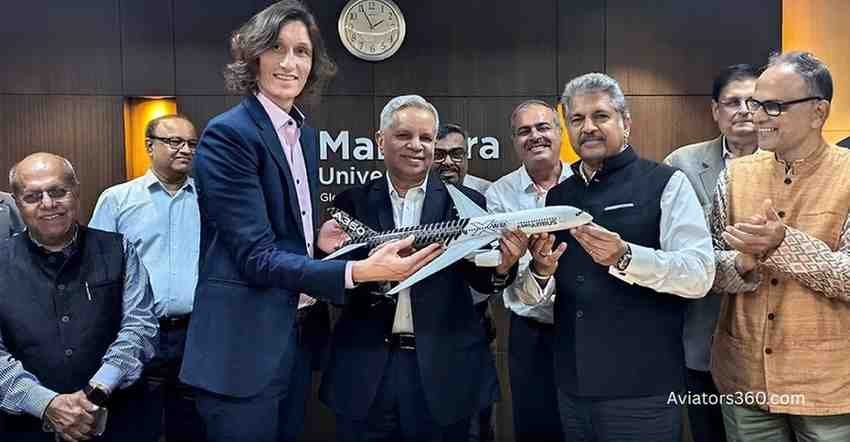
The Airbus–GSV Centre of Excellence is structured around clearly defined programmes rather than broad academic goals.
Research projects
The Centre will operate through Joint Study Agreements (JSAs) between Airbus and GSV. These projects are expected to focus on SAF development, including feedstock analysis, conversion technologies, lifecycle emissions assessment, and cost modelling. The aim is to produce research that can support future pilot projects and certification pathways.
Academic leadership
An Airbus Chair Professor will be appointed to guide curriculum development, supervise student research, and act as a bridge between university faculty and Airbus engineers. This role is intended to ensure that teaching and research remain aligned with industry needs.
Scholarships and inclusion
Airbus has committed scholarships for 45 students, with at least one-third reserved for women. This reflects an effort to improve diversity and inclusion within science, technology, engineering, and mathematics (STEM) fields, particularly in aerospace disciplines.
Hands-on training and internships
Beyond classroom learning, the Centre plans to offer executive education modules, postgraduate research opportunities, and internships. These programmes are designed to prepare students for roles in Indian and global MROs, original equipment manufacturers (OEMs), and SAF-related businesses.
Understanding SAF from municipal solid waste: a simple explanation
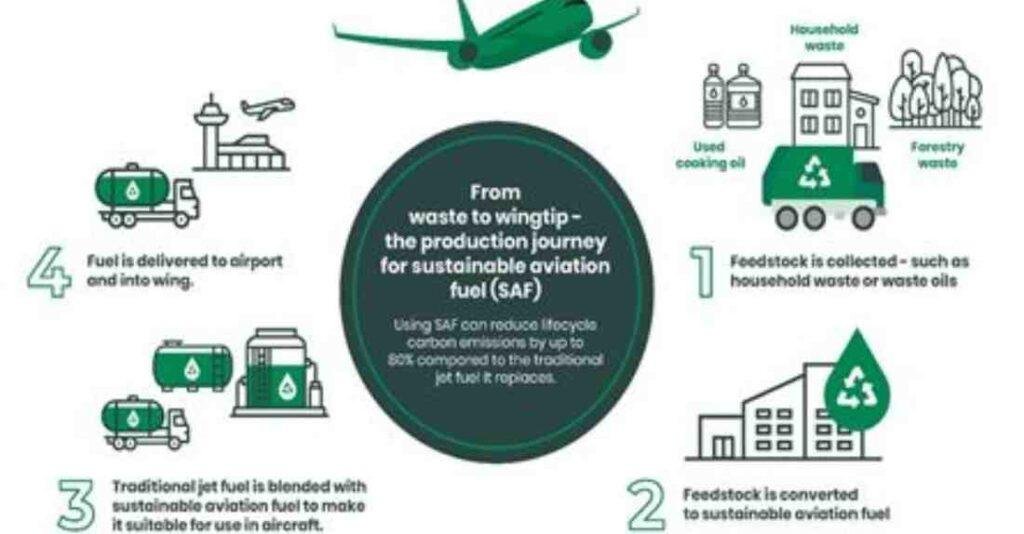
For readers without a technical background, the idea of turning waste into jet fuel can seem abstract. In simple terms, the process involves several stages:
- Sorting and preparation: Municipal waste is collected and sorted to remove unsuitable materials and isolate usable components.
- Conversion: The prepared waste is processed using heat-based methods to produce intermediate fuels or gases.
- Refining: These intermediates are refined into clean hydrocarbons that meet aviation fuel standards.
- Testing and certification: The fuel undergoes strict quality, safety, and emissions checks before it can be approved for use in aircraft.
Research at the Centre is expected to focus on improving efficiency, ensuring consistent fuel quality, and adapting processes to Indian waste streams and infrastructure.
Implications for aviation professionals and students
For aircraft maintenance engineers (AMEs)
As SAF use increases, maintenance practices may evolve. Fuel system compatibility, inspection routines, and long-term effects on engines will require updated knowledge. Training modules and applied research from the Centre could support upskilling and professional development.
For MRO organisations
The adoption of SAF affects fuel storage, handling, and contamination control. MROs may need revised procedures and updated certification. Early engagement with research outputs from the Centre could help organisations prepare for these changes ahead of wider industry adoption.
For students and job seekers
Scholarships, internships, and industry-linked research projects create new entry points into the aerospace sector. For young engineers and technicians, the Centre offers exposure to real-world challenges and potential pathways into OEMs, MROs, and SAF-related roles.
Risks, challenges, and open questions
Despite its promise, the initiative faces several practical challenges:
- Feedstock consistency: Municipal solid waste varies widely in composition, making consistent fuel production difficult.
- Economic viability: SAF derived from waste must compete with conventional jet fuel, often requiring policy support or incentives in the early stages.
- Certification and regulation: Any new SAF pathway must meet stringent regulatory requirements, including approval from the Directorate General of Civil Aviation, and alignment with guidance from the European Union Aviation Safety Agency and Federal Aviation Administration where applicable.
Timeframe: Moving from research to commercial-scale fuel production typically takes several years, meaning progress will likely be gradual rather than immediate.
Timeline and milestones to watch
- 2024: Airbus–GSV partnership announced; initial planning and agreements put in place
- 4 February 2026: Official inauguration and operational launch of the Centre of Excellence
- Next 12–24 months: Expected announcements on funded research projects, pilot demonstrations, scholarship application cycles, and internship opportunities
A strategic step toward India’s sustainable aviation future
The inauguration of the Airbus Centre of Excellence at Gati Shakti Vishwavidyalaya represents more than a new academic partnership. It reflects a broader shift in how India is positioning itself within the global aerospace landscape—moving toward innovation-driven growth, sustainability, and skilled workforce development.
By focusing on Sustainable Aviation Fuel derived from municipal solid waste, the Centre addresses environmental responsibility and energy security at the same time. Its emphasis on scholarships, applied research, and industry-aligned training ensures that the next generation of Indian engineers, technicians, and researchers are prepared for the future demands of aviation.
For professionals, MRO organisations, policymakers, and students, the initiative opens new pathways for learning, collaboration, and long-term growth. As research progresses from laboratories to real-world applications, the Centre of Excellence has the potential to become a national reference point for green aviation solutions and aerospace innovation. In the years ahead, its success will be measured not only by academic output, but by its ability to translate ideas into scalable, practical solutions that strengthen India’s aviation sector while contributing to global sustainability goals.
Disclaimer:
This blog is based on publicly available information, official announcements, and statements made at the time of publication. The content is intended solely for informational and educational purposes. While every effort has been made to ensure accuracy, details related to research outcomes, timelines, regulatory approvals, and project implementation may change as the initiative progresses. The publication does not provide investment, technical, or regulatory advice, and readers are advised to verify information independently where required.