
The United States is preparing for a major rebuild of its air traffic control system, but the project is now expected to cost significantly more than originally planned.
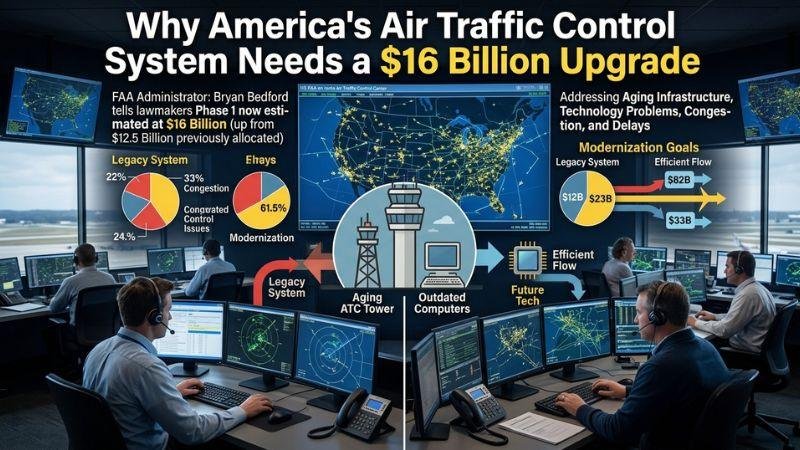
Federal Aviation Administration (FAA) Administrator Bryan Bedford told lawmakers on September 15 that the first phase of the air traffic control modernization program could cost about $16 billion. That is higher than the $12.5 billion Congress previously provided for the modernization effort.
The additional funding requirement highlights the scale of the challenge facing America’s National Airspace System.
Why Does the US Need a New Air Traffic Control System?
The FAA says much of America’s air traffic control infrastructure relies on aging technology.
Some systems still use old telecommunications infrastructure, while radar, communications equipment, software and other systems also need modernization.
According to the FAA, the current system was built around technology that is increasingly difficult to maintain and expand. The agency says modernization is needed to improve reliability, cybersecurity and the ability to handle future traffic growth.
The FAA expects commercial aviation demand to increase by more than 40% by 2046, while drones, commercial space operations and new types of aircraft will also add complexity to the airspace.
What Will the $16 Billion Program Upgrade?
The modernization program covers several important parts of the US air traffic control network.
One major area is telecommunications. The FAA is replacing older copper-based infrastructure with modern systems, including fiber, wireless and other technologies.
The agency is also upgrading radar and communication systems. The FAA says it is working to replace hundreds of aging radar systems and has already made progress in converting radio sites and installing modern equipment.
Another major part of the project is software.
The FAA is developing systems designed to bring together information about aircraft, weather, airline schedules and airspace capacity. One of these systems, called SMART, is intended to help identify congestion and manage flight routes and schedules more efficiently.
Why Has the Cost Increased?
The higher cost reflects the size and complexity of the modernization program.
A recent Government Accountability Office (GAO) report raised concerns about cost estimates and project management. Reuters reported that telecommunications modernization alone had increased from an earlier estimate of $4.75 billion to $5.91 billion.
The FAA says it is using additional resources from its existing Facilities and Equipment budget to help cover the current funding gap.
Bedford also asked lawmakers for additional funding for later stages of the modernization program.
What Does This Mean for Airline Passengers?
The modernization is ultimately aimed at making the US air traffic system more reliable and capable of handling growing demand.
New communications systems, better surveillance equipment and modern traffic-management software could help controllers manage aircraft more efficiently.
The FAA says the upgrades are intended to reduce delays and cancellations caused by equipment problems while improving the resilience of the National Airspace System.
However, the project will take several years to complete. The FAA has set an ambitious target of completing the new system by the end of 2028.
The Bigger Picture
America’s air traffic control modernization is one of the country’s largest aviation infrastructure projects. The $16 billion estimate for the first phase shows how expensive it can be to replace decades-old aviation technology while keeping the existing system running.
For airlines and passengers, the key question will be whether the investment can deliver a more reliable air traffic network as US aviation demand continues to grow.
With billions more potentially required, funding, project management and delivery timelines will remain closely watched as the FAA moves ahead with the modernization program.