
By Aviators360.com News Desk | June 22, 2026
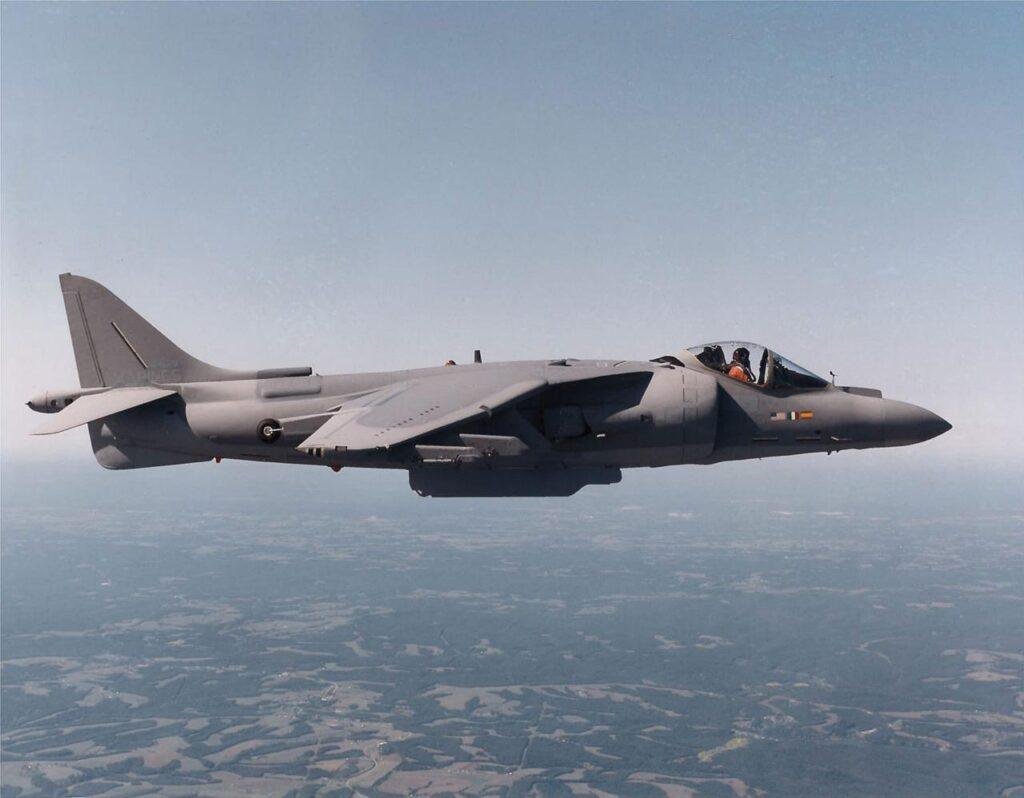
CHERRY POINT, North Carolina – On June 3, 2026, an era of military aviation came to a poignant close as the last AV-8B Harrier jet departed the U.S. Marine Corps Air Station at Cherry Point, North Carolina, for the final time. The iconic vertical takeoff and landing (V/STOL) aircraft, which had served the Marine Corps since the 1970s, officially flew into history, ending a remarkable five-decade legacy.
A Revolutionary Design Born from Cold War Concerns
The Harrier’s story began in 1957 when Hawker Siddeley, a British manufacturing group, started work on a vertical takeoff warplane. The design was a direct response to NATO strategists’ post-World War II concerns about the vulnerability of large runways to nuclear or conventional attacks. The first prototype was ordered by the Royal Air Force in 1965, and the aircraft was aptly named “Harrier” after the bird of prey in 1967.
By 1969, McDonnell Douglas (now part of Boeing) partnered with Hawker Siddeley to prepare for U.S. production of the Harrier. In May 1975, McDonnell Douglas proposed the AV-8B as an advanced vectored thrust V/STOL light attack aircraft. The YAV-8B prototype first flew on November 9, 1978, marking the official start of the AV-8B Harrier II program.
Innovation That Transformed Fighter Design
The AV-8B Harrier II introduced several groundbreaking innovations:
| Innovation | Impact |
|---|---|
| Carbon-epoxy composites | Weight reduction and increased strength |
| One-piece aerodynamic wing | Enhanced fuel and weapons capacity |
| Improved engine inlets | More efficient airflow to Pegasus engine |
| Underbody strakes | Better lift and hover control |
These techniques became standard practice across the fighter and attack aircraft industry, influencing generations of aircraft design.
The Harrier II Plus and Global Service
In the 1990s, the United States, Spain, and Italy coordinated efforts to develop the AV-8B Harrier II Plus, which first flew on September 22, 1992. This upgraded version featured a more powerful engine, advanced radar, and improved avionics, enabling aircrews to fly and fight in darkness and adverse weather.
Production of both versions ended in 2003 with the delivery of the last AV-8B to Spain from the St. Louis, Missouri, facility. A total of 340 aircraft were delivered, including:
AV-8B attack jets
TAV-8B two-seat trainers
YAV-8B prototypes
While the U.S. Marine Corps has retired the aircraft, the Harrier continues to serve with the navies of Italy and Spain.
A Personal Farewell from Boeing’s Chief Engineer
For those who worked on the Harrier program, the aircraft held a special place in their hearts. T-45/AV-8B Chief Engineer Michelle Brunick shared her emotional connection:
“I’ve never forgotten the first time I saw the Harrier hover effortlessly over the Mississippi River at a St. Louis air show. I was 8 years old and that moment of amazement was one of the many that fed my desire to pursue engineering. I never imagined my career would one day connect me to this remarkable aircraft.”
Brunick added that countless Boeing employees, retirees, industry partners, and customers shared how their careers began with this iconic aircraft. “The Harrier has clearly earned a special place in the hearts of all who have contributed to its legacy.”
A Legacy That Lives On
The official ceremony marking the end of the AV-8B’s U.S. service was a meaningful sendoff for the Marine Corps and the employees who dedicated decades to the program.
Although the Harrier will no longer serve the United States, its legacy as a symbol of collaborative innovation that spanned five decades remains. The aircraft’s spirit will continue to live on at Boeing’s Fighterland U.S.A. , ensuring that the contributions of all who worked on the Harrier are never forgotten.
Honoring the AV-8B Harrier
First Flight (YAV-8B): November 9, 1978
Total Delivered: 340 aircraft
Operators (Final): Italy, Spain
U.S. Service End: June 3, 2026
Production Years: 1981–2003
Stay tuned to Aviators360.com for more stories on aviation history, defense innovation, and aerospace news.