
The days of easily finding a cheap flight on a popular route might be numbered. As airlines increasingly adopt sophisticated artificial intelligence for pricing, the traditional “pricing gaps” that savvy travelers once exploited are closing . This shift represents a fundamental change in how airlines determine the cost of a seat.
Why is the hunt for cheap flights getting harder?
For decades, airlines relied on analysts using relatively simple, rule-based systems to manage pricing—for example, raising prices by a fixed percentage once a certain number of seats were sold . Today, AI is changing the game. Instead of a few rules, machine learning models can analyze dozens of variables in real-time to set the price for every single seat . This allows airlines to capture more revenue by eliminating the inefficiencies that previously allowed cheap fares to slip through the cracks .
A key technology driving this change is continuous pricing, moving away from fixed fare classes. Sabre, a major travel technology provider, recently launched an AI-native “Continuous Revenue Optimizer” that recommends the best price for each customer in real-time . This engine, built with Riyadh Air, can help airlines unlock up to 3.5% more revenue . The goal is to deliver the right price to the right customer at the right time.
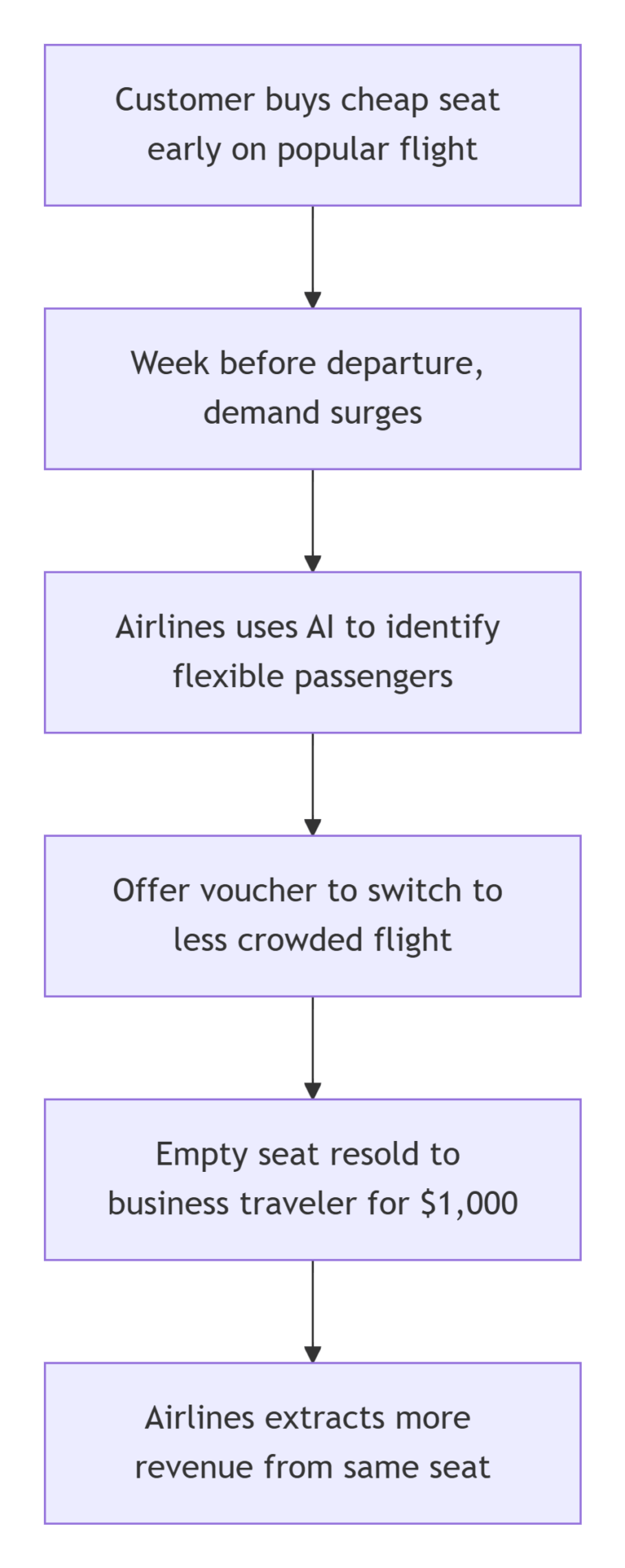
The chart below shows how AI can work to an airline’s advantage, even after a ticket is purchased.
What does this mean for passengers?
This new AI-driven approach is a double-edged sword for travelers.
The Bad News: Higher Fares on Popular Routes: On busy, in-demand routes, you can expect to see higher average fares. As airlines get smarter at predicting demand, fewer seats will be sold below what they believe a customer is willing to pay, maximizing revenue on each flight .
The Good News: Cheaper Flights on Quiet Routes: The AI’s ability to stimulate demand means that on flights where seats are empty, airlines can quickly drop prices to fill them . This is great for flexible travelers willing to fly during off-peak times or to less popular destinations.
A More Efficient Market (with a cost): The overall market becomes more efficient, meaning that by booking smart or early, travelers can still secure below-average fares . However, critics argue that airlines, which operate on thin margins, will use these powerful tools to push average fares and occupancy rates as high as possible .
Beyond the Ticket Price: Evolving Concerns
The growing power of AI also raises new concerns. Consumer advocates and lawmakers have warned about the potential for “surveillance pricing,” where fares are personalized based on a passenger’s personal data, such as browsing history or income . While airlines like Delta and AI pricing firms like Fetcherr claim they do not use personal data for pricing , the technology makes it a theoretical possibility that will be closely watched.