
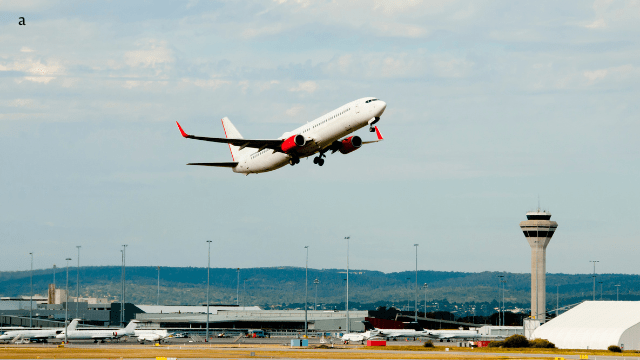
The era of rigid airline alliances is giving way to a more fluid, flexible model of partnerships focused on seamless customer experiences.
The global aviation landscape is undergoing a profound structural evolution. While the traditional global alliances—Star Alliance, oneworld, and SkyTeam—remain important, their role is shifting. In 2026, a definitive pivot toward highly agile, multi-continental bilateral partnerships is reshaping how airlines cooperate and compete. The question is no longer whether alliances are relevant, but how they must evolve to stay relevant.
From Network Reach to Seamless Customer Experience
Historically, airline alliances were built primarily around expanding global network reach. Today, their value is increasingly judged on whether the customer experience works seamlessly across airlines, technology platforms, and loyalty ecosystems.
As oneworld CEO Ole Orvér put it, “Let’s fix the basics… There’s a difference between what we promise and what we offer”. The challenge is delivering consistent, seamless travel—from dynamic boarding passes that update across carriers to baggage tracking that works as if you were flying on a single airline.
Star Alliance’s CEO Theo Panagiotoulias frames this shift in four pillars: “the booking experience, the airport experience, the connection experience at the airport, and the loyalty experience along that pathway”. The alliance’s role is to tackle problems “airlines simply cannot do it on their own”, such as:
Baggage tracking across multiple airlines through shared technology hubs
Cross-carrier seat selection and booking integration
Loyalty point consolidation across member programs
Connection centers that proactively manage misconnections—Star Alliance helped 300,000 customers avoid missed connections in 2024
The Rise of Bilateral “Frenemy” Partnerships
Perhaps the most significant shift is the growing preference for flexible bilateral partnerships that cut across traditional alliance boundaries. Airlines are increasingly prioritizing regional “frenemy” tactics over rigid alliance loyalty to gain market share.
Recent examples illustrate this trend:
Etihad Airways and Condor deepened their cooperation with a comprehensive frequent flyer agreement and new route connections, bypassing conventional regulatory and alliance constraints
Lufthansa Group and Air India signed a landmark joint business partnership, coordinating schedules and pricing between two different alliance ecosystems
Air India and Saudia announced a major codeshare agreement in February 2026—despite Air India being a Star Alliance member and Saudia belonging to SkyTeam
As one industry observer noted, this proves that “bilateral agility beats alliance loyalty”. Airlines are now seeking “hyper-specific, bilateral joint business agreements (JBAs) and strategic codeshares that cross traditional alliance boundaries”.
The “Bilateralization” of Aviation
This shift reflects what some call the “Bilateralization” of aviation. Instead of relying solely on alliance frameworks, airlines are building bespoke partnerships tailored to specific markets and strategic objectives.
For Air India, partnering with Saudia addresses a longstanding challenge: “leakage” of Indian passengers flying via Dubai or Doha. By keeping passengers within its network ecosystem while leveraging Saudia’s expansion into Europe and the US, Air India creates a defensive wall. For Saudia, the deal enables access to Air India’s massive domestic feed, supporting Saudi Arabia’s Vision 2030 goal of 330 million annual passengers.
Why the Traditional Alliances Still Matter
Despite these shifts, global alliances are not obsolete. They continue to provide essential value, particularly for smaller carriers.
“Not a single airline on this planet can cover all your customer needs,” Orvér argues. “We need to connect networks; we need to connect the hubs”. While large carriers have the clout to go it alone, smaller members benefit from alliance membership by gaining access to global networks, frequent flyer programs, and the credibility of being linked with world-class airlines.
Alliances also enable collective action on shared challenges. oneworld’s launch of a sustainable aviation fuel (SAF) investment fund with Breakthrough Energy Ventures demonstrates how alliances can drive sustainability initiatives that no single airline could achieve alone.
Fluid Membership and the New Normal
Alliance membership itself has become increasingly fluid:
LATAM Airlines exited oneworld in 2020 following Delta’s investment and shifted toward SkyTeam partnerships
SAS recently moved from Star Alliance to SkyTeam
ITA Airways joined Star Alliance following Lufthansa Group’s investment
The oneworld CEO suggests alliances should remain flexible and value-driven rather than resisting these shifts. “We’re very much consensus-oriented at oneworld,” Orvér said. “That maybe slows us down, but it also makes us stronger”.
Looking Ahead
The future of airline alliances lies in embracing both flexibility and seamless integration. The most successful alliances will be those that:
Deliver a genuinely seamless customer experience across member airlines
Provide technology platforms that enable frictionless interline travel
Remain adaptable enough to accommodate members’ bilateral partnerships
Offer value that individual airlines cannot replicate on their own
Facilitate collective action on sustainability and industry challenges
As Star Alliance VP Renato Ramos put it, the next evolution will be driven by AI “with a personal touch”—making loyalty programs more intuitive and enabling customers to consolidate points across airlines. The goal is to understand passenger behaviors with one carrier and deliver that same experience with the next.
In the final analysis, alliances remain deeply relevant—but their role has changed. They are no longer the primary mechanism for global network expansion. Instead, they are becoming platforms for seamless customer experience, technology integration, and collective industry action, operating alongside a growing web of flexible bilateral partnerships that define modern aviation.
Stay tuned to Aviators360.com for more insights on the evolving aviation landscape.