
By Aviators360 Aviation Desk
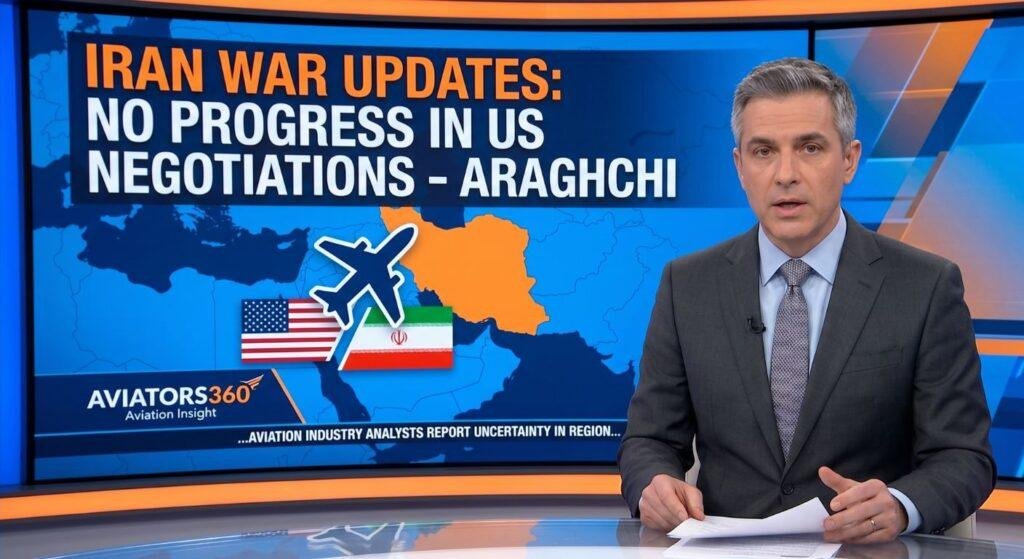
TEHRAN/WASHINGTON – In a stark assessment of diplomatic efforts, Iran’s Deputy Foreign Minister and lead nuclear negotiator, Abbas Araghchi, confirmed today that “no tangible progress” has been made in indirect negotiations with the United States. The statement comes as fears of a broader regional war intensify following recent escalations involving Israel, Hezbollah, and Houthi forces.
Speaking to state-run IRNA, Araghchi accused the US of maintaining a “maximum pressure” posture behind closed doors. “The gaps remain deep. Regarding the nuclear file, sanctions relief, and regional de-escalation, we are essentially at a standstill,” Araghchi said. He reiterated Tehran’s position that it will not negotiate under threat, particularly following recent US military repositioning in the Persian Gulf.
Diplomatic Deadlock
The breakdown in dialogue marks a significant setback compared to the indirect talks held in Oman earlier this year. Analysts suggest that the approaching US presidential election cycle, combined with Iran’s hardline parliamentary pressure, has frozen any potential confidence-building measures.
US State Department spokesman Matthew Miller responded that “the ball remains in Tehran’s court,” adding that Washington is pursuing “verifiable, permanent guarantees” regarding Iran’s nuclear program.
Aviation Impact Analysis: How Aviators360 Sees the Risk
For the commercial and military aviation community, stalled diplomacy is a red flag. Aviators360, a leading intelligence source for pilots, route planners, and aviation risk managers, has issued an updated threat assessment for the region.
According to their latest operational briefing:
1. Widening of Airspace Closures & Reroutings
“A lack of diplomatic progress directly correlates with the probability of a miscalculation in the air domain,” Aviators360 notes. Following the pattern of the April 2024 missile exchanges, major international carriers (Emirates, Qatar Airways, Lufthansa) are expected to maintain diversions away from the Tehran FIR (Flight Information Region). The key risk zones identified are:
Over the Persian Gulf: Potential jamming of GNSS (GPS) near Bandar Abbas.
Iraqi-Iranian Border: Historically used by pro-Iranian militias to launch UAVs, threatening commercial altitudes.
2. EGP-EW (Emergency General Procedures – Early Warning)
Aviators360’s internal tracker has moved the “Negotiation Failure” indicator to High. They warn that any military retaliation by the US or Israel—should Vienna or Doha talks collapse entirely—will likely be preceded by:
Cyber attacks on aviation navigation systems (as seen in previous Iran-Israel cycles).
Short-notice NOTAMs (Notices to Air Missions) declaring “unpredictable military maneuvers.”
3. Alternative Routing Costs
Airlines flying between Europe and Southeast Asia are already burning 25-30 additional minutes of fuel to skirt Iranian airspace. If Araghchi’s “no progress” stance leads to tit-for-tat tanker seizures, Aviators360 predicts the Strait of Hormuz will see mandatory naval escort protocols for civilian jets flying below FL300.
Advisory for Pilots
The aviation intelligence group advises flight crews transiting the Middle East to:
Carry paper charts (due to confirmed spoofing events).
Use the South Persian Gulf Corridor (unless specifically restricted).
Monitor UHF Guard for military advisories, as civilian ATC may be delayed in relaying urgent air defense warnings.
What’s Next?
With Araghchi ruling out a near-term breakthrough, the next 72 hours are critical. Western intelligence suggests Iran may conduct a “retaliatory drone swarm exercise” to protest the stalemate. Conversely, the US has signaled the potential return of the USS Theodore Roosevelt carrier strike group to the Northern Arabian Sea.
Aviators360’s bottom line: Until diplomatic channels show life, expect a “silent war” in the skies above the Middle East. For now, no progress means no safety buffer.
*Stay tuned to Aviators360 for real-time reroute suggestions and airspace status maps.*