
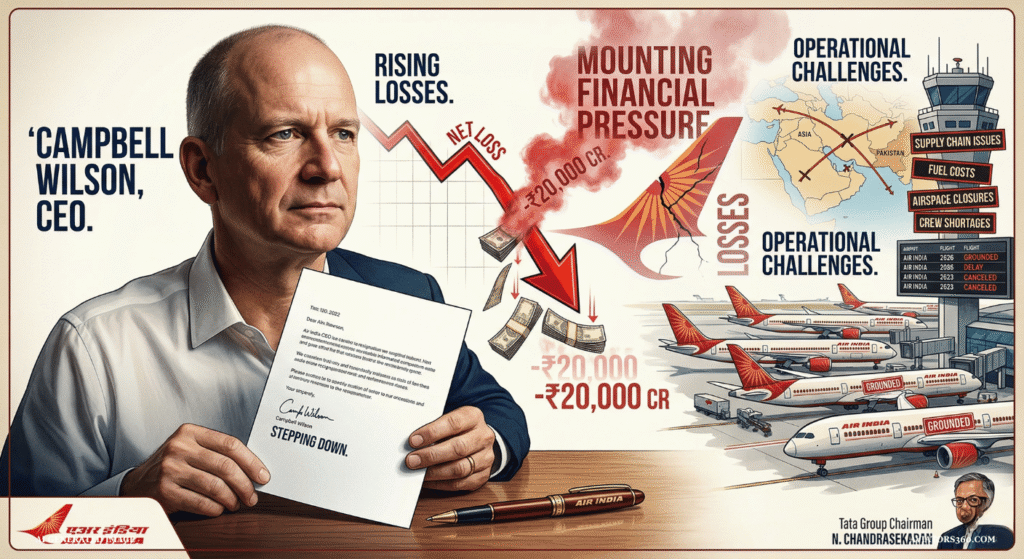
In a move that has sent ripples across the Indian aviation sector, Air India CEO Campbell Wilson has officially stepped down from his role at the helm of the full-service carrier. His departure, while surprising to some, had been increasingly anticipated by industry insiders as the airline continues to grapple with mounting financial losses and persistent operational headwinds. Wilson, who was appointed shortly after the Tata Group regained control of Air India in early 2022, had been the face of the ambitious “Vihaan.AI” transformation roadmap—a five-year plan designed to restore the national carrier to global prominence.
During his tenure, Wilson oversaw a historic fleet renewal, placing record-breaking orders for over 470 new Airbus and Boeing aircraft. He also spearheaded the consolidation of legacy systems, the launch of a new loyalty program, and the aggressive expansion of long-haul international routes. On paper, these were strategic victories. On the tarmac, however, the reality has been far more turbulent. Air India has continued to report significant quarterly losses, exacerbated by rising fuel costs, supply chain delays, and intense competition from both Gulf giants like Emirates and Etihad, as well as India’s own low-cost powerhouse, IndiGo.
Operational challenges have been equally glaring. Frequent flight delays, aging wide-body aircraft plagued by maintenance issues, and a shortage of trained cockpit crew have eroded customer confidence. Social media timelines have been flooded with passenger complaints about disrupted travel plans, outdated cabin interiors, and inconsistent service standards—issues that Wilson’s transformation plan struggled to resolve quickly enough to satisfy modern flyers.
With Wilson’s exit, the Tata Group is now expected to fast-track its long-pending merger strategy with Vistara, the joint venture with Singapore Airlines that is currently in the process of being absorbed into Air India. Industry speculation points toward the potential elevation of an operational turnaround specialist, possibly from within the Tata Group or from a global partner, who can stabilize on-time performance, integrate the Vistara workforce smoothly, and restore investor confidence.
While Campbell Wilson’s legacy includes bold strategic vision, his departure underscores a hard truth in aviation: even the most ambitious transformation plans cannot outrun daily operational realities.
Disclaimer: This post is for informational and commentary purposes only. The views expressed are those of Aviators360.com and do not constitute professional financial, investment, or aviation advice. While we strive for accuracy, leadership changes and corporate restructuring are subject to official confirmation by Air India and Tata Sons. Readers are strongly encouraged to verify any claims through official press releases or regulatory filings before making decisions based on this content.