When aspiring aviators come to me at Aviators360, they often ask the same question: “Ashutosh sir, what does it really take to get hired?”
Most people assume it is just about the license—the CPL, the AME certificate, or the cabin crew grooming. But the truth is, the Directorate General of Civil Aviation (DGCA) clears you to fly; your skills clear you to work.
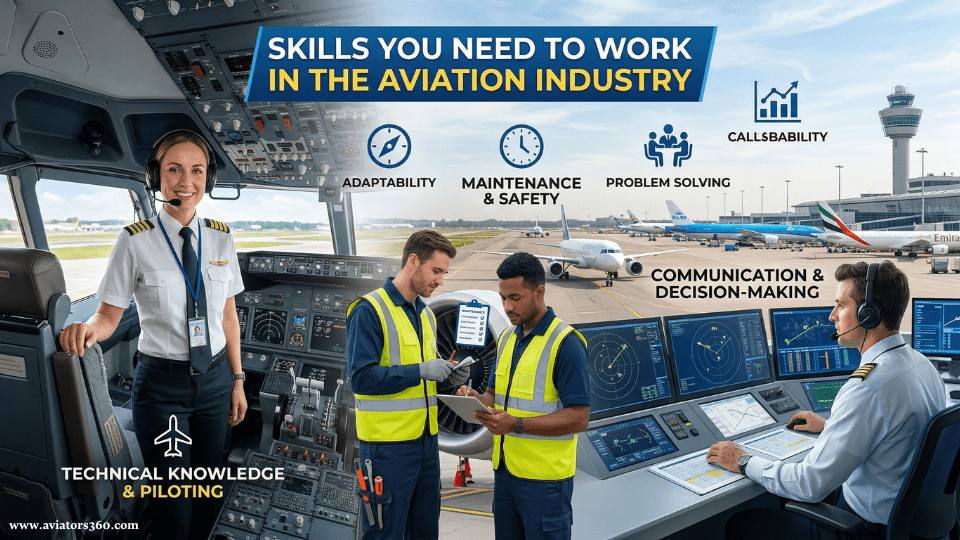
The aviation industry is unique. It operates 24/7, across borders, with lives resting on every decision. Whether you want to be in the cockpit, the cabin, or at the check-in counter, technical knowledge alone won’t suffice. Airlines and airport operators are looking for a specific blend of soft skills, cognitive abilities, and attitude.
In this guide, I will break down the 10 essential skills you need to thrive in the Indian aviation sector—and how you can start developing them today.
1. Exceptional Communication Skills
In aviation, communication is not just about speaking English well; it is about clarity and brevity. Miscommunication has been the cause of numerous aviation incidents worldwide.
For Pilots: You must master Aviation English and Radio Telephony (RTR). You need to communicate with Air Traffic Control (ATC) using standardized phraseology where every word has a specific meaning. There is no room for slang or hesitation.
For Cabin Crew & Ground Staff: You are the bridge between the airline and the passenger. You must handle irate travelers, convey safety instructions authoritatively, and assist VIPs with poise.
How to develop it: Practice speaking in clear, simple English. If you are a pilot aspirant, start listening to Live ATC feeds online to understand the rhythm of cockpit communication. For cabin crew, work on your vocabulary and body language.
2. Situational Awareness & Alertness
Aviation is a dynamic environment. Situational awareness means knowing what is happening around you and predicting what will happen next.
A pilot with good situational awareness knows exactly where the aircraft is, what the weather is doing, and what the fuel status is—without having to look at the instruments twice. A ground staff member with this skill spots a passenger having a medical emergency in a crowded terminal before it escalates.
How to develop it: This comes with training and simulation. In your daily life, practice observing your surroundings. Ask yourself: “What is the worst-case scenario here, and how do I prevent it?”
3. Problem-Solving Under Pressure
Things go wrong in aviation. Flights get delayed, technical snags occur, and weather diverts flights. The industry doesn’t need people who panic; it needs people who solve problems.
During the DGCA pilot exams, you are tested on this through Meteorology and Navigation—subjects that teach you to find alternate routes when a storm hits. For ground staff, it is about rebooking 200 passengers on a cancelled flight without losing your cool.
How to develop it: Adopt a solution-oriented mindset. When faced with a problem, instead of asking “Why did this happen?” ask “What is the next step?” This is a trait recruiters screen for during group discussions and interviews.
4. Teamwork and Crew Resource Management (CRM)
No single person flies a plane. The concept of Crew Resource Management (CRM) is central to aviation safety. It teaches that the Captain is not a dictator; they are a team leader who values input from the First Officer, the cabin crew, and even the ground engineer.
In the Cockpit: You need to have the humility to listen. If a co-pilot sees a mistake, they must speak up. Ego has no place in aviation.
On the Ground: Check-in staff, security, and ramp agents must coordinate seamlessly to ensure an on-time departure.
How to develop it: Participate in team sports or group projects. Learn to trust your teammates and practice giving and receiving constructive feedback gracefully.
5. Technical Aptitude
You don’t need to be an engineer to work in aviation, but you need to understand how things work.
Pilots: Must understand aerodynamics, aircraft systems (hydraulics, pneumatics, electrical), and performance calculations. You need to be comfortable with numbers and physics.
Cabin Crew: Must understand door operations, firefighting techniques, and the technical reasons behind turbulence to reassure passengers.
Ground Staff: Must understand weight and balance calculations and baggage handling systems.
How to develop it: For pilots and AMEs, this is covered in DGCA ground classes. For others, show curiosity. Learn the basics of how an aircraft flies—it will set you apart in interviews.
6. Physical and Mental Stamina
Aviation is glamorous, but it is also exhausting. Long-haul pilots deal with jet lag and circadian rhythm disruption. Cabin crew are on their feet for 12–14 hours. Ground staff work in extreme weather—scorching tarmac heat or freezing rain.
You must have the physical endurance to handle long shifts and the mental resilience to stay cheerful despite fatigue.
How to develop it: Maintain a fitness routine. Cardiovascular exercise (running, swimming) helps combat the effects of jet lag. Yoga and meditation are excellent for building the mental fortitude required for this high-stress industry.
7. Cultural Sensitivity and Adaptability
India is a melting pot of cultures, and aviation connects the world. You will serve passengers from Tamil Nadu to Punjab to New York. Understanding cultural nuances is critical.
For cabin crew, offering food with the right hand, understanding dietary restrictions, or simply greeting a passenger in their native language can turn a standard flight into a memorable experience.
How to develop it: Travel, if you can. If not, read about different cultures. Learning an additional Indian language (like Hindi, Tamil, or Bengali) is a massive advantage for cabin crew recruitment in India.
8. Discipline and Adherence to SOPs
Standard Operating Procedures (SOPs) are your best friend in aviation. They exist because someone, somewhere, made a mistake that cost lives. In this industry, creativity in safety procedures is dangerous.
You need the discipline to follow the checklist every single time, even if you have done it a thousand times before. Whether it is a pilot running through the pre-takeoff checklist or a security screener checking every bag, discipline is non-negotiable.
How to develop it: Start building habits. Be punctual. Follow rules strictly. In interviews, highlight your attention to detail and your respect for processes.
9. Customer Service Orientation
Beyond the technical skills, aviation is a service industry. Passengers are paying customers, and they expect comfort and safety.
For cabin crew and ground staff, this is the primary skill. For pilots, it is increasingly important. Airlines now want pilots who can make PA announcements that sound warm and reassuring, not robotic. A friendly interaction with the Captain at the boarding door can calm a nervous flyer.
How to develop it: Empathy is key. Put yourself in the passenger’s shoes. If you are in hospitality or retail currently, focus on exceeding customer expectations to build this muscle.
10. Leadership and Decision Making
Finally, whether you are a Captain or a Senior Cabin Crew member, you will be a leader. Leadership in aviation means taking responsibility for safety.
You must be able to make quick decisions with incomplete information. If there is a thunderstorm approaching, do you hold for 30 minutes or divert? If a passenger is unruly, do you offload them or try to de-escalate? A good leader makes the call, owns it, and protects the team.
How to develop it: Take initiative in your current job or college. Lead a project. Volunteer to be the team leader in group assignments. Confidence in decision-making comes from experience and self-belief.
Conclusion: Skills Are the Difference Between Licensed and Hired
At Aviators360, we have seen hundreds of students clear their DGCA exams but struggle to clear airline interviews. Why? Because they focused only on the license and neglected the skills.
Your license gets you eligibility. Your skills get you the job.
If you are serious about a career in Indian aviation, start working on these 10 skills today. Join a public speaking club, start a fitness regimen, and immerse yourself in aviation knowledge. The airlines are hiring, and they are looking for complete professionals.
Ready to build your aviation career? Visit Aviators360 or reach out to me, Ashutosh Bansal, for personalized mentoring. Let’s turn your passion into a profession.
FAQs
Q1: Is English proficiency mandatory for all aviation jobs in India?
Yes. Since aviation follows international standards, English is the universal language of aviation. Pilots and ATC must pass specific English proficiency tests, while cabin crew and ground staff must demonstrate fluency in spoken English.
Q2: Can I become a pilot if I am shy and introverted?
Yes, but you must overcome the shyness when it comes to communication. Pilots need to be assertive when speaking to ATC and crew. You don’t need to be an extrovert, but you must be able to communicate clearly and confidently under pressure.
Q3: Which skill is most important for cabin crew interviews?
Customer service orientation and grooming (presentation) are the top two. Airlines want to see that you are warm, empathetic, and take pride in your appearance. During the interview, your smile and body language matter as much as your answers.
Q4: Do pilots need customer service skills?
Increasingly, yes. Airlines like IndiGo, Air India, and Akasa Air value pilots who can interact pleasantly with passengers. During pilot interviews, you will be assessed on your communication style and your ability to represent the airline’s brand.
Q5: How does Aviators360 help develop these skills?
At Aviators360, we integrate soft skills training into our DGCA ground classes and counseling programs. We conduct mock interviews, group discussion sessions, and personality development workshops specifically tailored to aviation industry requirements.