
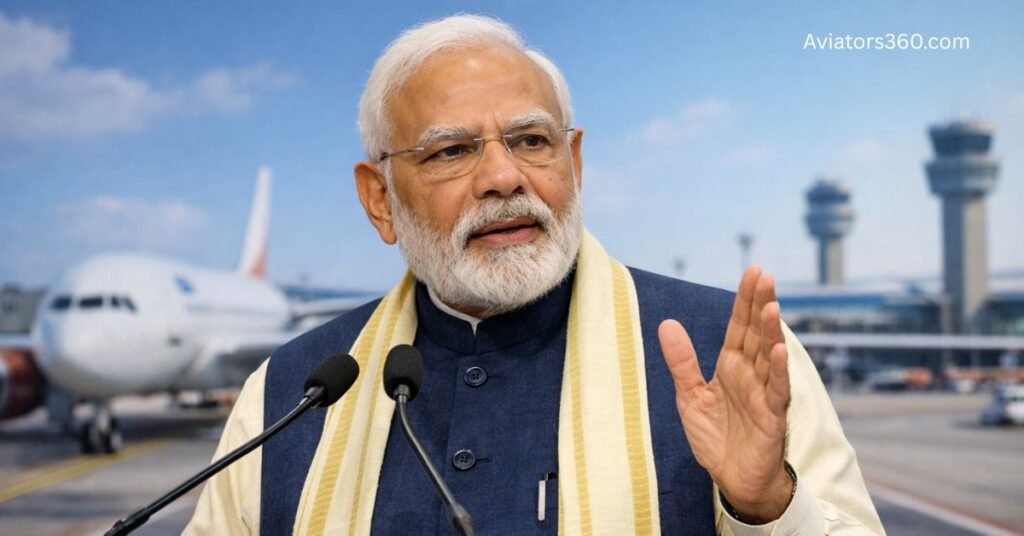
NEW DELHI – In a significant move to position India as a central pillar of global travel and sustainable energy, Prime Minister Narendra Modi has invited international investors to join the country’s rapidly ascending aviation sector. Speaking at the Wings India 2026 summit in Hyderabad, the Prime Minister outlined a vision that transforms India from a mere consumer of air travel into a global hub for aircraft manufacturing and a leading exporter of green aviation fuel.
The announcement comes at a time when India has already established itself as the world’s third-largest domestic aviation market. However, the government’s latest strategy indicates that the “golden age” of Indian flight is only just beginning, with a heavy bet on environmental sustainability and regional connectivity.
From a "Privileged Club" to a National Necessity
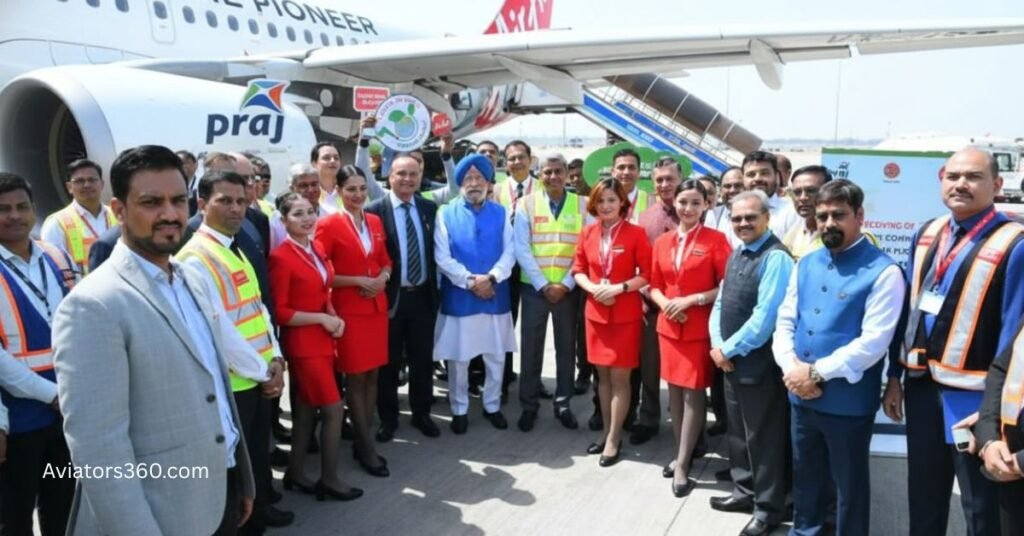
For decades, air travel in India was often viewed as a luxury reserved for a small segment of society. During his address, the Prime Minister highlighted how this perception has been dismantled over the last ten years. He described a “historic transformation” where the sector has moved from being an exclusive club to an inclusive service for the common citizen.
The numbers tell a compelling story:
- Airport Growth: In 2014, India had only 70 operational airports. Today, that number has surged to over 160.
- The 2047 Goal: The government estimates that by the year 2047, India will boast a network of more than 400 airports.
- Passenger Reach: Through the UDAN scheme (Regional Connectivity Scheme), nearly 15 million passengers have flown on routes that previously did not exist, connecting smaller “Tier-2” and “Tier-3” cities to the national map.
This expansion has created a massive demand for hardware. Indian airlines have placed record-breaking orders for more than 1,500 aircraft in recent years, signaling to global manufacturers that the Indian sky is the most active marketplace in the world.
A Bet on Green: Exporting the Fuel of the Future

Perhaps the most ambitious part of the Prime Minister’s message was the focus on Sustainable Aviation Fuel (SAF), often called “green fuel.” As the global aviation industry faces pressure to reduce its carbon footprint, India is positioning itself not just to use green fuel, but to produce and export it to the rest of the world.
Unlike traditional jet fuel derived from petroleum, SAF is made from renewable sources like agricultural waste, used cooking oil, and ethanol. India’s status as an agricultural powerhouse gives it a unique advantage.
“India is poised to become a major producer and exporter of green aviation fuel in the coming years,” the Prime Minister stated, emphasizing that this move would help the world meet its climate goals while boosting India’s rural economy.
By leveraging its massive surplus of ethanol and biomass, India aims to lower the cost of green energy. Experts suggest that becoming a “green fuel hub” could save the country billions in oil imports and create over a million new “green jobs” in processing and logistics.
Beyond Flying: Building and Fixing Planes at Home
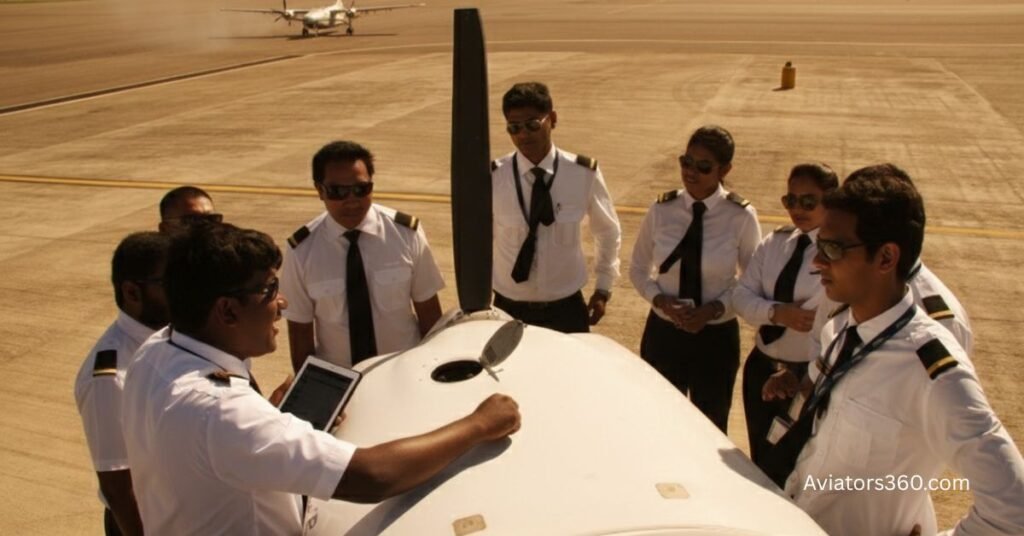
The Prime Minister also urged global investors to look beyond just operating flights. He invited partnerships in Aircraft Leasing, Pilot Training, and MRO (Maintenance, Repair, and Overhaul) services.
Currently, many Indian planes are sent abroad for major repairs, a process that is both expensive and time-consuming. By building a robust MRO ecosystem within India, the government hopes to keep that business—and those skills—within the country.
Furthermore, the “Atmanirbhar Bharat” (Self-Reliant India) initiative is now making its way into the hangar. India has already begun manufacturing military and transport aircraft. The next step, according to the Prime Minister, is a steady move toward civil aircraft manufacturing, ensuring that the planes flying in Indian skies are also made by Indian hands.
The Economic Ripple Effect
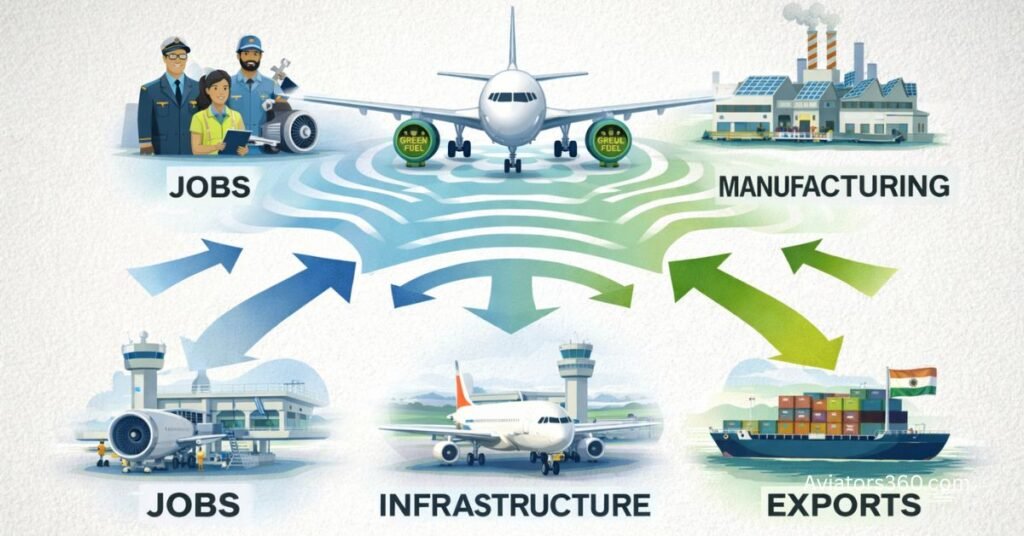
The push for a global aviation hub is expected to have a “force multiplier” effect on the Indian economy. Increased connectivity is a direct boost to the tourism sector, which the government is aggressively developing. As more remote areas become accessible by air—including the planned expansion of seaplane operations for island and coastal connectivity—local businesses and hospitality industries are expected to thrive.
For the general reader, this means more than just cheaper tickets or more flight options. It represents a shift in how the country functions. A well-connected nation moves goods faster, responds to emergencies quicker, and allows for a more mobile and skilled workforce.
Looking Ahead: The Next Phase of UDAN
As the summit concluded, the message to the world was clear: India is no longer just a destination; it is a partner. The government is already drafting the “next phase” of the UDAN scheme to reach the most difficult terrains, including hilly and aspirational districts.
With a stable policy environment and a clear roadmap toward 2047, the Indian government is betting that global investors will see the “golden opportunity” in a nation that is determined to fly higher, faster, and much greener than ever before.
Also Read : Wings India 2026 Begins in Telangana, Spotlighting the Future of Indian Aviation
Also Read : The Global Sky Stage: A Guide to the Major Aviation Events of 2026
Also Read : The Sky is Changing: A Simple Guide to the New Plane Fuel Everyone’s Talking About
Disclaimer:
The information presented in this blog is based on recent public announcements and government initiatives as of 2026. While every effort has been made to ensure factual accuracy at the time of writing, readers are advised to consult official government portals or authorized financial advisors before making investment decisions. This content is for informational purposes only and does not constitute professional investment advice.