
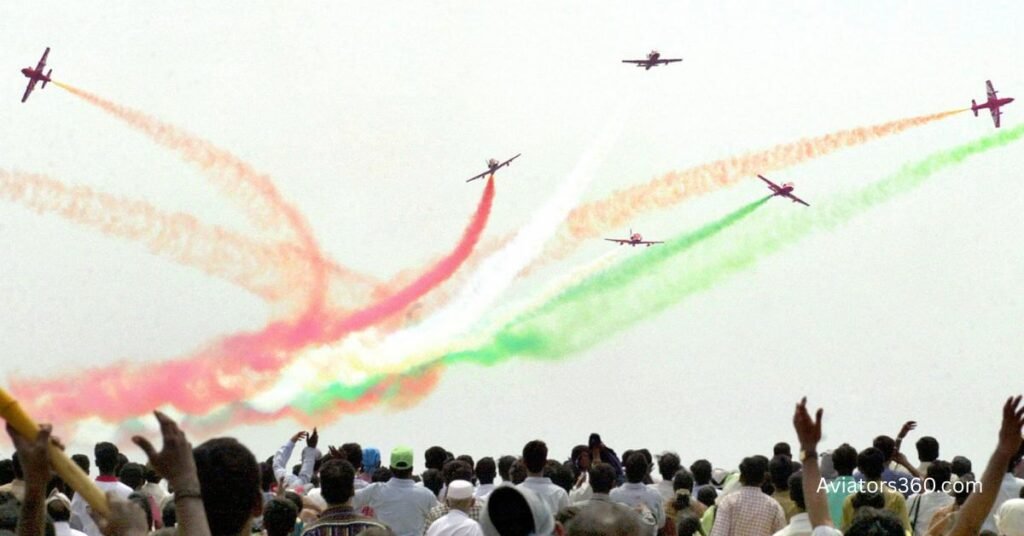
NEW DELHI – As the morning mist cleared over the Kartavya Path on January 26, 2026, the roar of jet engines signaled a historic moment for the Indian Air Force (IAF). Amidst the traditional display of cultural vibrant colors and military discipline, one specific moment captured the nation’s breath: the debut of the “Sindoor Formation.” This specialized aerial display was not just a show of speed; it was a sky-bound tribute to a recent chapter in India’s defense history. Designed to commemorate the success of Operation Sindoor, the formation served as the centerpiece of the 77th Republic Day flypast, blending modern technology with a deep sense of national remembrance.
The Story Behind the Name: Operation Sindoor
To understand the significance of this year’s flypast, one must look back to May 2025. Following a major terror attack in Pahalgam, the Indian Armed Forces launched Operation Sindoor, a high-precision, four-day tri-services campaign.
The operation was a landmark in modern Indian military strategy, focusing on dismantling terror infrastructure with surgical accuracy. It involved a seamless “kill chain” that utilized everything from unmanned drones to heavy-duty fighter jets. By naming the lead formation “Sindoor,” the IAF sought to honor the air warriors, soldiers, and strategists who participated in that mission.
A Spearhead in the Clouds
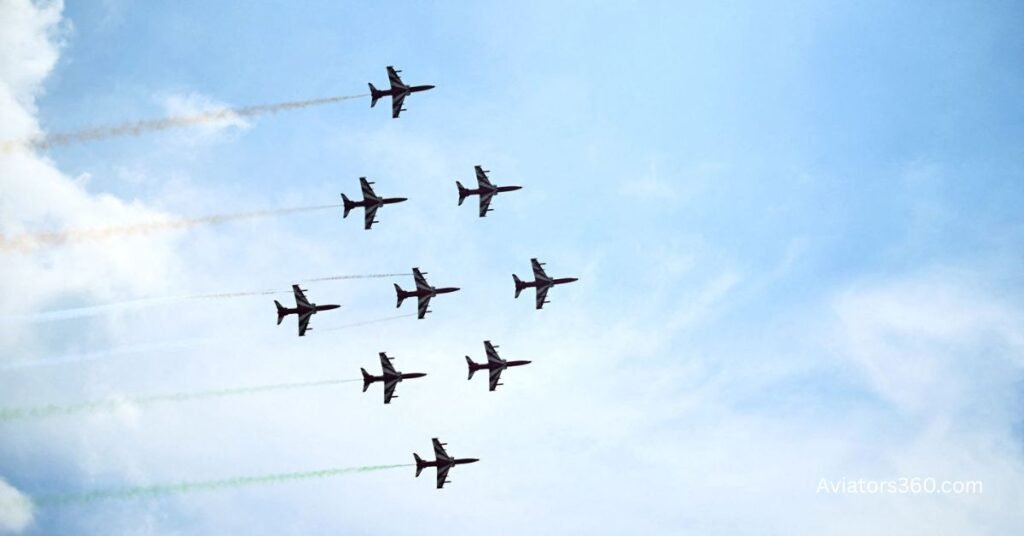
The “Sindoor Formation” was a powerful seven-aircraft “Spearhead” array. Unlike traditional formations that often group the same types of planes together, this display featured a diverse mix of the IAF’s frontline assets, symbolizing the unity required in modern combat.
The formation consisted of:
- Two Rafale Jets: The “omni-role” fighters known for their precision strike capabilities.
- Two Su-30 MKI: The heavy-weight backbone of the IAF, providing long-range dominance.
- Two MiG-29s: Agile interceptors used for swift air-to-air defense.
- One Jaguar: The veteran deep-penetration strike aircraft.
As these seven jets thundered past the Presidential dais, they were led by the Operation Sindoor flag, carried by a lead helicopter in a preceding formation. The sight of these different generations of aircraft flying in such tight, aggressive synchronization was a vivid demonstration of what officials call “Network-Centric Warfare”—where different platforms talk to each other to act as a single, unstoppable force.
A Shift Toward “Battlefield Realism”
The 2026 parade marked a significant departure from previous years. For the first time, the military segment was organized into a “Battle Array Format.” Instead of a simple symbolic march, the parade followed the logical steps of a real-world conflict. It began with reconnaissance (scouting), followed by logistics (supply lines), then deployment, and finally, the strike coordination represented by the flypast.
“This isn’t just a parade anymore; it’s a public education on how we protect our borders,” noted one defense analyst. “By showing the Sindoor Formation in this sequence, the IAF is demonstrating the actual ‘logic’ of air dominance.”
Beyond the Fighters: A Full Spectrum Display
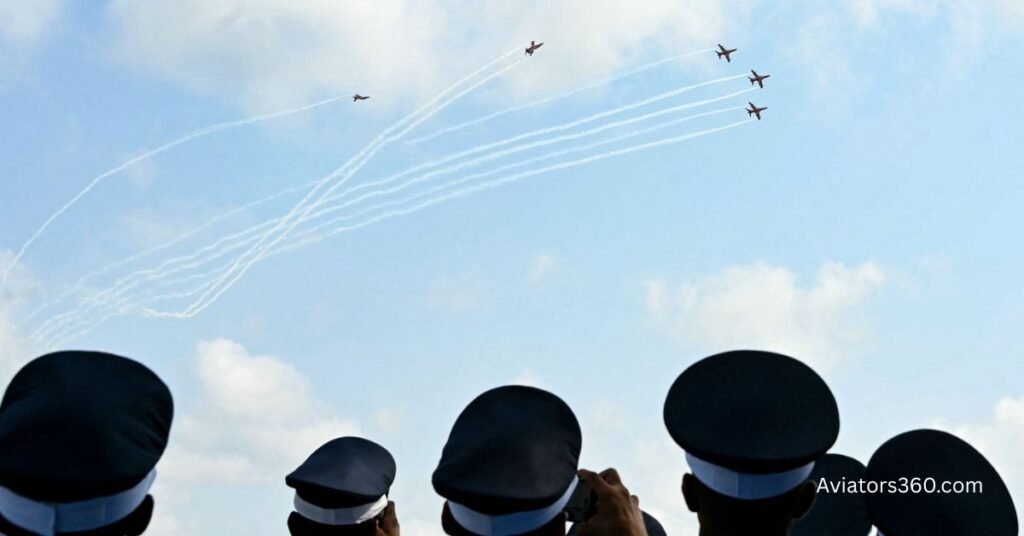
While the Sindoor Formation was the star, the flypast featured a total of 29 aircraft, including:
- Prachand and Apache Helicopters: Showcasing high-altitude and anti-tank capabilities.
- C-130J and C-295 Transports: Highlighting the ability to move troops and gear anywhere, anytime.
- P-8I Maritime Aircraft: A rare appearance by the Navy’s “submarine hunter,” showing how the Air Force and Navy now work as one.
The IAF also used this platform to showcase its evolving culture. The Air Force band, which played the stirring tune “Sound Barrier,” featured women Agniveers for the first time, reflecting a more inclusive and modern force.
Impact and Next Steps
The successful execution of the Sindoor Formation does more than just provide a photo opportunity. It sends a clear message of “Achook, Abhedya va Sateek” (Unerring, Impenetrable, and Precise)—the theme of this year’s display.
- Strategic Deterrence: By publicly displaying the exact aircraft and formations used in a recent successful operation, India reinforces its “proactive” defense posture to the world.
- Technological Pride: The heavy presence of indigenous platforms like the Dhruv and Prachand helicopters underscores the “Make in India” (Aatmanirbharta) push in defense.
- Jointmanship: The coordination between the Army’s ground assets and the IAF’s aerial strike reflects the new “Integrated Theatre Command” model, where all wings of the military operate under a unified plan.
As the jets disappeared into the horizon, leaving behind trails of saffron, white, and green, the “Sindoor Formation” left a lasting impression. It was a reminder that while Republic Day is a celebration of the Constitution, it is the silent, high-speed vigils in the skies that ensure that Constitution remains secure.
Disclaimer:
This blog is based on publicly available information, official statements, and credible media reports at the time of writing. It is intended for general informational purposes only. The views expressed do not represent any official position of the Indian Air Force or the Government of India. All details have been presented in a neutral and factual manner, without intent to speculate, mislead, or sensationalize events.