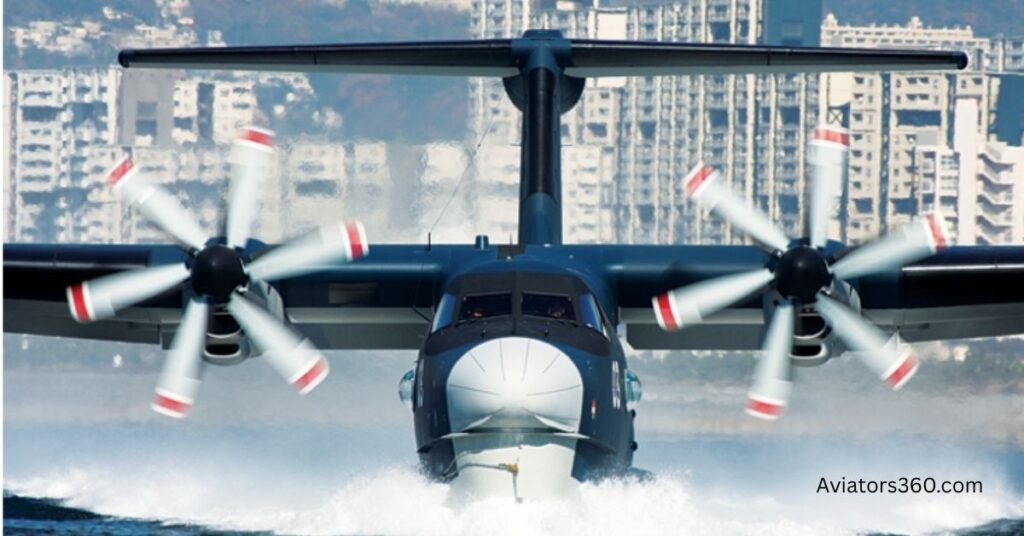
Indian Ministry of Defence (MoD) requirement for wet lease of 4 fixed-wing amphibious aircraft for 4 years for the Indian Navy, the focus clearly points to proven, multi-role, ocean-capable amphibians with logistics + SAR + special ops flexibility.
Below is a clear, role-oriented assessment of the most suitable global options
Key Operational Requirements (Decoded)
The aircraft must:
- Operate from open sea + inland water bodies + conventional runways
- Support long-range, sustained missions
- Be already certified, mature, and lease-ready
Perform:
- Operational
- Logistics
- LR-SAR
- Special
- Operations
- HADR
- CASEVAC
This immediately narrows the field to large amphibian
Here are some options,
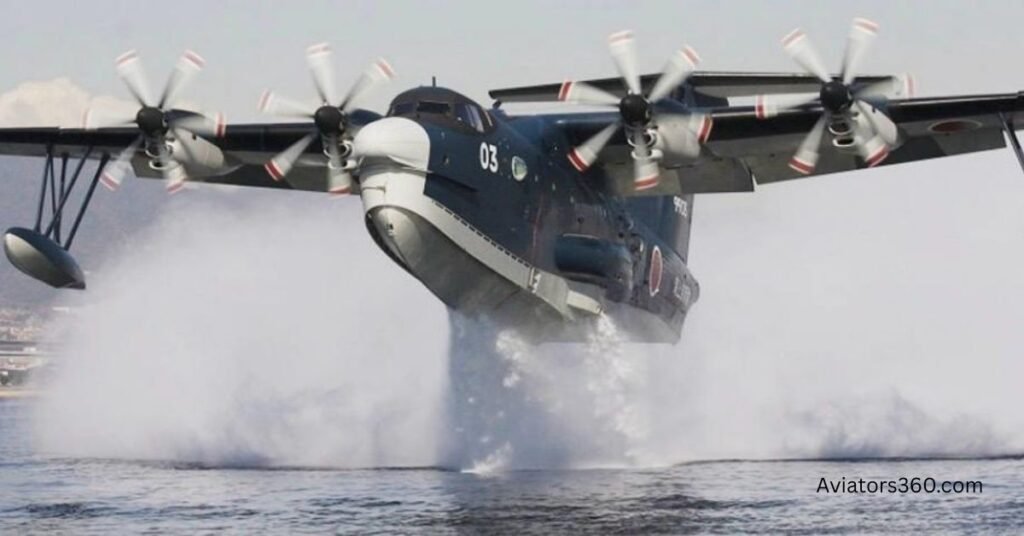
ShinMaywa Industries, Ltd. is a Japanese aircraft and industrial manufacturer best known for developing amphibious aircraft such as the US-1A and its successor, the US-2. The company operates as a major player in Japan’s aerospace and heavy engineering sectors, combining aviation expertise with diversified industrial product lines.
Key facts
- Founded: 1949 (as Shin Meiwa Industry Co., Ltd.)
- Headquarters: Takarazuka, Hyōgo Prefecture, Japan
- Founder: Chikuhei Nakajima
- Parent heritage: Successor to the wartime Kawanishi Aircraft Company
Notable products: US-1A, US-2 amphibious aircraft, industrial equipment
Historical background
ShinMaywa Industries originated from Kawanishi Aircraft, a key builder of flying boats during World War II. After Japan’s aviation ban was lifted, the company was reestablished in 1949 as Shin Meiwa Industry, later renamed ShinMaywa Industries in 1992. It inherited a tradition of maritime aircraft innovation and diversified into manufacturing precision machinery and special-purpose vehicles.
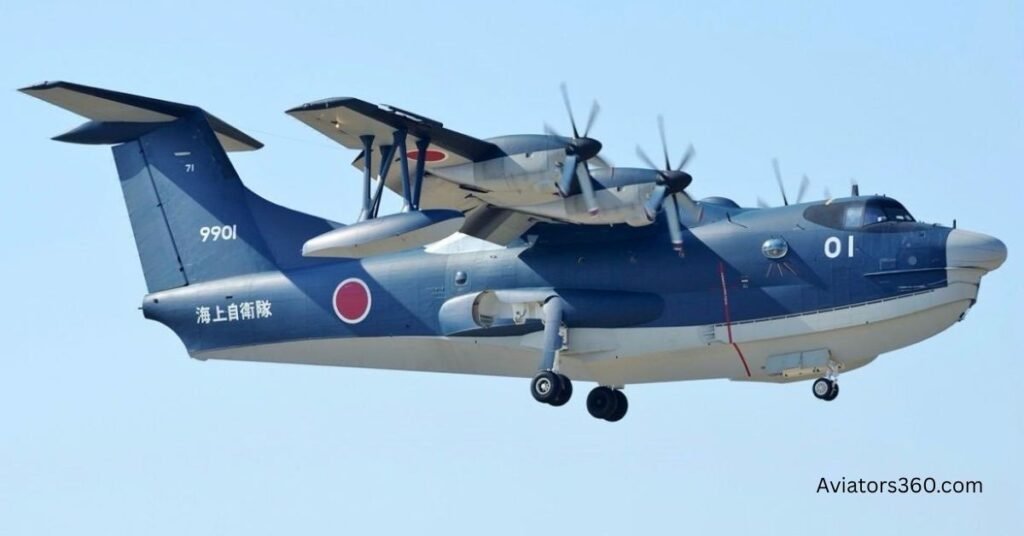
ShinMaywa continues to support Japan’s maritime rescue and disaster-relief infrastructure while pursuing export opportunities for the US-2, notably discussions with India. The company maintains a balance between its aviation heritage and modern industrial engineering businesses.
Why US-2 is the strongest contender:
- Designed specifically for open-sea operations
- Can take off & land in Sea State 5 (very rare capability)
- Short Take-Off & Landing (STOL) from water and land
- Proven long-range SAR platform
Strategic Advantage for India
- Already under India–Japan defence cooperation
- Ideal for Andaman & Nicobar, IOR, island chains
- Leasing aligns perfectly with MoD wet-lease model
Viking Air
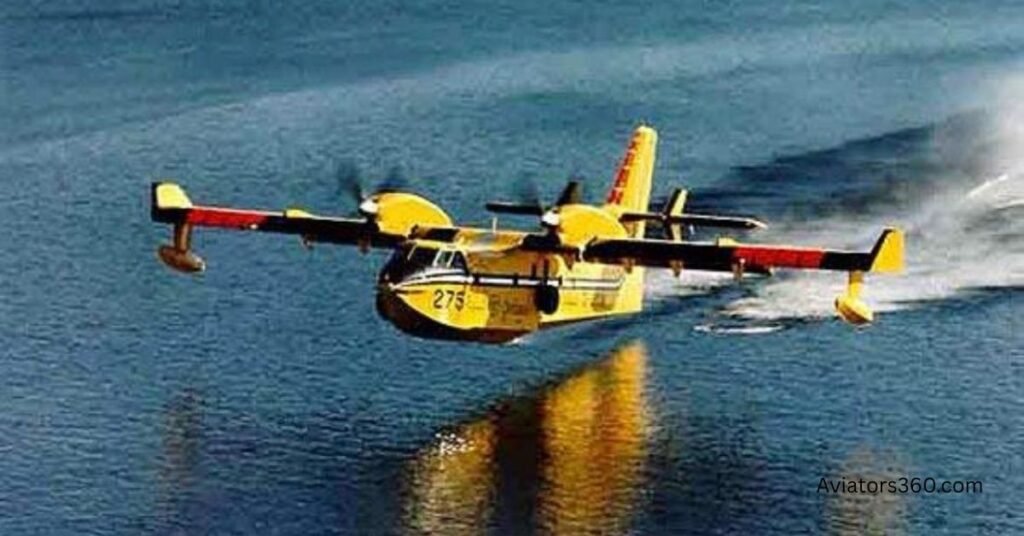
Viking Air is a Canadian aircraft manufacturer known for producing utility and short takeoff and landing (STOL) aircraft. Based in North Saanich, British Columbia, the company is recognized for reviving and supporting legacy de Havilland aircraft and for sustaining Canada’s regional aviation heritage.
Key facts
Founded: 1970
- Headquarters: North Saanich, British Columbia, Canada
- Parent company: Longview Aviation Capital
- Notable products: DHC-6 Twin Otter Series 400, CL-415EAF amphibious aircraft
- Specialisation: STOL and amphibious aircraft for commercial and utility use
History and development
Viking Air began in 1970 as a maintenance and modification provider for de Havilland aircraft. Over time, it acquired type certificates for several legacy de Havilland models, including the DHC-1 through DHC-7 series. This allowed Viking to resume production and provide full product support for these classic designs. Its strategic expansion positioned the company as a key custodian of Canada’s aerospace legacy.rations
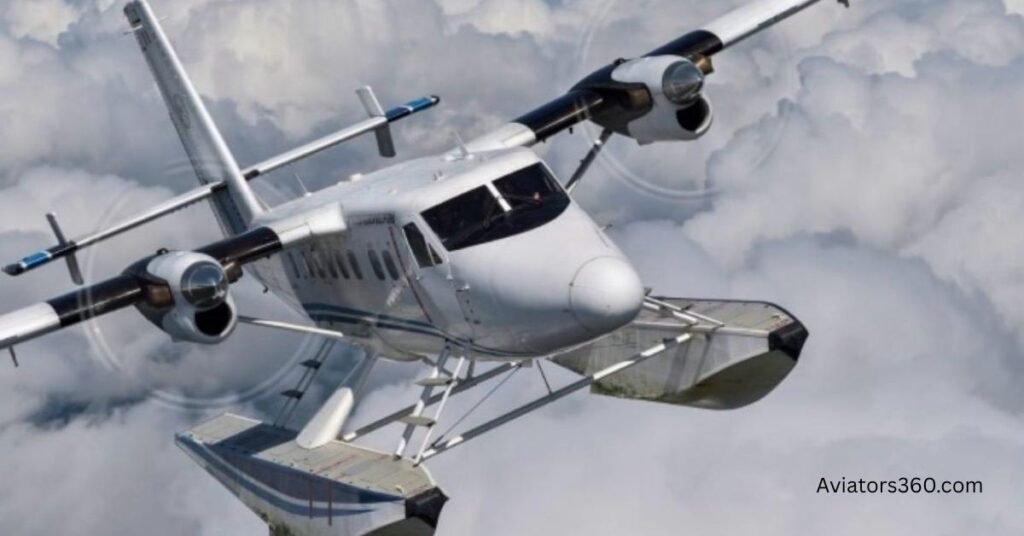
Strengths:
- Proven amphibious operations
- Good SAR & disaster response
- Can operate from land and water
Limitations:
- Primarily firefighting-focused design
- Limited: Special Ope
Beriev Be-200 Altair
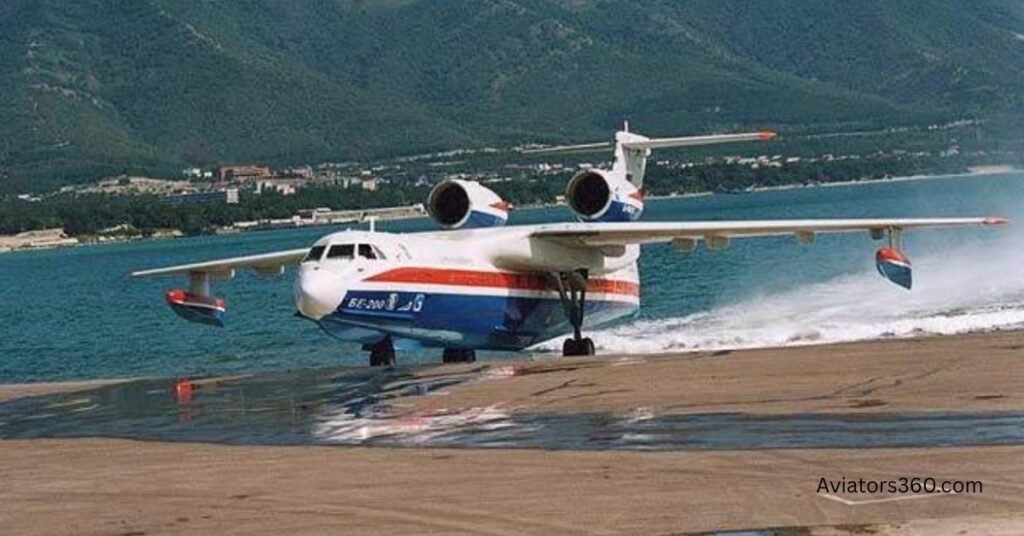
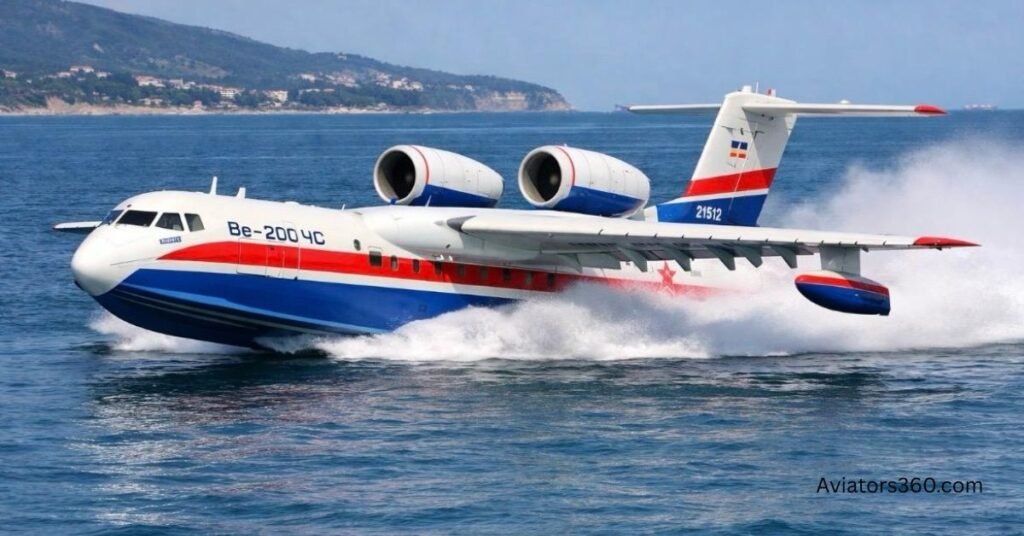
The Beriev Be-200 Altair is a Russian twin-engine, jet-powered amphibious aircraft designed primarily for aerial firefighting and multi-role utility missions. Developed by the Beriev Aircraft Company, it’s one of the very few modern jet amphibians in active service and is notable for its high scooping speed and payload.
Key facts
- Role: Multipurpose amphibious aircraft / water bomber
- Origin: Russia; designer Beriev, manufacturer Taganrog/Irkut
- First flight: 24 September 1998; in service since 2003
- Capacity: About 12,000 L (12 t) of water or up to 72 passengers
- Top speed (approx.): 700 km/h; cruise ~560 km/h
Design and configuration
The Be-200 is a high-wing, T-tail amphibious flying boat with a single-step hull optimised for water operations. Its two Progress D-436TP turbofans sit on pylons above the wing roots to minimise spray ingestion during take-off and scooping runs. The largely aluminium airframe has corrosion protection, with composites and titanium used in key areas. A modern glass cockpit with fly-by-wire controls and integrated avionics (ARIA-200M) supports a two-pilot crew.
Notes / Limitations:
- Production and export may be constrained by sanctions (affecting engines and parts).
- Not originally optimized as a dedicated military maritime patrol aircraft; primary certification has been for civil/multirole uses.
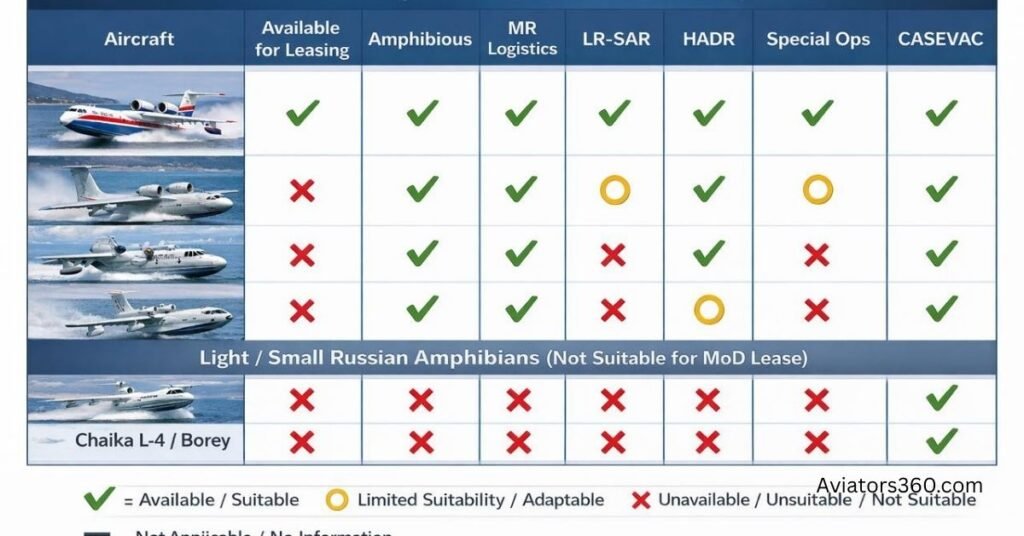
As India’s maritime responsibilities expand, the ability to operate beyond runways is no longer optional. Amphibious aircraft offer reach, resilience, and rapid response where infrastructure does not exist.
Conclusion
For the Indian Navy, the requirement for wet-leased fixed-wing amphibious aircraft is ultimately about assured access, speed of response, and mission continuity across India’s vast maritime domain. With long island chains, dispersed naval assets, and increasing expectations in SAR, HADR, and special operations, the Navy needs an aircraft that can reliably operate from open seas as well as conventional runways, with minimal dependency on shore infrastructure.
Among the available global options, platforms designed from the outset for rough-sea operations, long endurance, and multi-role flexibility offer the greatest operational value. While several amphibians can support niche missions, the Indian Navy’s operational reality favours a mature, ocean-capable, naval-grade amphibian that can seamlessly integrate into maritime operations from day one.
In this context, the current leasing initiative is not merely a stop-gap capability, but a strategic step toward strengthening India’s maritime reach, humanitarian response capacity, and island security posture—ensuring that when runways end, the Navy’s responsibility, and ability to act, does not.
By
Ashutosh Bansal
AME, Indigo