We all see how planes get better. New curved wingtips. Bigger TV screens. Shiny new cabins. For years, that’s how we saw progress in flying.
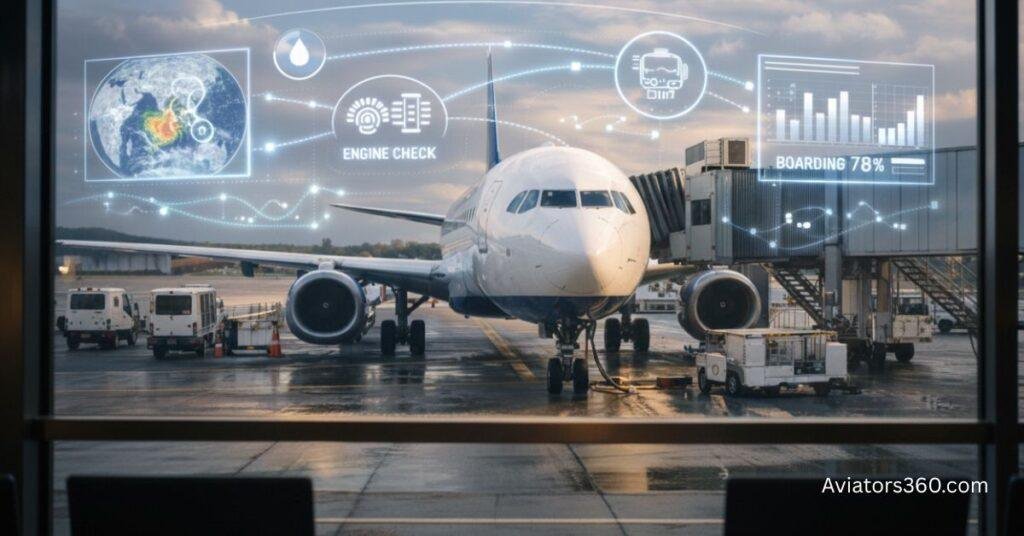
But the biggest change in air travel today is invisible. It’s not in the cockpit. It’s not in the cabin. It’s in the computer systems that make sure your flight happens at all. Artificial Intelligence (AI) didn’t come to fly the plane. It came to fix problems before they even start.
Why Pilots Still Fly the Plane (For Now)
Flying is built on super-strict safety rules. Every button in the cockpit is tested for years. AI is smart, but it learns and changes. That made people nervous to let it control the plane directly.
So, airlines asked a different, smarter question: “Can AI help us stop problems before the pilot even needs to fix them?”
That’s where the quiet revolution began.
AI’s Real Job in Aviation: The Behind-the-Scenes Helper
- Smart Fixes, Not Just Scheduled Ones
Planes used to be checked on a strict calendar. “Change this part every 6 months,” for example, whether it needed it or not.
Now, AI listens to the plane. It looks at data from hundreds of sensors on the engines, wheels, and systems. It can spot tiny signs that a part is getting tired, and tell mechanics, “This will need attention in three weeks.” This means fewer surprise breakdowns and delays. Your plane is more likely to be ready and waiting for you. - Solving the Daily Airline Puzzle
Running an airline is a huge daily puzzle. A storm, a sick crew member, or a delay in one city can mess up flights everywhere.
Humans try to manage this, but it’s too complex. AI looks at everything at once—weather, crew schedules, plane locations, connecting passengers—and finds the best solution in seconds. It helps get planes back on track faster when things go wrong, so fewer people get stuck. - Saving Fuel (and Money) with Math
Fuel is an airline’s biggest cost. AI is a super-smart fuel calculator. It looks at the wind forecast, the weight of your plane (that’s you and your bags!), and the health of the engines. It then finds the perfect speed and route to use the least fuel.
Saving a little bit on every flight saves millions of dollars a year. It also means less pollution. It’s a win for the airline and the planet. - Knowing What You Need (Before You Do)
While AI works on the plane, it also learns about passengers. By looking at travel patterns (anonymously), it can make service smoother.
For example, if it sees your first flight is running late and you have a tight connection, it might automatically rebook you on the next one. It can help airlines offer you the right help or options faster when things don’t go to plan. The goal is less stress for you.
Airports and Airlines Are Embracing Quiet AI
Airlines work on very small profits. Every delay costs money. Every extra kilo of fuel costs money. AI helps save that money by making everything run smoother. It’s like a super-efficient manager that never sleeps, finding small savings everywhere that add up to a lot.
What This Means for People Who Work with Planes
AI is not taking pilots’ jobs. You still want a skilled human in charge up front. But the jobs around flying are changing.
The best mechanics now use AI to know what to fix. The best flight planners use AI to build better schedules. They work with the AI as a powerful tool. It makes their hard jobs a little easier and a lot smarter.
The Bottom Line: The Invisible Upgrade
The next time you have a smooth flight, or get rebooked quickly after a delay, there’s a good chance AI helped in the background.
The real change in flying isn’t a louder engine or a fancier seat. It’s the quiet work that makes your trip more reliable, cheaper to run, and less wasteful. AI didn’t take over the controls. It took over the planning. And in the world of travel, good planning is everything.
Also Read : Airline Safety Update: Why Charging Phones on Planes is Now Banned in India
Disclaimer:
This blog is for informational and educational purposes only. It is based on publicly available data, industry reports, and expert commentary available at the time of writing. The content does not constitute technical, operational, or professional aviation advice. Airline procedures, technologies, and regulatory standards may vary by region and are subject to change. Readers are advised to consult official airline sources or aviation authorities for the most current and accurate information.
Pingback: Global Aviation Trends and India: Why Growth Is Shifting East