
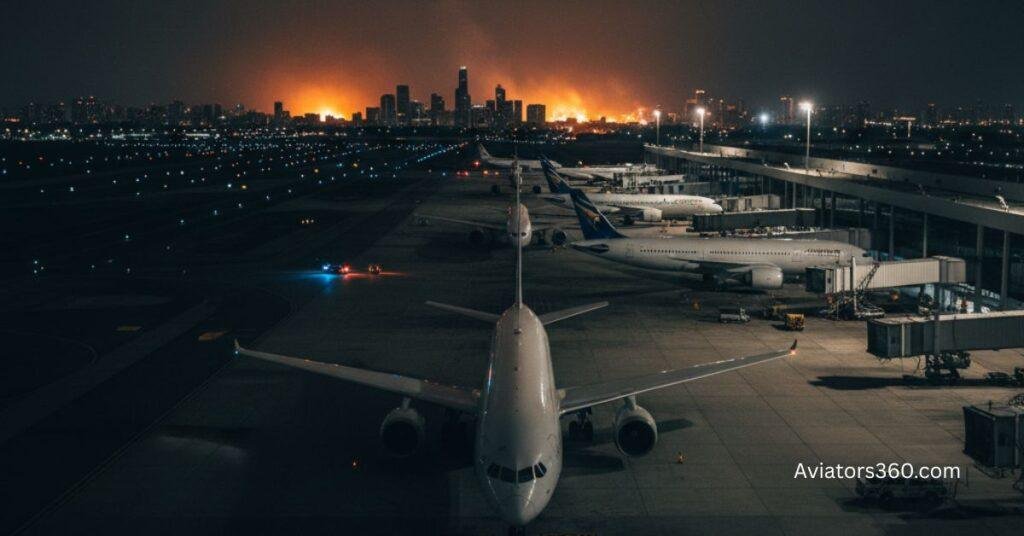
On a day that will be marked in the annals of Venezuelan history, the nation’s skies fell silent. Reports flooded international news desks, confirming a complete cessation of all air traffic within Venezuelan airspace. This unprecedented event was triggered by a series of controlled, targeted military strikes authorized by the United States, resulting in audible explosions across several regions. The sudden development has sent shockwaves through the international community, raising urgent questions about sovereignty, international law, and the future of U.S.-Venezuela relations.
Crisis Timeline Explained
The Initial Strikes and Immediate Aftermath
In the early hours, without prior public declaration of war, U.S. military assets executed a coordinated operation. According to statements later released by the U.S. Department of Defense, these were precision strikes targeting a specific network of facilities. Witnesses in states like Miranda, Zulia, and near the capital, Caracas, reported hearing successive explosions, followed by visible plumes of smoke. Crucially, there were no immediate reports of widespread civilian casualties, suggesting the strikes were highly focused.
The Venezuelan Response: Grounding a Nation
The Venezuelan government’s reaction was swift and total. The National Institute of Civil Aviation (INAC), under directives from the state’s military high command, issued a NOTAM (Notice to Airmen) closing the country’s entire airspace to all traffic—commercial, private, and civilian. Flights mid-route were forced to divert to neighboring countries like Colombia, Brazil, or Trinidad and Tobago. Airports, including the major Simón Bolívar International Airport near Caracas, transformed into static parking lots for aircraft, stranding thousands of passengers and creating immediate logistical chaos.
The “Why”: Geopolitical Tensions Reach a Boiling Point
The Official U.S. Justification
In a televised address, the U.S. President and Pentagon officials presented their rationale. The strikes, they claimed, were a “necessary and proportionate response to an imminent and grave threat.” The targeted sites were allegedly clandestine facilities operated by transnational criminal organizations with deep ties to the Maduro government. The U.S. accused these networks of trafficking narcotics on a massive scale into North America and of harboring foreign extremist elements that posed a direct threat to U.S. personnel and interests in the hemisphere. The action was framed not as an act of war against the Venezuelan people, but as a counter-terrorism and counter-narcotics operation.
Venezuela’s Counter-Narrative and Historical Context
The Venezuelan president condemned the strikes as a “blatant act of imperialist aggression” and a flagrant violation of international law and national sovereignty. He framed the event as the latest and most severe escalation in a long-standing campaign of U.S. hostility, which has included severe economic sanctions, support for opposition figures, and recognition of a parallel government. For the Venezuelan leadership, this action was viewed as an attempt at regime change under a new pretext. The government showcased images of damaged buildings, rallying nationalistic sentiment and calling for international solidarity from allies like Russia, Iran, and China.
The International Reaction: A World Divided
The global response highlighted deep fissures. Key U.S. allies, including members of the Lima Group, expressed concern over the unilateral action but reiterated accusations against the Maduro regime. The European Union called for maximum restraint and an emergency session of the United Nations Security Council.
Conversely, nations like Russia and China issued furious condemnations, accusing the U.S. of “gunboat diplomacy” and destabilizing the region. Regional bodies like ALBA and CARICOM largely denounced the use of force, while the United Nations Secretary-General appealed for immediate de-escalation and dialogue. The Organization of American States (OAS) saw its internal divisions laid bare.
Immediate Impacts and Consequences
Humanitarian and Economic Fallout
The immediate closure of airspace had severe knock-on effects. Vital medical evacuation flights were halted, and the import of critical supplies, already hampered by sanctions, faced new disruptions. The tourism industry, a minor but existing economic sector, evaporated instantly. The economic blockade tightened perceptibly, exacerbating the nation’s pre-existing humanitarian crisis.
Security and Military Posturing
Venezuela placed its armed forces on the highest state of alert. There were unconfirmed reports of mobilizations toward likely defense positions. The U.S., meanwhile, moved additional naval assets to the Caribbean Sea, signaling readiness for any potential retaliation. The region was plunged into a state of high anxiety, with fears of a broader conflict.
The Path Forward: Scenarios and Future Plans
Short-Term De-escalation Efforts
The immediate international focus is on preventing further military engagement. Diplomatic channels, both public and back-channel, are likely being exhausted at the UN and through neutral intermediaries. The primary goals are securing a reopening of humanitarian corridors in the airspace and establishing a communication line between U.S. and Venezuelan military commands to avoid miscalculation.
Medium-Term Diplomatic Maneuvering
The crisis will dominate the agenda of international diplomacy for the foreseeable future. Venezuela will seek a condemnation of the U.S. in the UN General Assembly and may pursue legal action in international courts. The U.S. will campaign to justify its actions as lawful self-defense under Article 51 of the UN Charter, presenting intelligence to allied nations. The future of any existing negotiation tracks between the Venezuelan government and the opposition is now deeply uncertain.
Long-Term Strategic Implications
This event represents a dangerous new normal in hemispheric relations. Several long-term consequences are plausible:
- Fortification and Alliances: Venezuela will likely seek to deepen its military-technical cooperation with Russia and China, potentially hosting more permanent foreign assets as a deterrent.
- Regional Rearmament: Other nations in Latin America may feel compelled to increase defense spending, viewing the event as a precedent for unilateral intervention.
- U.S. Policy Recalibration: The success or failure of this operation will influence future U.S. policy toward Venezuela and other adversarial states. It could embolden a more interventionist stance or, if the fallout is severe, lead to a period of isolationism.
- The Fate of the Venezuelan Government: Domestically, the government may use the attack to consolidate power, crack down on dissent in the name of national unity, and rally patriotic support. Conversely, it may expose further vulnerabilities, leading to increased internal instability.
Simply Put: A Precipice in the Americas
The silencing of Venezuela’s airspace is more than a logistical footnote; it is a stark symbol of a geopolitical rupture. The U.S. strikes and the resulting explosions have not just damaged physical infrastructure but have shattered already fragile diplomatic frameworks. The world now watches to see if this event becomes a isolated, albeit severe, chapter or the opening volley in a more protracted and devastating conflict. The coming days, filled with urgent diplomacy and military posturing, will determine whether the path leads toward a precarious peace or a dangerous, uncontrolled escalation. The skies over Venezuela may be quiet, but the diplomatic storm on the ground is just beginning.
Also Read : Venezuela’s Sky Shut Down: Why Major Airlines Pulled Out and What Happens Next
Disclaimer:
This blog is based on publicly available information and media reports at the time of writing. Details regarding the events in Venezuela, including claims of military action and airspace closures, are subject to change as official investigations and statements continue. The content is provided for informational purposes only and does not represent political, military, or legal opinion. Readers are advised to rely on official government and aviation authority updates for the most accurate and current information.
Pingback: US Forces Strike ISIS Targets in Syria: Latest Update