
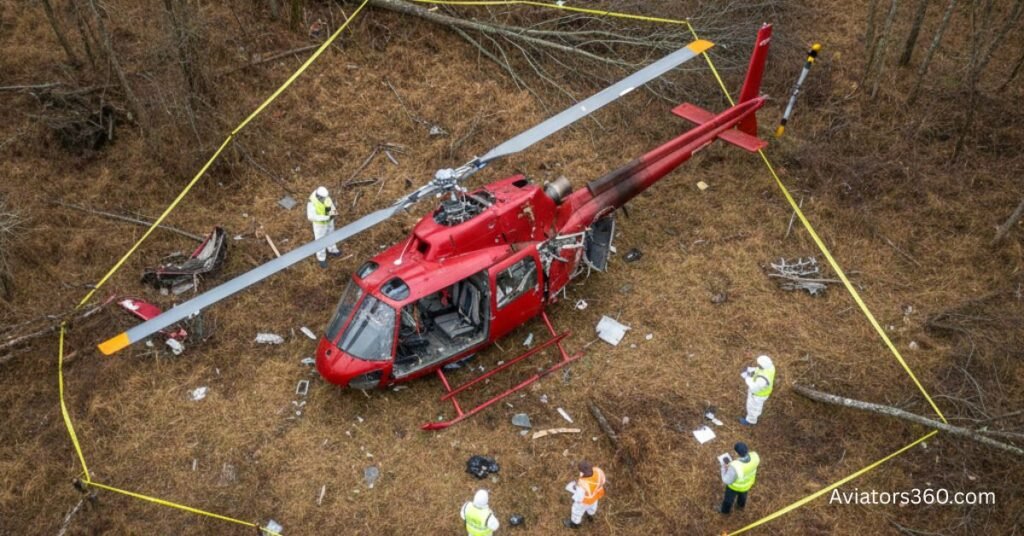
The serene skies above New Jersey turned into a scene of tragedy recently when two helicopters collided mid-air, claiming the lives of both pilots. This shocking incident has sent ripples through the aviation community and raised urgent questions about safety protocols in shared airspace. For the everyday person, such events are both heartbreaking and perplexing. How can two experienced pilots, in control of sophisticated machines, collide in the vast openness of the sky?
Chronology of the Incident
The accident occurred on a clear day, conditions that should have been ideal for flying. Here is a breakdown of the incident based on preliminary reports from authorities like the National Transportation Safety Board (NTSB) and local law enforcement.
The Location and Time:
The collision happened near the border of Mount Olive and Washington Township in New Jersey, a mixed-use area not far from residential neighborhoods. It was shortly before noon, a time of day with good visibility.
The Aircraft Involved:
Two helicopters were involved. One was a news helicopter, a Robinson R44, which was reportedly traveling from the Philadelphia area to report on a police activity incident. The other was a private helicopter, also a Robinson R44, which had taken off from a nearby airport. Both are popular, reliable models used worldwide for various purposes.
The Moment of Impact:
Witnesses on the ground described a horrifying sequence. They heard the sound of helicopter rotors, followed by a sudden, loud “bang.” Looking up, they saw debris raining from the sky. The helicopters collided at an estimated altitude of 1,200 feet. Tragically, there was no chance for recovery. Both aircraft spiraled down, crashing in separate locations within a wooded area. First responders arrived swiftly, but neither pilot survived.
The Immediate Aftermath:
Emergency services secured the crash sites. The Federal Aviation Administration (FAA) swiftly issued a ground stop for the immediate area. The most critical next step began: the investigation, led by the NTSB.
Factors That Led to the Incident
A mid-air collision is a rare but catastrophic event. Investigators are piecing together the puzzle from flight data, wreckage, radar information, and witness accounts. While the official NTSB report will take 12-18 months, early evidence points to several key areas of focus.
Shared Airspace and Traffic Alerts:
This is a primary line of inquiry. The airspace where the collision occurred is what’s known as “Class G” or uncontrolled airspace. Unlike near major airports, pilots here are largely responsible for avoiding each other by visually looking out their windows and communicating on a shared radio frequency. A critical question is whether both pilots were on the same frequency and broadcasting their positions. Did their flight paths intersect unexpectedly? Was one helicopter descending or climbing into the path of the other?
The Role of “See and Avoid”:
In visual flight conditions, the principle of “see and avoid” is the pilot’s primary tool for collision prevention. Despite clear weather, could a blind spot from the helicopter’s structure, momentary pilot distraction, or the sun’s glare have played a role? Investigators will examine the pilots’ experience levels and their flight histories to understand their training and habits.
Technology and Advisory Systems:
Many modern aircraft, including helicopters, are equipped with safety technology like ADS-B (Automatic Dependent Surveillance–Broadcast). This system broadcasts a plane’s location to other equipped aircraft and air traffic control. A key question is whether both helicopters had functioning ADS-B Out systems, and if so, whether the pilots had displays (ADS-B In) to see each other’s positions. Not all aircraft are required to have this technology, especially in uncontrolled airspace.
Mission Profiles and Distraction:
The news helicopter was on assignment. Could the pilot have been focused on locating a scene on the ground, communicating with a news desk, or preparing camera equipment? The private pilot might have been on a training flight or personal trip. Understanding the “human factors”—the tasks and mental workload each pilot was managing—is a crucial part of the NTSB’s investigation.
Human Cost and Community Impact
Beyond the technical investigation, this is a profound human tragedy. Both pilots were experienced aviators with a passion for flight. Their loss is deeply felt by their families, friends, and the close-knit aviation community. The local community was also shaken, with debris scattered and the frightening sight of the crash occurring near homes. Counselors were made available, and an outpouring of support highlighted how such events touch us all, reminding us of the risks those in aviation sometimes face.
Looking Ahead: Future Plans to Enhance Safety
In the wake of this accident, the focus turns sharply to prevention. What can be done to make sure this doesn’t happen again?
- NTSB Recommendations:
The NTSB’s final report will provide concrete safety recommendations. These could target:
- Technology Mandates: Recommending broader requirement for ADS-B In/Out technology in all aircraft operating in certain types of airspace, so pilots have a clearer picture of traffic around them.
- Training Enhancements: Advocating for renewed and emphasized training for pilots on visual scanning techniques and communication procedures in uncontrolled airspace.
- Airspace Re-evaluation: Studying whether certain high-traffic corridors, even in uncontrolled airspace, need revised procedures or structure.
- Industry and Pilot Action:
The aviation community often leads the way on safety. Pilots and helicopter operators are already discussing this accident in hangars and online forums, reinforcing the timeless lessons: always communicate your position, constantly scan the sky, and consider installing affordable traffic alert technology even if not required. News agencies may review their flight operations protocols for aerial reporting. - Public Awareness:
For the general public, this tragedy underscores the incredible complexity and responsibility of flying. It’s a reminder that safety in the skies is an ongoing effort, built on technology, rigorous training, and an unwavering culture of caution.
Conclusion: A Sobering Reminder of Vigilance Aloft
The mid-air collision in New Jersey is a sobering event. It shows that even with experienced pilots and good weather, the shared sky demands constant vigilance. As the investigation continues, it will undoubtedly lead to changes that make aviation safer. For now, the aviation world mourns two of its own, reminding everyone that behind every flight is a human being dedicated to the art and science of aviation. Our thoughts remain with the families of the pilots, and our hope is fixed on a future where such tragedies are prevented through learned lessons and unwavering commitment to safety.
Disclaimer:
The information provided in this blog post is based on preliminary reports from official sources, such as the National Transportation Safety Board (NTSB) and Federal Aviation Administration (FAA), as well as credible news outlets available at the time of writing. The investigation into this accident is ongoing, and findings may change as more evidence is analyzed. The causes and future plans discussed are based on common aviation safety principles and historical precedent following similar incidents; they are not definitive conclusions from the pending final report. Readers are encouraged to follow updates from the NTSB for official findings. The views expressed are for informational purposes only.