
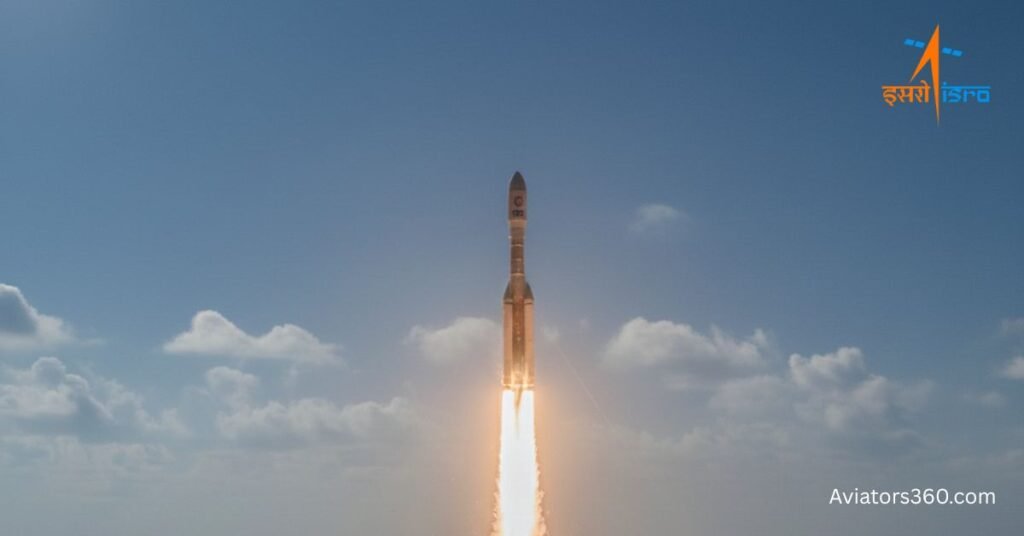
On December 24, 2025, India did something amazing in space. ISRO, India’s space agency, launched its biggest rocket, the LVM3, from Sriharikota. It was carrying a very special passenger – a huge American satellite named BlueBird Block-2. This wasn’t just any satellite. It was the heaviest object ever launched from India. The mission was a complete success, and the satellite is now on its way to space. This is a huge step for India’s ability to do big business in space.
Overview of the LVM3-M6 BlueBird Block-2 Mission
The Rocket: India’s Most Powerful Vehicle
Think of the LVM3 rocket as India’s strongest space truck. It’s the same type of rocket that took India’s Chandrayaan-3 mission to the Moon. It’s powerful, trusted, and can carry very heavy things into space. For this job, it was loaded up more than ever before.
The Satellite: A Giant Space Antenna
The satellite, BlueBird Block-2, belongs to a US company called AST SpaceMobile. Their big idea is simple but amazing: to give your normal mobile phone internet connection from space.
You know how your phone sometimes has no signal in villages, on mountains, or in the middle of the sea? This satellite aims to fix that. It’s like a giant mobile phone tower floating in space. It can connect directly to regular phones on the ground, without you needing a special phone or antenna.
How the LVM3-M6 Mission Strengthens India’s Global Launch Position
This success is a big deal for a few key reasons.
- It Shows India’s New Business Strength in Space
For a long time, other countries were the leaders in launching big, expensive commercial satellites for other countries. By launching this huge American satellite perfectly, India (through its commercial wing, NewSpace India Limited) has joined the big leagues. The world now knows India is a reliable and strong partner for heavy-lift launches. - Breaking India’s Previous Space Launch Records
This was the heaviest thing ever sent to space from India. Every country’s space program has milestones, and carrying this massive satellite is like winning a weightlifting gold medal. It proves ISRO’s rocket is more capable than ever.
- It Helps Connect the Unconnected
The satellite’s job is to help people everywhere get a phone signal. This is great news for millions of people in remote areas, fishermen at sea, or travellers in places with no towers. It can help in emergencies and bring more people online. An Indian rocket helped launch this helpful technology. - It Brings Money and Jobs to India
Launching satellites for other countries is a business. This successful mission brings in good money. That money can be used for more science missions, better technology, and creating jobs. It also helps Indian private space companies grow.
The Path Forward After ISRO’s LVM3-M6 Launch
So, what happens after this big launch?
For the Satellite (BlueBird):
- This BlueBird is one of the first of many. The company plans to launch many more such satellites to form a group (a “constellation”) in space.
- Their goal is to build a network that covers the whole Earth, making sure no phone is ever without a signal.
For ISRO and India:
- More Commercial Launches: After this success, ISRO will get more orders from other countries and companies to launch their big satellites. It’s like becoming a popular delivery service for space.
- Building New Rockets: The money earned from these launches will help ISRO build newer, even more advanced rockets. They are already working on a next-generation rocket that can be reused (like a space plane), which will make launches cheaper.
- Helping Indian Private Companies: ISRO’s success paves the way for smaller, private Indian rocket companies to grow. They can start handling smaller satellite launches, making India’s overall space industry very strong.
- Bigger Goals: This confidence boost helps India plan its own future missions – like sending astronauts to space (Gaganyaan), building a space station, and more Moon and Mars missions.
In Simple Words: What This Means for Us
Think of it this way: India’s space program, which we are proud of for missions like Chandrayaan, has now also become a world-class space service provider. It’s like a talented scientist who is also a successful entrepreneur.
The rocket launch you saw on the news wasn’t just science; it was smart business. It puts India on the global map in a new way, brings in money, and most importantly, the satellite it carried will one day help people all over the world stay connected.
It’s a proud moment that shows how far India has come – from launching its first small satellite in 1975 to launching the heaviest commercial satellite for another country in 2025. The sky is not the limit anymore!
Disclaimer:
This blog is published for informational and educational purposes only. The details presented are based on publicly available information, official statements, and credible media reports at the time of writing. While every effort has been made to ensure accuracy, developments may occur after publication. The author and publisher do not assume responsibility for any errors, omissions, or outcomes arising from the use of this information.
Pingback: India’s First 2026 Space Mission to Launch Military and Nepal Satellites - aviators360.com