
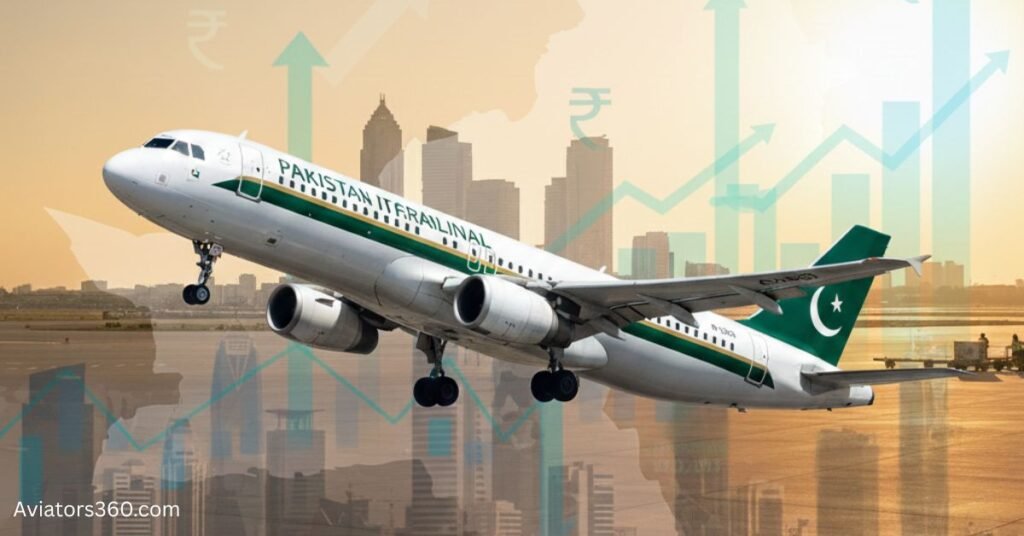
Pakistan International Airlines (PIA) has entered a new chapter. After years of financial losses, operational struggles, and repeated discussions about privatization, the Government of Pakistan has finalized a major decision. Control of the national airline has been handed to a private business consortium, marking one of the most significant economic reforms in recent years.
A group of leading Pakistani businessmen, led by renowned industrialist Arif Habib, has won the bid to take operational control of Pakistan International Airlines. This development is being seen as a turning point for the airline and a critical step for Pakistan’s broader economic stabilization efforts.
For passengers, the decision raises two key issues: why the government took this step, and how the change in ownership may affect the PIA travel experience in the future.
The Simple Story Behind the Sale
PIA’s condition can be compared to a house that looks impressive from the outside but is structurally weak on the inside. While the brand still carries national pride and valuable international access, the airline has been burdened with heavy debt, inefficient operations, and long-standing management problems.
The government concluded that it could no longer repair this “house” on its own. This is why Pakistan selling PIA became unavoidable. Instead of selling the entire airline along with its liabilities, authorities adopted a strategic approach. The valuable assets—such as aircraft, profitable routes, and international traffic rights—were moved into a new company. The debt and loss-making components remained with the state.
Ownership Structure and Assets Transferred
The Arif Habib Consortium acquired a 51% controlling stake in the newly structured PIA entity. The consortium includes prominent business groups such as Arif Habib Group and JS Group, both known for expertise in finance, investment, and corporate restructuring.
The government retains a 49% share, ensuring continued public ownership while allowing private management to take charge of daily operations. The new owners have committed to injecting fresh capital to stabilize and rebuild the airline.
The Real Reasons Behind PIA’s Privatization
Continuous Financial Losses
For more than a decade, PIA recorded billions of rupees in annual losses. Government bailouts—funded by taxpayers—were repeatedly used to keep the airline operational. This financial drain placed significant pressure on the national budget.
IMF Commitments
Pakistan’s financial assistance program with the International Monetary Fund included strict conditions. One key requirement was ending state support for loss-making public enterprises. Privatizing PIA became essential to meet these commitments and unlock critical funding.
Structural and Management Failures
Overstaffing, aging aircraft, political interference, and slow decision-making severely impacted performance. These issues resulted in unreliable schedules, frequent technical delays, and declining passenger confidence.
The Core Strengths That Make PIA Worth Saving
Despite its problems, PIA possesses highly valuable assets. Its international landing rights—particularly to destinations such as the UK, Canada, and Saudi Arabia—are difficult to obtain and highly profitable if managed well. The government’s expectation is that professional, commercially driven leadership can fully utilize these strengths.
Key Priorities for PIA’s New Owners
Immediate Priorities
The first phase will focus on stopping financial losses by cutting wasteful expenses and settling urgent liabilities. Investment from the new owners will be used to stabilize operations.
Fleet Improvements
Many aircraft in PIA’s fleet are outdated. The consortium is expected to either refurbish existing planes or lease newer aircraft, improving fuel efficiency, safety, and punctuality.
Passenger Experience
Service upgrades are anticipated across check-in systems, cabin cleanliness, in-flight meals, and digital booking platforms. Rebuilding passenger trust will be a core objective.
Workforce Restructuring
Overstaffing remains a sensitive issue. Management may introduce early retirement schemes or retraining programs to align workforce size with operational needs.
Long-Term Vision for the Airline
The consortium is expected to redesign route networks, focusing on profitable destinations while discontinuing underperforming ones. Strategic partnerships with international airlines could improve global connectivity. Additional revenue may come from cargo services, maintenance facilities, and catering operations.
Challenges Ahead
The transition will not be smooth. Employee unions may resist workforce changes, outdated systems will take time to modernize, and competition from well-established Gulf carriers will remain intense.
Conclusion: A Cautious but Hopeful Beginning
The transfer of PIA’s control to the Arif Habib–led consortium represents a major policy shift. It signals the government’s intent to reduce financial waste and reform struggling state enterprises. For passengers and citizens, it offers cautious optimism.
While improvements will not happen overnight, this move provides PIA with its strongest opportunity in decades to regain stability, credibility, and pride. The task ahead is difficult, but the path toward recovery has finally begun.
Disclaimer:
This blog is based on publicly available information, media reports, and official statements at the time of writing. While every effort has been made to ensure accuracy, developments related to Pakistan International Airlines (PIA), its ownership, and privatization process may change. The content is intended for informational purposes only and should not be considered financial, legal, or investment advice. Readers are advised to verify details independently from official sources.