
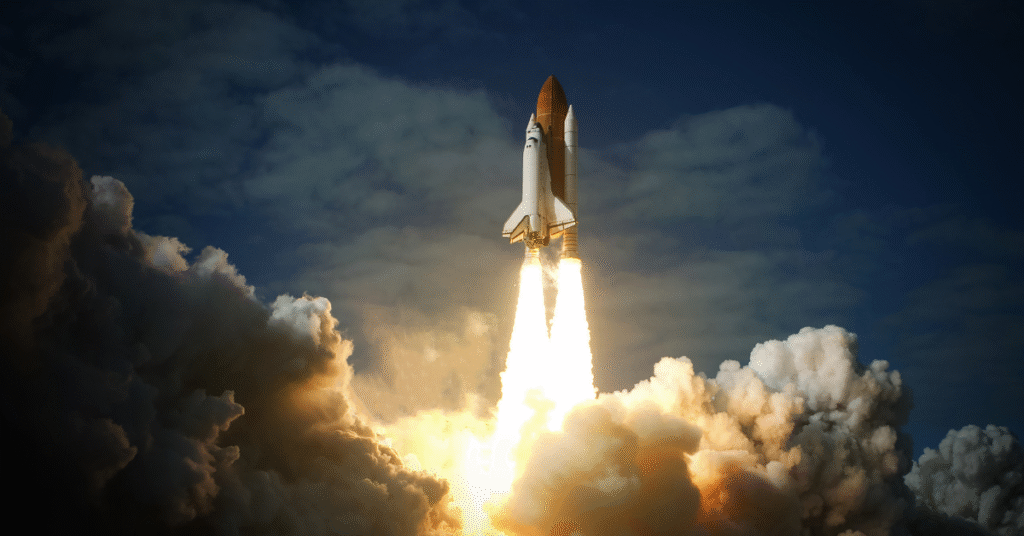
Countdown to the Cosmos: ISRO’s CMS-03 Mission and a New Era in Communication
The familiar rumble is set to return to the Satish Dhawan Space Centre in Sriharikota. After the triumphant success of the Aditya-L1 solar mission, the Indian Space Research Organisation (ISRO) is ready to launch its next ambitious project: the CMS-03 satellite, scheduled for a November 2nd launch. This mission isn’t just another launch; it’s a significant step in enhancing India’s communication capabilities and showcasing the evolving prowess of the Indian space program.
For space enthusiasts and the common citizen alike, the question is: what exactly is this mission, and why should we be excited? Let’s dive deep into the details of the CMS-03 launch, from the precise timing to the advanced technology it carries.
The Star of the Show: What is CMS-03?
CMS-03 stands for Communication Satellite-03. It is a follow-up mission to the highly successful CMS-01 satellite launched in 2020. But to call it just a “communication satellite” would be an understatement. CMS-03 is a next-generation satellite built to provide a wide range of services with enhanced performance and longevity.
Its primary objectives include:
C-band and Ku-band Transponders: These will be used for television broadcasting, satellite news gathering, telemedicine, tele-education, and broadband services. Essentially, it will ensure that your DTH service, live news from remote areas, and digital classrooms have robust and reliable satellite support.
Extended Service Life: Unlike its predecessors that had a mission life of around 7-9 years, CMS-03 is designed to operate for a remarkable 12-15 years. This is a testament to the advancements in satellite technology and power systems, making the mission more cost-effective and sustainable in the long run.
Enhanced Coverage: The satellite will have a wider footprint, ensuring better connectivity over the Indian mainland and its remote islands, bridging the digital divide.
In short, CMS-03 is a vital national asset that will silently work from the heavens to keep India connected, informed, and educated.
The Mighty Chariot: GSLV Mk II (F14)
The responsibility of placing this 4,000+ kg satellite into its designated orbit falls on the shoulders of one of ISRO’s most trusted workhorses: the Geosynchronous Satellite Launch Vehicle Mark II (GSLV Mk II). This mission will be designated as GSLV-F14.
The GSLV Mk II is a three-stage launch vehicle known for its powerful cryogenic upper stage—a technology India mastered after initial challenges. Here’s a quick breakdown:
First Stage: A solid fuel motor (S139) that provides the initial, massive thrust to lift the rocket off the pad.
Second Stage: A liquid fuel engine (Vikas Engine) that takes over after the first stage separation.
Third Stage: The crown jewel—the indigenously built Cryogenic Upper Stage (CUS), which uses liquid hydrogen and liquid oxygen. This highly efficient stage is crucial for injecting heavy satellites like CMS-03 into a Geosynchronous Transfer Orbit (GTO).
The “F14” in its name signifies that this is the 14th flight of the GSLV, a vehicle that has become synonymous with reliability for India’s communication satellite launches.
What to Expect on Launch Day: The Timeline and the Spectacle
For those planning to witness this celestial event, here’s a detailed breakdown of what to expect.
1. The Launch Window:
The launch is scheduled for November 2nd. While ISRO will announce the precise lift-off time closer to the date, based on past GSLV missions, we can expect the launch to take place in the afternoon or early evening. This timing is chosen to ensure optimal orbital mechanics and lighting conditions for the satellite’s deployment.
2. The Countdown:
The final countdown will begin several hours before the launch, typically around T-26 hours. During this period, the Launch Authorisation Board (LAB) will give its final clearance after reviewing all system checks. The rocket will be fuelled with liquid and cryogenic propellants—a critical and delicate operation.
3. The Final 10 Seconds (The “Automatic Launch Sequence”):
This is the most thrilling part for viewers. You will hear the mission director announce, “All systems go.” The final countdown from 10 to 1 will commence, building an electric atmosphere.
4. Lift-off (T-0):
At T-0, the first stage solid motor will ignite. For a few seconds, the rocket will be held down by clamps as the engines build up to full thrust. Then, with a thunderous roar and a brilliant plume of fire and smoke, the 49-meter-tall GSLV will majestically ascend into the sky. The initial moments are slow and dramatic, as the vehicle fights Earth’s gravity.
5. The Ascent Phase:
~2 minutes after lift-off: The first stage will burn out and separate. The second stage Vikas engine will ignite almost simultaneously.
~4 minutes after lift-off: The payload fairing (the nose cone that protects the satellite) will separate once the rocket is out of the dense atmosphere.
~5 minutes after lift-off: The second stage will separate, and the cryogenic upper stage will ignite. This is a critical phase, where the CUS will perform its long-duration burn.
6. Satellite Injection:
Approximately 18 minutes after lift-off, after a flawless burn of the cryogenic stage, the CMS-03 satellite will be injected into a precise Geosynchronous Transfer Orbit (GTO). This is an elliptical orbit where the satellite’s closest point (perigee) is a few hundred kilometers from Earth and the farthest point (apogee) is nearly 36,000 km away.
You will hear the announcement from the Mission Director: “CMS-03 satellite has been successfully injected into its intended orbit.” The control room will erupt in applause, a familiar and heartwarming sight from ISRO missions.
7. The Post-Launch Journey:
The launch is just the beginning for CMS-03. Over the next few days, the satellite will use its own Liquid Apogee Motor (LAM) to perform a series of orbit-raising maneuvers, slowly circularizing its orbit and moving into its final “parking spot” in the Geostationary Orbit, approximately 36,000 km above the equator. Once there, it will unfurl its solar panels and communication antennas, ready for in-orbit testing before commencing its 15-year service.
Why This Launch Matters
The CMS-03 mission is a clear indicator of ISRO’s dual focus: pushing the boundaries of interplanetary science while simultaneously strengthening the nation’s core infrastructure. It demonstrates a mature, reliable, and self-sufficient space program that is crucial for a country of India’s size and aspirations. Every successful launch of a satellite like CMS-03 translates to better connectivity, enhanced disaster management, and a more digitally empowered nation.
So, mark your calendars for November 2nd. Tune into ISRO’s official YouTube channel to witness another chapter of Indian space history being written. As the GSLV soars, it carries not just a satellite, but the hopes and technological ambitions of 1.4 billion people.
This blog was written by Ashutosh Bansal, a space enthusiast and writer dedicated to bringing the wonders of the cosmos closer to you. For more insights on space, technology, and innovation, stay tuned to this blog. You can share your thoughts and excitement for the launch in the comments